Introduction
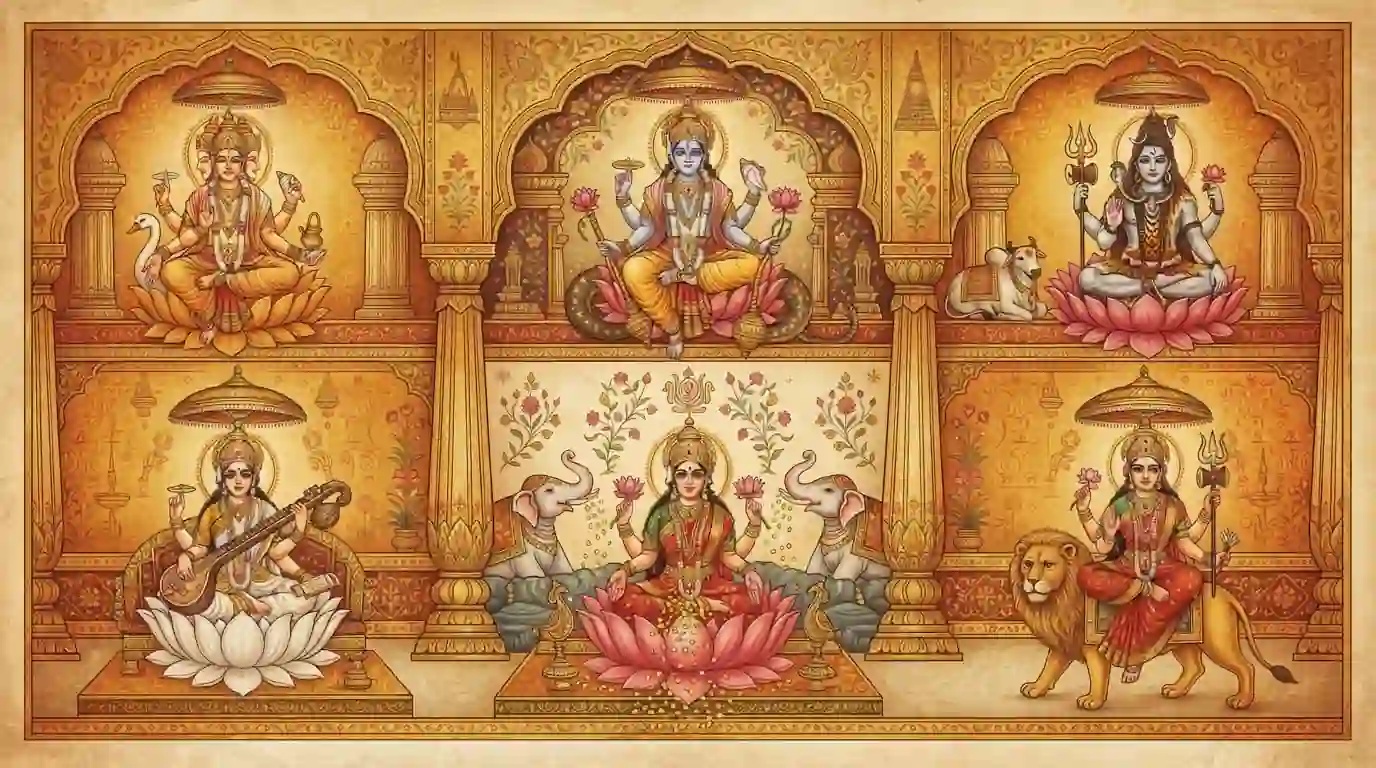
Hinduism is home to one of the richest pantheons in the world — a vast, interconnected family of hindu gods and goddesses list, each representing different forces of nature, virtues, and cosmic functions. If you’ve ever wondered who’s who in Hindu mythology, this guide breaks down every major deity in one place, organized so you can actually make sense of it.
Whether you’re here out of curiosity, spiritual interest, or research, this list covers the Trimurti, the Tridevi, their avatars, and the wider pantheon of gods that shape Hindu tradition.
The Trimurti: The Three Supreme Gods
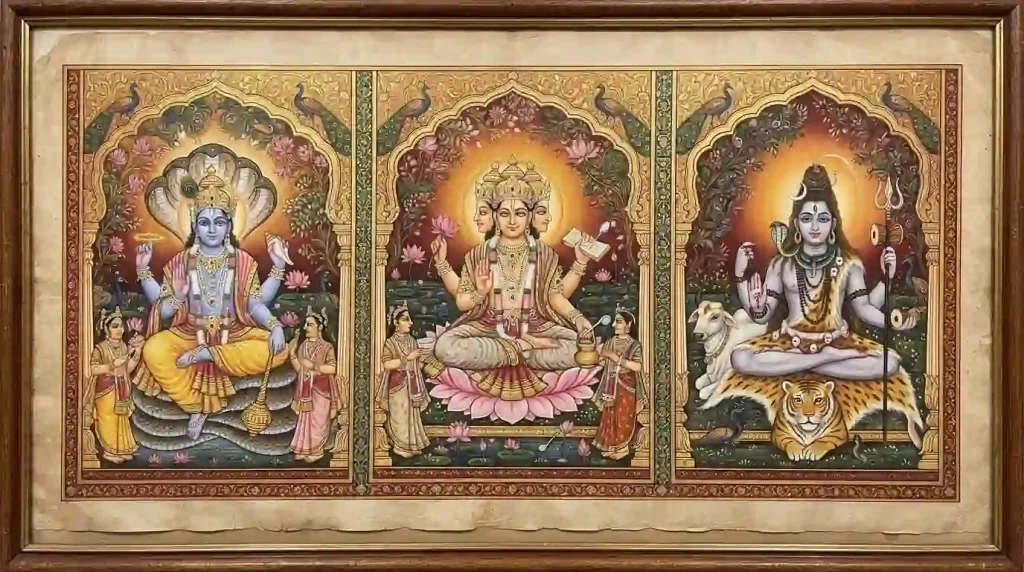
The Trimurti represents the three central roles of the universe — creation, preservation, and destruction. These three gods form the foundation of Hindu cosmology.
Brahma – The Creator
Brahma is regarded as the creator of the universe. He’s usually shown with four heads, representing the four Vedas, and is often depicted seated on a lotus. Unlike Vishnu and Shiva, Brahma is rarely worshipped directly today, though his role in creation remains central to Hindu philosophy.
Vishnu – The Preserver
Vishnu is the preserver of the universe, responsible for maintaining order (dharma). He’s known for descending to Earth in different forms — his avatars — whenever the world needs saving from chaos. Vishnu is typically shown with blue skin, holding a conch, a discus (chakra), a mace, and a lotus.
Shiva – The Destroyer
Shiva represents destruction and transformation — not in a negative sense, but as the force that clears the way for renewal. He’s often depicted with a third eye, a crescent moon, a trident (trishul), and a serpent around his neck. Shiva is one of the most widely worshipped gods in Hinduism.
The Tridevi: The Three Supreme Goddesses
Just as the Trimurti governs cosmic function, the Tridevi represents the divine feminine energy (Shakti) behind creation, preservation, and destruction.
Saraswati – Goddess of Knowledge
Saraswati is the goddess of wisdom, learning, music, and the arts. She’s usually shown in white, holding a veena (a stringed instrument), and is the consort of Brahma.
Lakshmi – Goddess of Wealth
Lakshmi represents wealth, prosperity, and abundance — both material and spiritual. She’s the consort of Vishnu and is especially worshipped during Diwali.
Parvati (Durga/Kali) – Goddess of Power
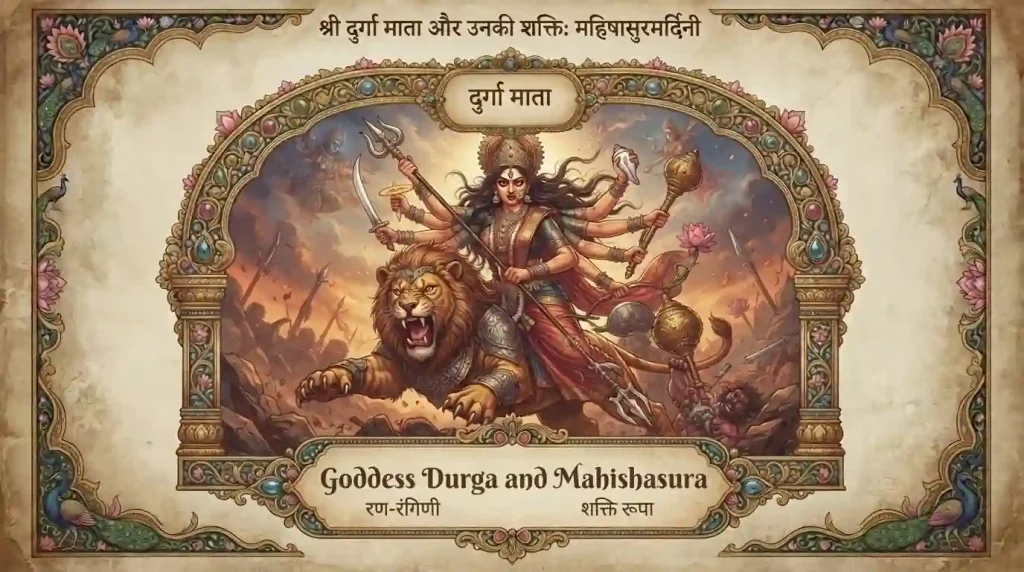
Parvati is the goddess of love, fertility, and devotion, and the consort of Shiva. In her fierce forms, she appears as Durga (the warrior goddess who defeats evil) and Kali (the goddess of time, destruction, and transformation).
The Dashavatara: 10 Avatars of Vishnu
Vishnu is said to descend to Earth whenever balance is threatened. These are his ten major avatars:
Other Major Gods
- Ganesha – The elephant-headed god of new beginnings, wisdom, and remover of obstacles. Son of Shiva and Parvati.
- Hanuman – The monkey god known for strength, devotion, and loyalty, central to the Ramayana.
- Indra – King of the heavens and god of thunder, rain, and war.
- Surya – The sun god, associated with light, energy, and life.
- Agni – The god of fire, seen as a messenger between humans and the gods.
- Kartikeya (Murugan) – God of war and victory, brother of Ganesha.
- Yama – God of death and justice, ruler of the underworld.
- Kubera – God of wealth and treasure, keeper of the gods’ riches.
- Vayu – God of wind and breath.
- Varuna – God of the oceans and cosmic order.
Other Major Goddesses
- Durga – The fierce warrior goddess who battles evil forces, especially celebrated during Navratri.
- Kali – Goddess of time, destruction, and transformation, often depicted with a dark complexion and fierce expression.
- Radha – Beloved companion of Krishna, symbolizing divine love and devotion.
- Sita – Wife of Rama, revered as a symbol of virtue and devotion in the Ramayana.
- Ganga – Goddess of the river Ganges, symbolizing purification.
- Annapurna – Goddess of food and nourishment.
Regional and Lesser-Known Deities
Hindu mythology varies significantly by region, and many deities are worshipped more locally:
- Ayyappan – Popular in South India, especially Kerala
- Khandoba – A regional deity worshipped in Maharashtra and Karnataka
- Jagannath – Worshipped primarily in Odisha, especially at Puri
- Meenakshi – A form of Parvati, central to Tamil Nadu temple traditions
- Santoshi Mata – A relatively modern goddess of satisfaction and contentment
Frequently Asked Questions
How many gods are there in Hinduism?
Hindu tradition often describes 33 crore (330 million) deities, but this figure is symbolic, representing the belief that the divine can manifest in infinite forms. In practice, a much smaller number of gods and goddesses are widely worshipped.
Who is the most powerful Hindu god?
There’s no single answer — Brahma, Vishnu, and Shiva are each supreme within their own cosmic role (creation, preservation, destruction), and different traditions within Hinduism (Vaishnavism, Shaivism, Shaktism) consider different deities to be the ultimate reality.
What is the difference between a god and an avatar?
A god exists independently, while an avatar is a specific earthly incarnation of a god — most commonly associated with Vishnu, who takes different forms to restore balance during times of crisis.
Are Hindu gods and goddesses related to each other?
Yes — many are connected through marriage or parentage. For example, Ganesha and Kartikeya are the sons of Shiva and Parvati, and Lakshmi is the consort of Vishnu.
Final Thoughts
The Hindu pantheon isn’t just a list of names — it’s a living framework of ideas about creation, morality, power, and the forces that shape human life. This guide covers the major figures, but Hindu mythology is deep enough that entire lifetimes of study are dedicated to just one deity.
Explore our individual deity guides — linked throughout this article — for deeper stories, symbolism, and meaning behind each god and goddess.