
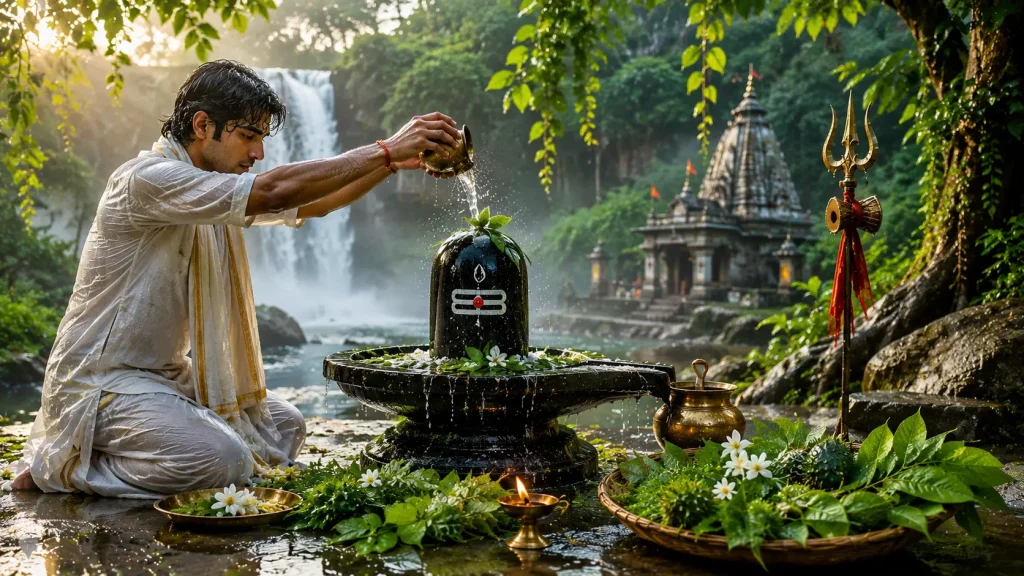
Among all the sacred months in the Hindu calendar, Sawan (Shravan) holds a special place in the hearts of millions of devotees. As soon as the monsoon rains begin to nourish the earth, temples dedicated to Lord Shiva echo with the chants of “Har Har Mahadev” and “Om Namah Shivaya.”
People observe fasts, perform Rudrabhishek, offer sacred Bel Patra, and undertake Kanwar Yatra with unwavering faith. But have you ever wondered why Sawan is exclusively dedicated to Lord Shiva? Why does this month hold unparalleled spiritual power compared to all others?
The answer lies in ancient scriptures, cosmic events, divine love, and profound spiritual symbolism. Let us uncover the untold divine reasons that make Sawan the holiest month for Shiva devotees.
What Is Sawan Month?
Sawan, also known as Shravan Maas, is the fifth month in the Hindu lunar calendar. It usually falls between July and August, coinciding with the rainy season.
This month symbolizes:
- Spiritual purification
- New beginnings
- Prosperity
- Devotion
- Inner transformation
Nature itself appears rejuvenated during Sawan, representing the cleansing of both the Earth and the human soul.

Why Is Sawan Dedicated to Lord Shiva?
The sacred connection between Sawan and Lord Shiva is rooted in several legendary events described in Hindu scriptures.
1. The Great Samudra Manthan
The most famous reason comes from the legendary Samudra Manthan (Churning of the Ocean).
During the churning of the cosmic ocean by the Devas and Asuras, many divine treasures emerged. However, before the nectar of immortality appeared, a deadly poison called Halahala surfaced.
The poison was so powerful that it threatened to destroy all creation.
To save the universe, Lord Shiva compassionately drank the poison.
Goddess Parvati immediately held His throat so the poison would not spread throughout His body.
As a result, Shiva’s throat turned blue, earning Him the name Neelkanth.
The poison generated unbearable heat inside Shiva’s body.
To cool Him, the Devas continuously offered:
- Holy water
- Milk
- Curd
- Honey
- Ganga water
This sacred offering became the origin of the Abhishekam performed during Sawan.
2. The Descent of the Holy River Ganga
Another powerful reason relates to the descent of Mother Ganga.
King Bhagiratha performed severe penance to bring Ganga from heaven to Earth for the salvation of his ancestors.
The mighty river’s force could have destroyed Earth.
Lord Shiva accepted the impact by catching Ganga in His matted locks (Jata).
Only after calming her powerful flow did He release her gently onto Earth.
Since this divine event is closely associated with the rainy season, devotees offer Gangajal to Shiva throughout Sawan.
3. Goddess Parvati Won Shiva During Sawan
According to the Shiva Purana, Goddess Parvati performed intense penance over many lifetimes to marry Lord Shiva.
Her unwavering devotion reached its peak during the month of Shravan.
Pleased by her dedication, Lord Shiva accepted her as His eternal consort.
This is why unmarried women observe Solah Somvar Vrat and Sawan Mondays to seek a loving, understanding, and virtuous life partner.
Married women also pray for the long life and prosperity of their husbands.
4. Shiva Loves Simplicity
Unlike many deities adorned with gold and jewels, Lord Shiva is pleased by the simplest offerings.
During Sawan, devotees offer:
- Bel Patra
- Dhatura
- Bhang
- White flowers
- Milk
- Water
- Honey
- Sugarcane juice
These humble offerings symbolize purity rather than wealth.
Shiva teaches that true devotion comes from the heart, not material possessions.
Why Are Mondays So Sacred in Sawan?
Monday is known as Somvar, a day ruled by the Moon (Chandra).
Interestingly, Lord Shiva wears the crescent Moon on His head.
The Moon also represents:
- Peace
- Emotional balance
- Mental clarity
During Sawan Mondays, the spiritual energy is believed to become especially powerful.
Devotees observe Sawan Somvar Vrat to seek:
- Good health
- Marriage blessings
- Success
- Peace
- Spiritual growth
- Removal of obstacles
The Spiritual Meaning of Monsoon and Shiva
The arrival of monsoon carries deep spiritual symbolism.
Just as rain washes away dust from nature, devotion to Shiva washes away:
- Ego
- Anger
- Greed
- Attachment
- Negative karma
Sawan reminds us that transformation begins from within.
Every drop of rain represents divine grace.
Why Bel Patra Is Offered to Shiva
Bel Patra is considered Shiva’s favorite leaf.
Its three leaflets symbolize:
- Brahma
- Vishnu
- Mahesh
They also represent:
- Creation
- Preservation
- Destruction
Some scriptures interpret them as:
- Satva
- Rajas
- Tamas
Offering Bel Patra signifies surrendering all aspects of life to Lord Shiva.
Importance of Rudrabhishek During Sawan
One of the most sacred rituals is Rudrabhishek.
The Shiva Linga is bathed with:
- Water
- Milk
- Honey
- Yogurt
- Ghee
- Sugar
- Gangajal
During the ritual, devotees chant:
- Om Namah Shivaya
- Shri Rudram
- Mahamrityunjaya Mantra
It is believed to remove:
- Negative energies
- Financial troubles
- Health issues
- Planetary doshas
while bringing peace and divine blessings.
Kanwar Yatra: A Journey of Faith
Every Sawan, millions of devotees known as Kanwariyas undertake the Kanwar Yatra.
They collect holy water from sacred rivers such as the Ganga and carry it over long distances to offer it at Shiva temples.
The pilgrimage represents:
- Devotion
- Discipline
- Sacrifice
- Patience
- Gratitude
Walking barefoot for hundreds of kilometers symbolizes surrender to Lord Shiva.
Scientific Perspective Behind Sawan Rituals
Many traditions observed during Sawan also have practical significance.
Fasting
- Supports digestive rest during the humid monsoon season.
- Encourages moderation and mindful eating.
Meditation
Regular chanting reduces stress and improves mental clarity.
Temple Visits
Walking barefoot and participating in community worship encourages physical movement, emotional well-being, and social harmony.
Offering Water
The act of Abhishek promotes mindfulness, gratitude, and disciplined spiritual practice.
These perspectives complement the spiritual meaning of the rituals while preserving their traditional significance.
Benefits of Worshipping Shiva During Sawan
According to Hindu scriptures, sincere worship during Sawan may bless devotees with:
- Mental peace
- Prosperity
- Good health
- Happy married life
- Career success
- Spiritual awakening
- Freedom from fear
- Relief from negative influences
- Family harmony
- Divine protection
More importantly, it nurtures self-discipline, compassion, and inner devotion.
Simple Ways to Worship Lord Shiva in Sawan
You do not need elaborate rituals to seek Lord Shiva’s blessings. Simple acts performed with sincerity are considered meaningful.
You can:
- Wake up before sunrise.
- Take a bath and wear clean clothes.
- Offer water or Gangajal to the Shiva Linga.
- Place fresh Bel Patra on the Linga.
- Chant “Om Namah Shivaya” 108 times.
- Read stories from the Shiva Purana or Shiva Chalisa.
- Practice charity and help those in need.
- Avoid speaking harshly and cultivate kindness.
- Spend a few minutes in silent meditation.
Timeless Lessons from Sawan and Lord Shiva
The sacred month of Sawan teaches valuable life lessons that extend beyond rituals.
- Compassion is greater than power.
- Simplicity is more valuable than luxury.
- Devotion transforms the heart.
- Patience leads to divine rewards.
- Nature and spirituality are deeply connected.
- True strength lies in self-control and humility.
These teachings remain relevant in modern life, inspiring people to live with balance and purpose.
The sacred relationship between Sawan and Lord Shiva is not merely a tradition—it is a timeless expression of faith, compassion, and spiritual awakening. From the cosmic sacrifice of consuming Halahala poison to receiving the mighty Ganga in His matted locks and accepting Goddess Parvati’s unwavering devotion, every legend reflects Lord Shiva’s role as the protector, transformer, and compassionate guardian of the universe.
Sawan invites devotees to purify their minds, deepen their devotion, and reconnect with the Divine. Whether through fasting, Rudrabhishek, chanting, meditation, or simple acts of kindness, every sincere offering made during this holy month is believed to draw one closer to Lord Shiva’s boundless grace.
As the rains renew the Earth, may this sacred season also renew your spirit, bringing peace, wisdom, and the blessings of Mahadev into your life.
Har Har Mahadev!
Frequently Asked Questions (FAQs)
1. Why is Sawan considered Lord Shiva's favorite month?
Sawan is associated with Lord Shiva’s acceptance of Halahala poison during Samudra Manthan, the descent of the Ganga, and Goddess Parvati’s successful penance to marry Him, making it the holiest month for His worship.
2. Why do devotees fast on Sawan Mondays?
Fasting on Sawan Somvar is believed to please Lord Shiva and is observed for blessings related to health, prosperity, spiritual growth, and a happy married life.
3. Why is Bel Patra offered to Lord Shiva?
Bel Patra is considered sacred because its three leaves symbolize the Trimurti and the three fundamental qualities of nature, making it one of the most cherished offerings to Shiva.
4. What is the significance of Rudrabhishek during Sawan?
Rudrabhishek is a sacred ritual in which the Shiva Linga is bathed with holy substances while Vedic mantras are chanted. It symbolizes purification, devotion, and seeking divine blessings.
5. Can anyone worship Lord Shiva during Sawan?
Yes. People of all ages and backgrounds can worship Lord Shiva during Sawan through prayer, chanting, meditation, charity, or simple offerings made with sincere devotion.