
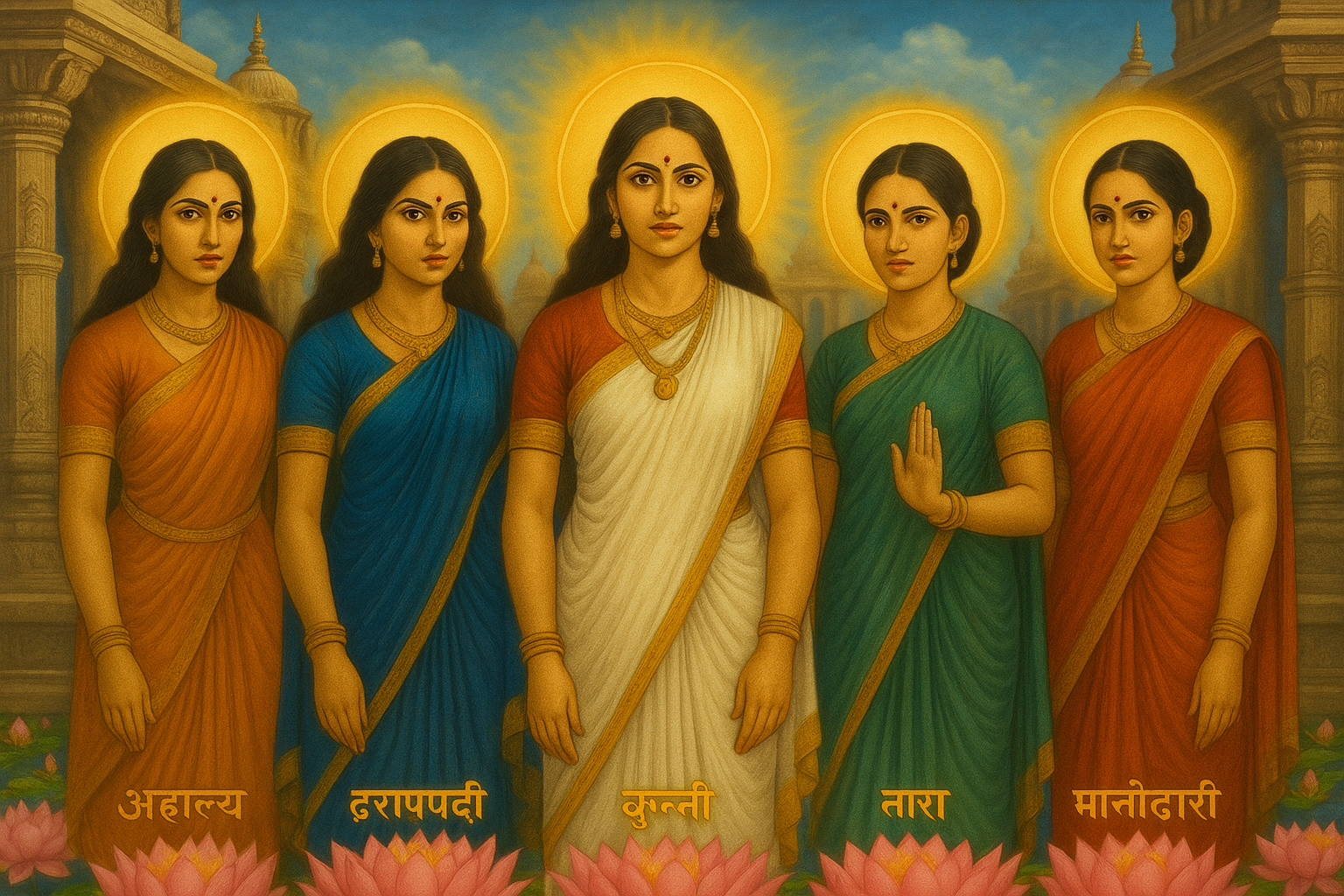
In Hindu mythology, the Panchkanya in hindu mythology —Ahalya, Draupadi, Kunti, Tara, and Mandodari—are revered as five divine women whose lives symbolize purity, resilience, and spiritual strength. Despite facing immense trials, challenges, and complex circumstances, they are remembered not for their flaws but for their inner power and unwavering devotion. Reciting their names is believed to destroy sins and bring blessings, making the Panchkanya a timeless symbol of feminine divinity, wisdom, and strength in Indian tradition.
Hindu mythology is filled with timeless legends, gods, and goddesses, each symbolizing deep spiritual truths. Among these sacred figures, the Panchkanya (Five Virgins) hold a very special place. These five women are revered not just for their beauty and strength but also for their wisdom, resilience, and unique roles in shaping the great epics of India—Ramayana and Mahabharata.
In Hindu Mythology the Panchkanya are: Ahalya, Draupadi, Kunti, Tara, and Mandodari.
A popular Sanskrit verse glorifies them:
“Ahalya Draupadi Kunti Tara Mandodari tatha |
Panchakanyah smaren nityam mahapataka nashanam ||”
It means: Remembering the Panchkanya every day destroys the greatest of sins.
This blog explores their lives, virtues, and the deeper symbolism of the Panchkanya in Hindu mythology.
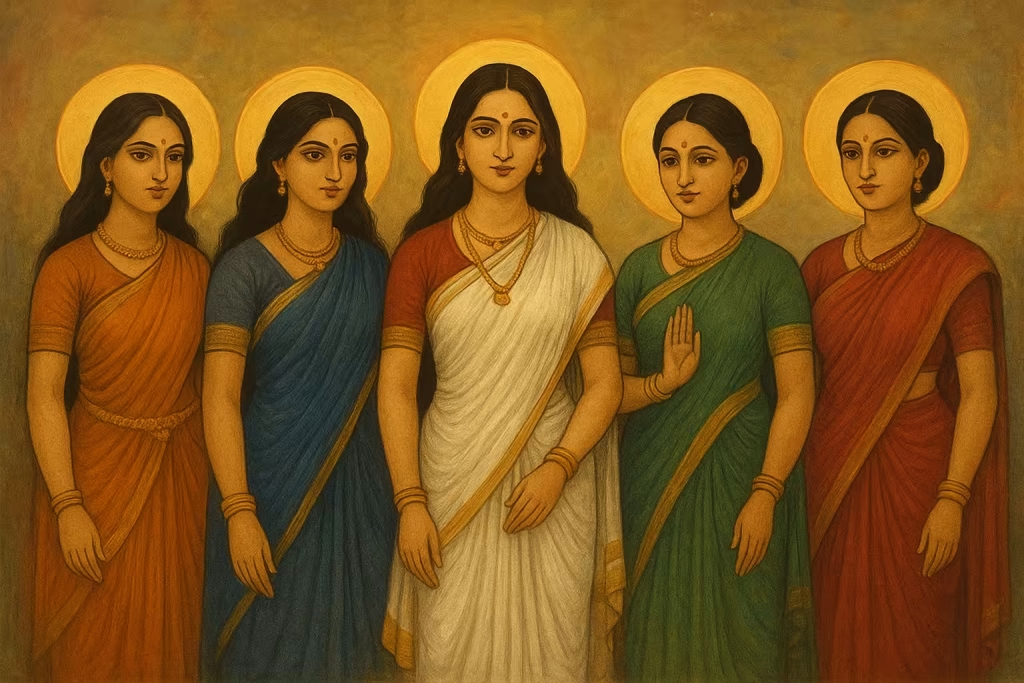
Who are the Panchkanya?
The term Panchkanya means “five virgins.” Interestingly, it does not imply physical virginity but rather spiritual purity, inner strength, and eternal inspiration. Each of these women had complex lives filled with trials, yet they rose above circumstances to embody courage, wisdom, and dharma.
1. Ahalya – The Redeemed One
Epic: Ramayana
Story: The wife of Sage Gautama Ahalya, was cursed. Due to Indra’s deception and turned into stone . Lord Rama later liberated her with his divine touch.
Symbolism: Ahalya Symbolize the power of forgiveness and redemption. She reminds us that even after mistakes, spiritual awakening is possible.
2. Draupadi – The Embodiment of Honor and Strength
Epic: Mahabharata
Story: Born from fire, Draupadi was the wife of the five Pandavas. She endured humiliation in the Kaurava court during the infamous cheer-haran but remained steadfast in faith and courage.
Symbolism: Draupadi symbolizes honor, resilience, and divine justice. Her unwavering devotion to dharma inspires countless devotees.
3. Kunti – The Mother of Heroes
Epic: Mahabharata
Story: Blessed with a divine mantra to invoke gods, Kunti bore sons from Surya, Yama, Indra, and Ashwini Kumars, becoming the mother of the Pandavas. Despite hardships, she guided her children with wisdom and strength.
Symbolism: Kunti represents sacrifice, endurance, and motherhood’s strength in upholding righteousness.
4. Tara – The Wise Counselor
Epic: Ramayana
Story: Tara the wife of monkey king Vali. After king vali’s death, she is the queen of Kishkindha with Sugriva. Known for her wisdom, she played a crucial role in guiding Sugriva and later supporting Lord Rama in his mission.
Symbolism: Tara is the symbol of intelligence, diplomacy, and leadership, reminding us of the power of wisdom in governance.
5. Mandodari – The Virtuous Queen
Epic: Ramayana
Story: Mandodari the wife of Ravana, the king of Lanka. Despite being married to a man of great power and flaws, she remained virtuous, advising him against adharma. Her devotion and purity shone even in difficult times.
Symbolism: Mandodari embodies virtue, loyalty, and moral courage, teaching us to stand firm in dharma despite challenges.
The Spiritual Significance of the Panchkanya
The Panchkanya are more than just mythological figures. They are eternal role models who:
Teach resilience in adversity.
Represent purity beyond physical definitions.
Inspire faith, forgiveness, wisdom, and courage.
The Panchkanya remind us how to do balance between dharma and worldly duties.
Remembering them is believed to purify the mind and soul, helping devotees overcome even the gravest of karmic sins.
The Panchkanya in Hindu mythology are timeless embodiments of strength, wisdom, and purity. Ahalya, Draupadi, Kunti, Tara, and Mandodari remind us that women in Indian epics were not just supporting characters—they were central forces of transformation and dharma.
Chanting their names or remembering their stories is said to bring spiritual upliftment, guiding us to live with dignity, wisdom, and courage in our own lives.
Frequently Asked Questions (FAQ) on Panchkanya in Hindu Mythology
1. Who are the Panchkanya in Hindu mythology?
The Panchkanya are five revered women from Hindu epics celebrated for their purity, courage, and spiritual strength.
2. What does the term ‘Panchkanya’ mean?
The term Panchkanya literally means “five virgins”. However, it signifies spiritual purity and strength of character rather than physical virginity.
3. Why are the Panchkanya remembered every day?
According to a Sanskrit verse:
“Ahalya Draupadi Kunti Tara Mandodari tatha |
Panchakanyah smaren nityam mahapataka nashanam ||”
It means remembering these five women daily destroys even the greatest sins (mahapatakas).
4. What is the spiritual meaning of the Panchkanya?
The Panchkanya represent virtue, purity, and strength. Their stories teach resilience in adversity, loyalty, and the importance of upholding dharma.
5. Is there a difference between Panchkanya and Five Sati?
Yes. The Panchkanya (Ahalya, Draupadi, Kunti, Tara, Mandodari) are remembered for strength amidst trials, while the Five Sati (Sati, Savitri, Anasuya, Arundhati, Damayanti) are celebrated for ideal chastity and devotion.