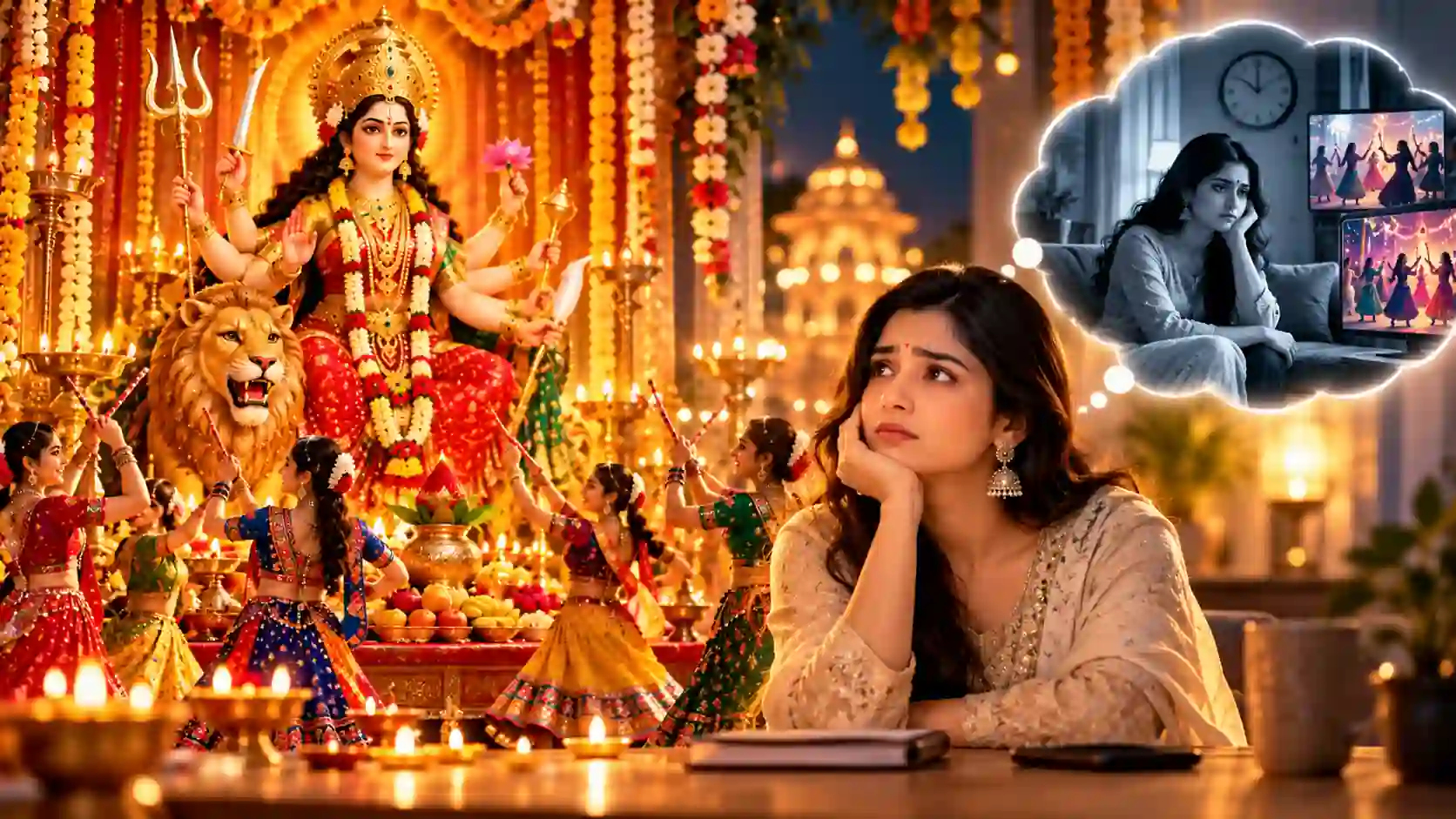
If you’ve been wondering why celebrate Navratri when work is busy and the festival season feels crowded, here’s the honest answer: nothing bad will happen to you if you skip it. Hindu tradition doesn’t threaten anyone into worship. But Navratri 2026, from 11 to 20 October, offers something that’s hard to find the rest of the year: nine days set aside for devotion, reflection, family and community, with a clear beginning and a joyful end. Missing that is the kind of thing people tend to regret quietly, later. Here’s what you’d be passing up, and how to take part even in a small way.
The Meaning You’d Miss
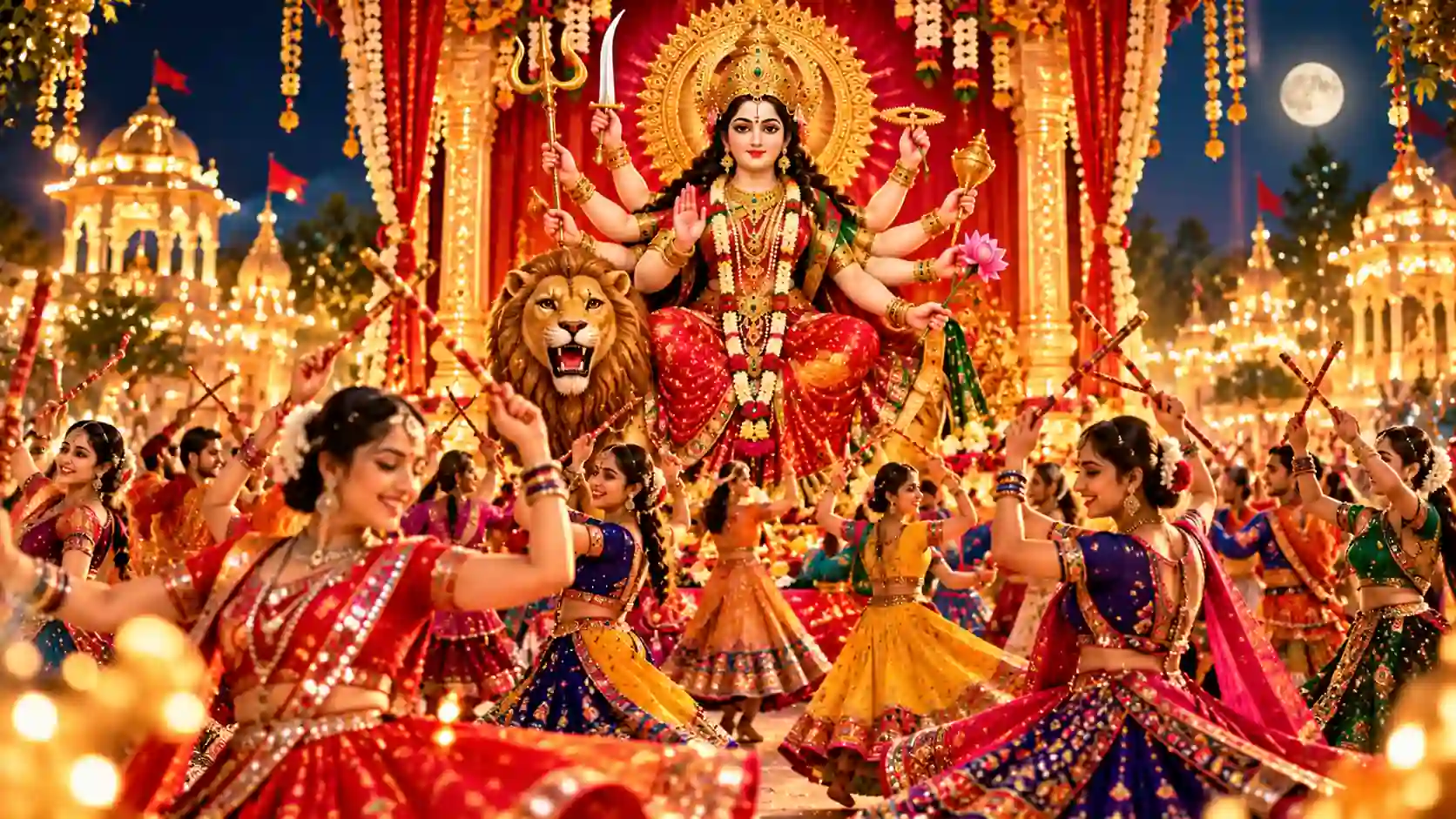
Navratri is built on the Devi Mahatmya, the text in the Markandeya Purana that describes the Goddess emerging from the combined power of the gods to defeat Mahishasura and other demons. Read simply, it’s a story of good overcoming evil. Read more closely, as many teachers have done, it’s also a picture of inner struggle: of ego, anger and inertia being overcome by clarity and strength. Spending nine nights with that story, through daily prayer or recitation of the Durga Saptashati, gives it room to work on you in a way a single reading doesn’t.
The nine forms of the Goddess, from Shailaputri to Siddhidatri, add to this. Each day brings a different quality into focus: steadiness, discipline, courage, creativity, motherhood, fierceness, the destruction of fear, purity and fulfilment. Even if you only pause for a few minutes each morning, the sequence gives your days a shape.
A Rare Reset in the Calendar
Navratri falls at the turn of the season, when the monsoon gives way to Sharad, the clear autumn months. Many people use these nine days as a deliberate reset: simpler food, a little fasting, earlier mornings, less screen time, more prayer. A fast in particular, whether for nine days or just on Ashtami, is a small exercise in self-discipline that many devotees find steadying. It works best when chosen with care for your health; our guide on Navratri fasting rules explains the options.
Family Traditions Need Someone to Carry Them
Many of the most meaningful parts of Navratri are learned at home rather than from books: how your family sets up the kalash, which day it holds Kanya Pujan, the particular bhajan your grandmother sang at aarti. These customs survive only when someone keeps doing them. If you have children, Navratri is one of the easiest festivals to share with them, with its daily goddess, colours, jaware growing a little every morning, and Garba in the evening. Skipping it for a year or two is often how such traditions fade.
Honouring Girls and Women
Kanya Pujan, held on Ashtami (Sunday, 18 October) or Navami (Monday, 19 October) in 2026, is one of the most touching rituals of the Hindu year. Young girls are welcomed into the home, their feet are washed, and they’re served food and given gifts as forms of the Goddess. In a festival devoted to the divine feminine, it’s a reminder to carry that respect into everyday life, beyond the nine days.
Community You Can’t Get Online
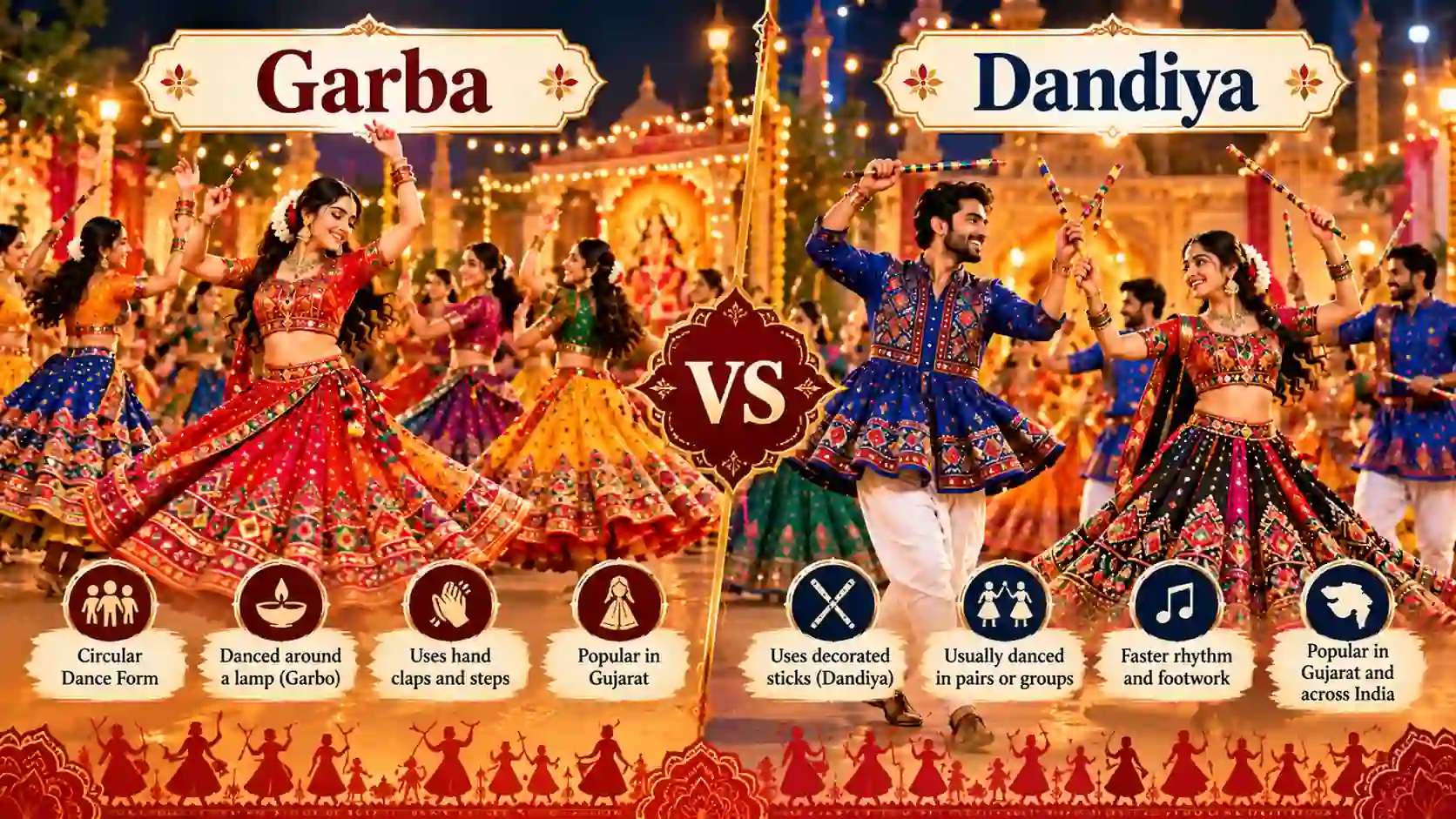
Garba circles, Durga Puja pandals, Ramlila grounds and temple queues bring together neighbours who may not speak for the rest of the year. Garba of Gujarat and Durga Puja in Kolkata are both recognised by UNESCO as intangible cultural heritage partly for this reason: they gather people across age and background. Watching the reels isn’t the same as standing in the circle. Read more about the dance in Garba vs Dandiya.
Small Ways to Take Part in 2026
You don’t need to do everything to take part meaningfully. Light a lamp each evening from 11 October and say a short prayer to the day’s goddess. Recite the Durga Chalisa once a day. Fast only on Ashtami. Attend one Garba night or one pandal. Join a neighbour’s Kanya Pujan if you can’t host your own. Attend the Ravan Dahan on Dussehra, 20 October. Any one of these is a real way of observing Navratri.
Frequently Asked Questions
Is it bad luck to not celebrate Navratri?
No. Hindu tradition encourages devotion but doesn’t treat skipping a festival as a cause of misfortune. Navratri is an opportunity, not an obligation backed by fear.
What is the main purpose of Navratri?
Navratri is dedicated to worship of the Goddess in her nine forms, remembering her victory over Mahishasura as described in the Devi Mahatmya, and culminating in Vijayadashami, the celebration of victory.
Can I celebrate Navratri if I’m very busy?
Yes. A daily lamp and short prayer, a fast on one day, or attending a single Garba night or puja are all meaningful ways to observe the festival.
When does Navratri 2026 start?
Navratri 2026 begins with Ghatasthapana on Sunday, 11 October and concludes with Vijayadashami on Tuesday, 20 October.
Why Celebrate Navratri: Make Room for Nine Nights
The real reason not to skip Navratri isn’t guilt. It’s that the festival gives you a structure for slowing down, honouring the Goddess and reconnecting with the people around you, and it does so only once in the autumn. Choose how much you can take on, and begin on 11 October. Our Navratri 2026 celebration guide has everything you need to get started, and the preparation checklist will help you plan the week.