

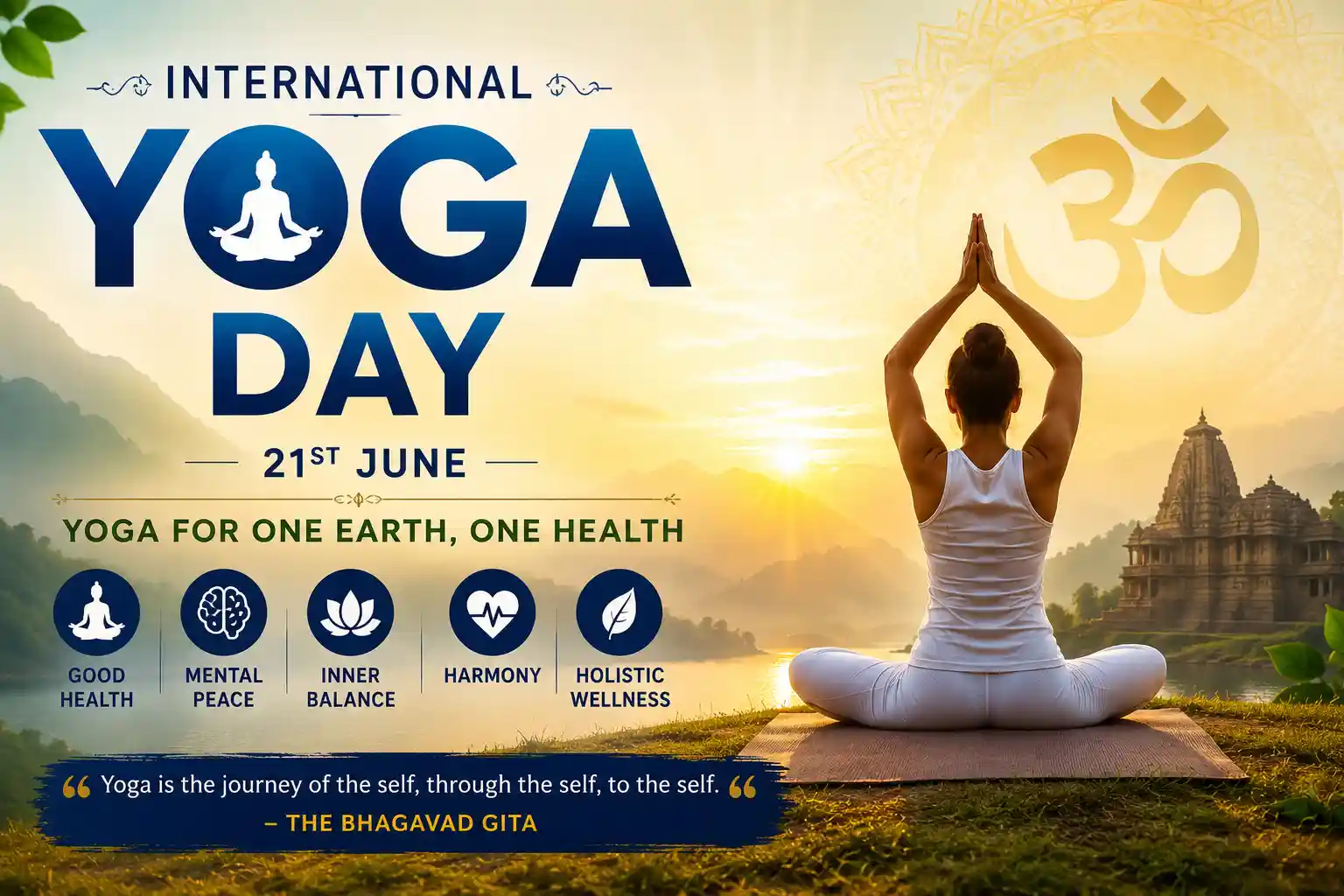
International Yoga Day and Sanatan Dharma Connection
Every year on 21st June, millions of people across the globe roll out their yoga mats and participate in International Yoga Day. From India to America, from Japan to Europe, yoga has become a worldwide symbol of health, balance, and inner peace. However, while many people recognize yoga as a physical exercise, few understand its profound connection with Sanatan Dharma, the eternal spiritual tradition of India.
Yoga is not merely a collection of stretches or breathing techniques. It is an ancient spiritual science that originated within the sacred traditions of Sanatan Dharma thousands of years ago. The sages, rishis, and yogis of ancient India developed yoga as a path to self-realization, divine connection, and liberation from suffering.
The relationship between International Yoga Day and Sanatan Dharma Connection is deeply rooted in India’s spiritual heritage. Understanding this connection allows us to appreciate yoga not only as a wellness practice but also as a sacred journey toward inner awakening.
What is International Yoga Day?
International Yoga Day is celebrated annually on 21 June. The date was chosen because it marks the summer solstice in the Northern Hemisphere, the longest day of the year, which holds special significance in yogic traditions.
The United Nations officially adopted International Yoga Day in 2014, recognizing yoga’s universal benefits for physical, mental, and spiritual well-being.
Since then, the celebration has expanded globally, with millions participating in yoga sessions, meditation programs, wellness workshops, and educational events.
While the world celebrates yoga for health benefits, its roots remain firmly embedded in the timeless teachings of Sanatan Dharma.
Understanding Sanatan Dharma
Before understanding yoga’s connection to Sanatan Dharma, it is important to know what Sanatan Dharma means.
The term “Sanatan Dharma” translates to:
- Sanatan = Eternal
- Dharma = Natural Law, Righteous Duty, Cosmic Order
Sanatan Dharma is often referred to as Hinduism, but it is much more than a religion. It represents a way of life based on universal truths, spiritual wisdom, and harmony with nature.
Its core teachings include:
- Truth (Satya)
- Non-violence (Ahimsa)
- Self-discipline
- Compassion
- Karma
- Meditation
- Self-realization
Yoga emerged from these very principles.
The Origin of Yoga in Sanatan Dharma
The roots of yoga stretch back thousands of years into the sacred Vedic civilization.
Ancient rishis spent years in forests, mountains, and caves performing meditation and spiritual practices. Through deep contemplation, they discovered methods to control the mind, purify the body, and awaken higher consciousness.
The earliest references to yoga can be found in:
- The Vedas
- The Upanishads
- The Bhagavad Gita
- Yoga Sutras of Patanjali
These texts clearly demonstrate that yoga was born as a spiritual discipline within Sanatan Dharma.
The goal was never simply physical fitness.
The true aim was union with the Divine.
Meaning of Yoga According to Sanatan Dharma
The Sanskrit word “Yoga” comes from the root “Yuj,” meaning “to unite.”
In Sanatan Dharma, yoga refers to the union of:
- Individual soul (Atman)
- Universal consciousness (Brahman)
This understanding is far deeper than modern fitness culture.
According to ancient sages:
Yoga is the process of realizing that the divine exists within every being.
Through yoga, one transcends:
- Ego
- Ignorance
- Attachment
- Fear
- Suffering
And ultimately experiences spiritual liberation.
Yoga in the Bhagavad Gita
One of the most important scriptures of Sanatan Dharma, the Bhagavad Gita, contains extensive teachings on yoga.
Lord Krishna explains several forms of yoga to Arjuna.
These include:
Karma Yoga
The path of selfless action.
One performs duties without attachment to results.
Bhakti Yoga
The path of devotion and love toward God.
Jnana Yoga
The path of wisdom and spiritual knowledge.
Dhyana Yoga
The path of meditation and inner concentration.
These yogic paths remain central to Sanatan Dharma even today.
Why Was 21 June Chosen?
The summer solstice holds great significance in yogic traditions.
According to ancient beliefs, after the summer solstice, the first yogi, often referred to as Adiyogi, began transmitting yogic knowledge to his disciples.
Many spiritual traditions regard this period as ideal for inner growth and spiritual practices.
Therefore, June 21 became a symbolic day to honor yoga’s ancient origins.

Lord Shiva: The First Yogi
Within Sanatan Dharma, Lord Shiva is revered as the Adiyogi—the first yogi.
According to tradition:
- Shiva mastered all dimensions of yoga.
- He transmitted this knowledge to the Sapta Rishis.
- The Sapta Rishis spread yogic wisdom throughout the world.
For this reason, many yoga practitioners begin their spiritual journey by honoring Lord Shiva.
His meditative posture symbolizes ultimate inner stillness and enlightenment.
Patanjali and the Systemization of Yoga
The ancient sage Patanjali organized yogic wisdom into a structured framework known as the Yoga Sutras.
He defined yoga as:
“Yoga is the cessation of the fluctuations of the mind.”
Patanjali’s Eight Limbs of Yoga include:
- Yama (Ethical Discipline)
- Niyama (Personal Discipline)
- Asana (Physical Postures)
- Pranayama (Breath Control)
- Pratyahara (Withdrawal of Senses)
- Dharana (Concentration)
- Dhyana (Meditation)
- Samadhi (Spiritual Absorption)
This clearly demonstrates that physical postures are only one part of yoga.
The ultimate objective remains spiritual realization.
Yoga and the Concept of Dharma
Sanatan Dharma teaches that every individual has a purpose and responsibility.
Yoga helps people align with their Dharma by:
- Developing self-awareness
- Improving discipline
- Strengthening character
- Enhancing mental clarity
A person connected with Dharma naturally contributes to society with compassion and integrity.
Thus, yoga becomes a practical tool for living Sanatan values.
Yoga and Meditation in Ancient India
Meditation has always been an essential component of yoga.
Ancient sages practiced meditation to:
- Understand reality
- Experience divine consciousness
- Discover inner peace
Meditation remains one of the greatest gifts Sanatan Dharma has offered humanity.
Today, scientific research continues to confirm its benefits for mental health, emotional stability, and stress reduction.
The Spiritual Benefits of Yoga
Yoga was originally designed for spiritual evolution.
Some spiritual benefits include:
Greater Self-Awareness
Yoga encourages introspection and self-understanding.
Inner Peace
Regular practice calms mental disturbances.
Emotional Balance
Yoga helps individuals manage anger, anxiety, and fear.
Divine Connection
Many practitioners experience deeper spiritual awareness.
Liberation from Ego
Yoga teaches humility and self-transcendence.
These benefits closely align with the teachings of Sanatan Dharma.
The Physical Benefits of Yoga
Modern society often embraces yoga for health reasons.
Benefits include:
- Improved flexibility
- Better posture
- Enhanced immunity
- Stronger muscles
- Better sleep
- Reduced stress
- Improved breathing
- Increased energy levels
These physical benefits serve as a foundation for deeper spiritual practices.
The Global Spread of Yoga
Today yoga is practiced in:
- Schools
- Universities
- Hospitals
- Corporate offices
- Sports centers
- Wellness retreats
Millions benefit from yoga regardless of nationality, race, or religion.
This universal appeal reflects the inclusive nature of Sanatan Dharma itself.
The wisdom of yoga belongs to all humanity.
Common Misconceptions About Yoga
Many people mistakenly believe:
Yoga is Only Exercise
In reality, exercise represents only a small part of yoga.
Yoga is a Religion
Yoga is a spiritual science that can be practiced by anyone.
Yoga Requires Flexibility
Flexibility develops gradually through practice.
Yoga is Only for Adults
People of all ages can benefit from yoga.
Understanding these misconceptions helps preserve yoga’s authentic roots.
How International Yoga Day Honors Sanatan Wisdom
International Yoga Day serves several important purposes:
Preserving Ancient Knowledge
It reminds humanity of yoga’s origins in India’s spiritual traditions.
Promoting Health
It encourages healthy living worldwide.
Encouraging Peace
Yoga promotes harmony within individuals and communities.
Building Global Unity
People from different cultures unite through a shared practice.
In this way, International Yoga Day reflects the universal values of Sanatan Dharma.
Relevance of Yoga in Modern Life
Modern life is often characterized by:
- Stress
- Anxiety
- Depression
- Distractions
- Information overload
Yoga provides solutions that are as relevant today as they were thousands of years ago.
It teaches:
- Mindfulness
- Self-control
- Emotional resilience
- Spiritual balance
These qualities help individuals navigate contemporary challenges more effectively.
What Sanatan Dharma Teaches Through Yoga
The deeper teachings of yoga include:
- The body is a sacred temple.
- The mind can be trained.
- Every soul possesses divine potential.
- Happiness comes from within.
- True freedom is spiritual.
These principles continue to inspire millions around the world.
Celebrating International Yoga Day the Sanatan Way
You can celebrate International Yoga Day by:
Practicing Yoga Asanas
Spend time improving physical and mental well-being.
Meditating
Dedicate a few minutes to silence and self-reflection.
Chanting Mantras
Sacred sounds help focus the mind.
Reading Spiritual Texts
Study the Bhagavad Gita and yogic teachings.
Practicing Compassion
Express yoga through kindness and service.
Connecting with Nature
Sanatan Dharma teaches harmony with the natural world.
Conclusion
The International Yoga Day and Sanatan Dharma Connection reveals a profound truth: yoga is far more than a physical exercise. It is a sacred gift from the ancient sages of Sanatan Dharma, designed to guide humanity toward health, wisdom, peace, and self-realization.
For thousands of years, yoga has helped seekers discover their true nature and connect with the divine presence within. International Yoga Day provides an opportunity to honor this timeless heritage and share its benefits with the world.
As we celebrate yoga on June 21, let us remember its deeper purpose—not merely to strengthen the body, but to awaken the soul. Through yoga, Sanatan Dharma continues to illuminate a path of harmony, compassion, and spiritual growth for all humanity.
“Yoga is not just a practice; it is the journey from the self to the Self.”
FAQs
1. What is the connection between International Yoga Day and Sanatan Dharma?
Yoga originated within Sanatan Dharma and was developed as a spiritual path toward self-realization and divine union.
2. Why is International Yoga Day celebrated on 21 June?
June 21 is the summer solstice and holds special significance in ancient yogic traditions.
3. Who is considered the first yogi in Sanatan Dharma?
Lord Shiva is revered as Adiyogi, the first yogi and source of yogic knowledge.
4. Is yoga only a physical exercise?
No. Yoga includes ethics, breath control, meditation, concentration, and spiritual realization.
5. Which scripture explains yoga in detail?
The Bhagavad Gita and Patanjali’s Yoga Sutras are among the most important texts explaining yoga.
6. How does yoga support spiritual growth?
Yoga helps purify the mind, control emotions, develop self-awareness, and deepen one’s connection with the Divine.