
If you’ve been sensing that this year’s Pitru Paksha carries a heavier weight — or a deeper pull — you’re not imagining it.
Pitru Paksha 2026 is already on the radar of astrologers, priests, and everyday families trying to honor their ancestors the right way. And there are real reasons why this particular year stands out from the rest.
This guide is for anyone who observes Shradh rituals, wants to understand the spiritual significance behind them, or is simply curious about why people around them are taking this year’s 16-day period more seriously than usual.
Here’s what we’re getting into:
- What Pitru Paksha actually means and why the rituals aren’t just tradition for tradition’s sake
- What’s different about 2026 — including the astrological shifts that are making this year’s observance land differently for a lot of people
- How to mark this time in a way that feels meaningful, whether you’re a lifelong observer or doing this for the first time
No fluff, no complicated jargon — just the stuff you actually need to know.
Understanding Pitru Paksha and Its Sacred Significance
The Spiritual Purpose Behind Honoring Ancestors During This Period
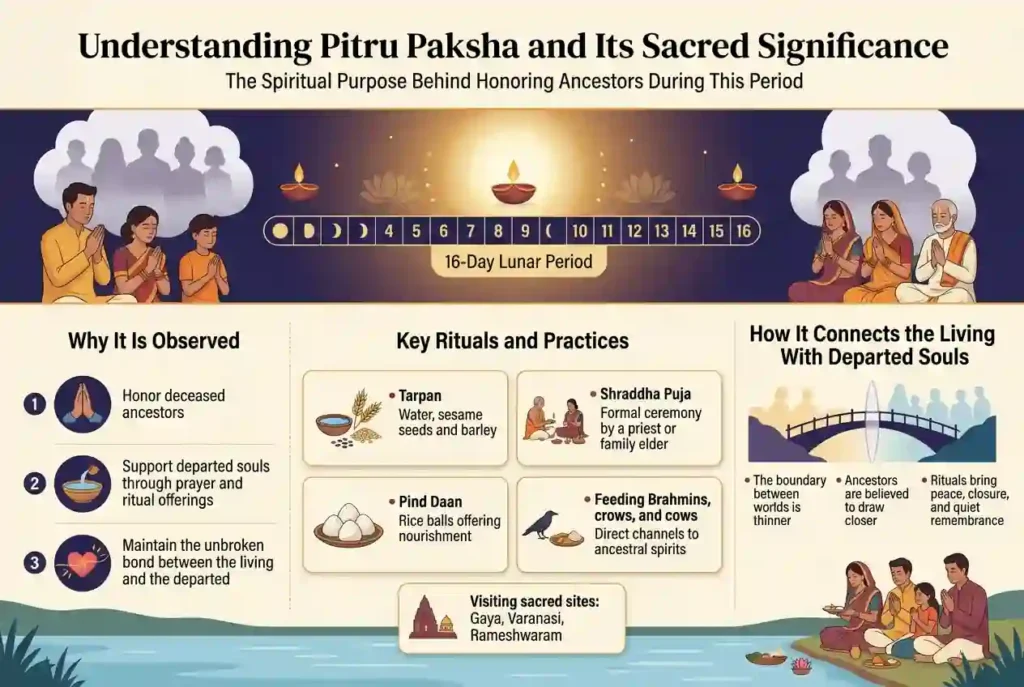
Pitru Paksha is a 16-day lunar period in the Hindu calendar dedicated entirely to honoring deceased ancestors. Rooted in the belief that ancestors exist in a subtle realm between lives, this observance creates a window where the living can actively nourish and support departed souls through prayer and ritual offerings.
The underlying idea is beautifully simple — love doesn’t stop at death. By performing Shraddha rites, families acknowledge an unbroken bond that transcends physical existence.
Key Rituals and Practices Observed by Devotees Worldwide
- Tarpan — offering water mixed with sesame seeds and barley to ancestors
- Shraddha Puja — a formal ceremony performed by a priest or family elder
- Pind Daan — offering rice balls (pinda) representing nourishment for the departed
- Feeding Brahmins, crows, and cows — considered direct channels to ancestral spirits
- Visiting sacred sites like Gaya, Varanasi, or Rameshwaram for amplified merit
How Pitru Paksha Connects the Living With Departed Souls
During this period, the boundary between worlds is considered thinner than usual. Ancestors are believed to draw closer, waiting to receive offerings and blessings. When families perform rituals with genuine intention, they report a deep sense of peace — almost like a conversation without words, a quiet settling of unresolved grief.
What Makes 2026 a Unique Year for Pitru Paksha
Rare Planetary Alignments Amplifying Ancestral Rituals
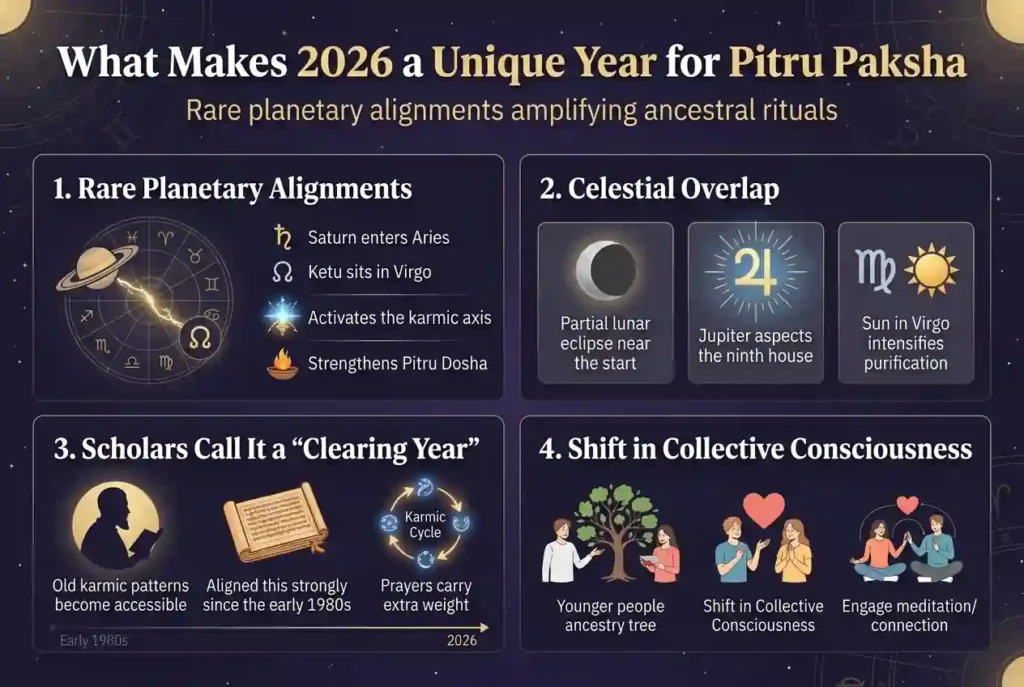
In 2026, Saturn transits into Aries while Ketu sits in Virgo — a combination that directly activates the karmic axis connected to ancestral debts (Pitru Dosha). This strengthens the energetic channel between the living and the departed, making rituals like tarpan and pind daan noticeably more potent.
Significant Overlap With Other Celestial Events
- A partial lunar eclipse falls within days of Pitru Paksha’s start
- Jupiter aspects the ninth house in several rising signs, amplifying blessings received through ancestral worship
- The solar position in Virgo during this period intensifies purification rituals
How Astrologers and Scholars Are Reading This Year
Many Jyotish practitioners describe 2026 as a “clearing year” — old karmic patterns becoming unusually accessible for resolution. Scholars point out that alignments this layered haven’t coincided with Pitru Paksha since the early 1980s. The consensus: prayers offered this year carry extra weight.
The Shift in Collective Consciousness
Something broader is happening culturally. More young people are actively researching ancestral healing, generational trauma, and lineage karma. Pitru Paksha 2026 lands at a moment when people genuinely want to reconnect — making this observance less ritual, more personal reckoning.
Astrological Influences Shaping Pitru Paksha 2026
The Role of Saturn and Its Impact on Karmic Debts This Year
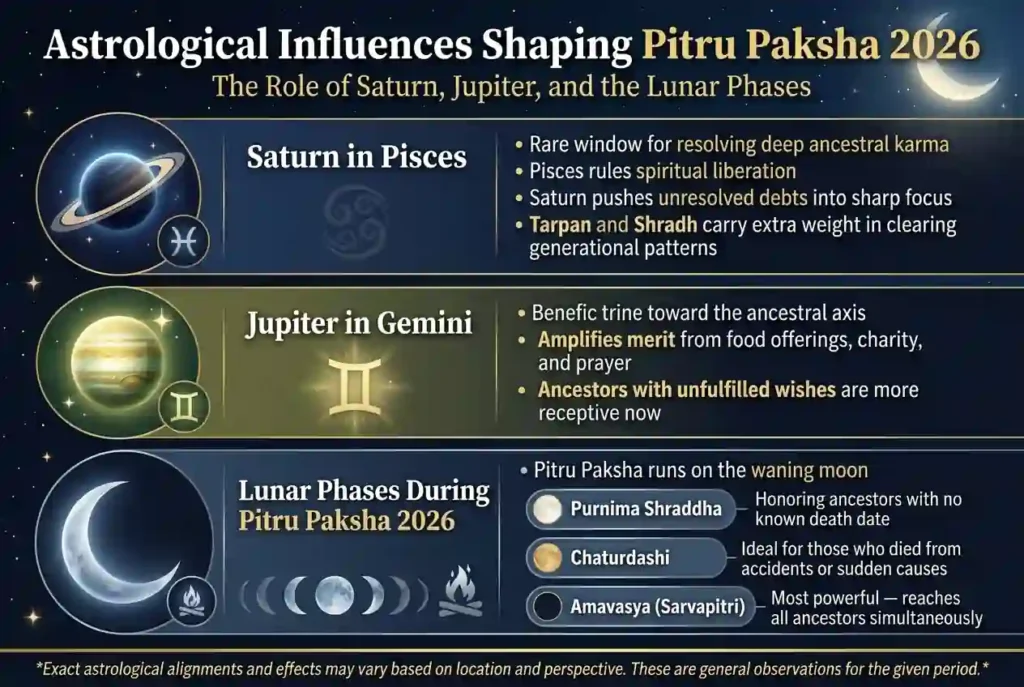
Saturn sits in Pisces during Pitru Paksha 2026, creating a rare window for resolving deep ancestral karma. Pisces rules spiritual liberation, so Saturn here pushes unresolved debts — both personal and inherited — into sharp focus. Tarpan and Shradh performed this year carry extra weight in clearing generational patterns.
Jupiter’s Position and Its Blessings on Ancestral Offerings
Jupiter moves through Gemini, casting a benefic trine toward the ancestral axis in most charts. This placement amplifies the merit generated through food offerings, charity, and prayer. Ancestors who departed with unfulfilled wishes are more receptive to receiving these offerings right now.
How Lunar Phases During Pitru Paksha 2026 Enhance Rituals
Pitru Paksha always runs on the waning moon, but 2026 brings a particularly potent lunar sequence:
| Tithi | Significance |
| Purnima Shraddha | Honoring ancestors with no known death date |
| Chaturdashi | Ideal for those who died from accidents or sudden causes |
| Amavasya (Sarvapitri) | Most powerful — reaches all ancestors simultaneously |
The moon’s slow transit through earth signs during this period grounds rituals energetically, making each offering feel more tangible and connected.
Meaningful Ways to Observe Pitru Paksha 2026
Performing Shraddha and Tarpan Rituals with Greater Intention
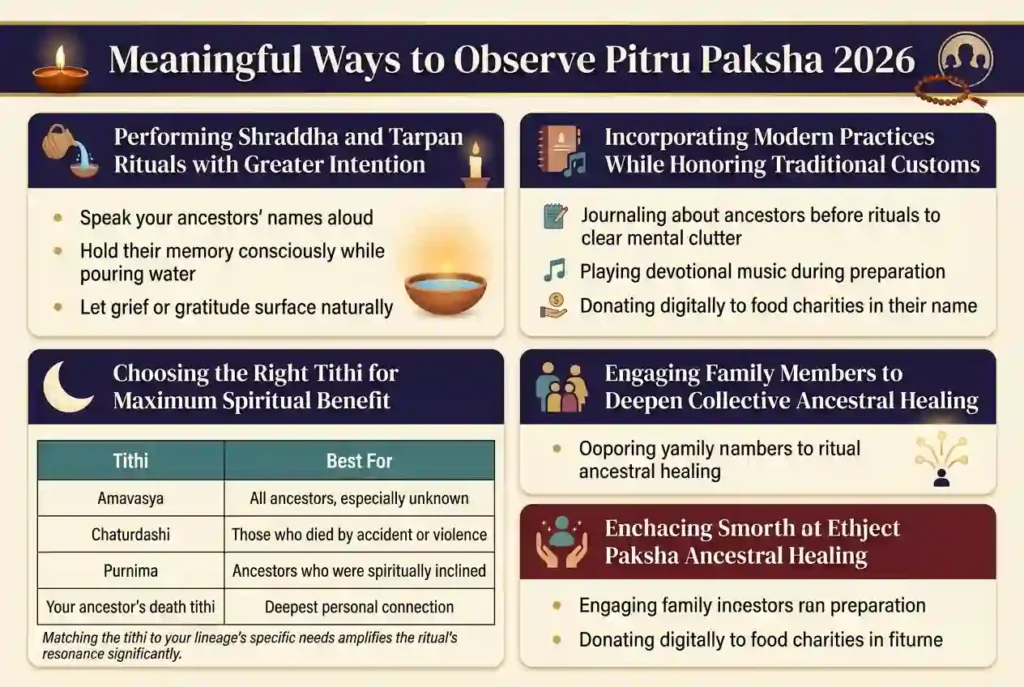
Skip the autopilot approach this year. Bring genuine remembrance into each offering — speak your ancestors’ names aloud, hold their memory consciously while pouring water, and let grief or gratitude surface naturally.
Choosing the Right Tithi for Maximum Spiritual Benefit
| Tithi | Best For |
| Amavasya | All ancestors, especially unknown |
| Chaturdashi | Those who died by accident or violence |
| Purnima | Ancestors who were spiritually inclined |
| Your ancestor’s death tithi | Deepest personal connection |
Matching the tithi to your lineage’s specific needs amplifies the ritual’s resonance significantly.
Incorporating Modern Practices While Honoring Traditional Customs
- Journaling about ancestors before rituals to clear mental clutter
- Playing devotional music during preparation
- Donating digitally to food charities in their name
Engaging Family Members to Deepen Collective Ancestral Healing
Group participation multiplies healing energy. Even distant family members can join virtually, lighting lamps simultaneously and reciting prayers together across time zones.
Sacred Locations That Carry Heightened Power During This Cycle
- Gaya (Bihar) – considered the most potent site for Pitru Paksha offerings
- Varanasi – powerful for tarpan at Pishach Mochan Kund
- Nashik’s Ramkund – especially active during this 2026 cycle due to post-Kumbh spiritual residue
The Emotional and Healing Dimensions of This Year’s Observance
Why More People Are Seeking Ancestral Healing in 2026
Something has shifted. Between global uncertainty, mental health conversations going mainstream, and a collective hunger for meaning, people are tracing their pain back further than their own lifetimes. Ancestral trauma — grief, addiction, broken relationships passed silently through families — is now being recognized as real and worth addressing. Pitru Paksha offers a structured, spiritually grounded way to do exactly that.
Breaking Generational Patterns Through Conscious Ritual Participation
Ritual becomes powerful when you bring awareness to it. When you perform tarpan or Shraddha not out of obligation but with genuine intention to release old family wounds, something shifts internally. You’re not just feeding the departed — you’re consciously choosing not to carry forward their unresolved pain.
Key intentions to hold during rituals:
- Forgiveness — releasing resentments inherited from family stories
- Gratitude — acknowledging the sacrifices made before you arrived
- Release — letting old survival patterns dissolve that no longer serve you
Personal Transformation That Emerges From Honoring Lineage
When you genuinely honor your ancestors, you stop fighting where you came from. That acceptance creates surprising inner freedom. People report feeling lighter, making clearer decisions, and experiencing a deeper sense of belonging — not despite their family history, but because they’ve finally made peace with it.
Pitru Paksha 2026 carries a weight that feels different from years past — a rare blend of astrological shifts, collective emotional readiness, and a deeper cultural yearning to reconnect with those who came before us. From understanding its sacred roots to exploring the unique planetary influences at play this year, it’s clear that this isn’t just another ritual on the calendar. It’s an invitation to pause, reflect, and genuinely honor the ancestors who shaped who we are today.
If there was ever a year to take Pitru Paksha seriously, 2026 is it. Whether you choose to perform the rituals with full devotion or simply sit quietly and remember your loved ones, what matters most is the intention behind it. Let this season be a time of real healing, gratitude, and connection — not just to the past, but to yourself.