
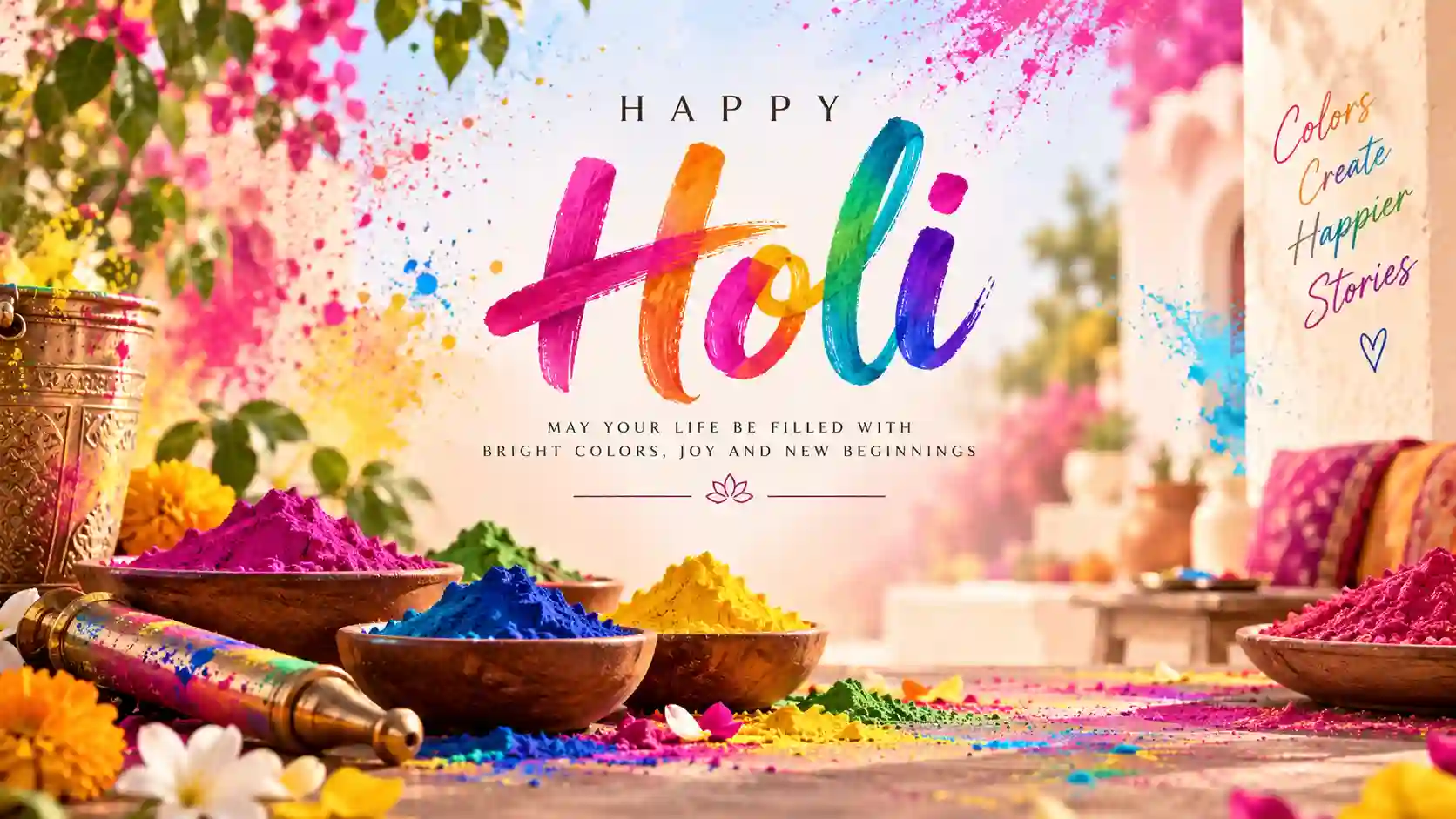
Holi 2026 falls on Tuesday, March 3 (with Holika Dahan on Monday, March 2), and is one of the most joyous and colorful festivals in Hinduism. Known as the Festival of Colors, Holi celebrates the arrival of spring and the victory of devotion over evil, and is marked by bonfires, playing with colored powders, music and sweets across India and among Hindu communities worldwide.
Holi 2026 Date and Tithi
Holika Dahan falls on Phalgun Purnima (Monday, 2 March 2026), and Rangwali Holi — the day of playing with colors — falls the next day on Chaitra Krishna Pratipada (Tuesday, 3 March 2026).
Significance of Holi
Holi’s origins lie in the legend of Prahlad, Hiranyakashyap and Holika. The demon king Hiranyakashyap demanded he be worshipped as god, but his own son Prahlad remained devoted to Lord Vishnu. When the king’s sister Holika, who was blessed with immunity to fire, tried to burn Prahlad by carrying him into a bonfire, her boon failed and she was consumed by the flames while Prahlad emerged unharmed through his faith. This story is remembered every year through the ritual of Holika Dahan, the bonfire lit on the eve of Holi, symbolizing the victory of devotion and righteousness over pride and evil.
The following day, known as Rangwali Holi or Dhulandi, is celebrated by playing with colored powders (gulal) and water, erasing social distinctions for a day as people of all backgrounds come together in celebration. Holi is also deeply tied to the love story of Radha and Krishna, especially in the Braj region (Mathura, Vrindavan, Barsana and Nandgaon), where the festival is celebrated for several days with traditions like Lathmar Holi and Phoolon Wali Holi. Agriculturally, Holi also marks the arrival of spring and the harvesting of the winter crop, making it both a spiritual and seasonal celebration of renewal.
Holi Puja Vidhi (Rituals)
Holika Dahan, the evening before Holi, is traditionally observed as follows:
- Choose the site and gather wood – A pyre of wood, dried leaves and cow dung cakes is prepared at a chosen public spot a few days in advance.
- Perform Holika Puja – Offer raw cotton thread, turmeric, unbroken moong dal, water, kumkum, flowers, and a sweet like gujiya or coconut to the pyre before lighting it.
- Light the bonfire – The pyre is lit at an auspicious time (Bhadra-rahit Pradosh Kaal), and people walk around it (parikrama) praying for the removal of negativity.
- Roast grains – Fresh wheat or gram stalks are sometimes roasted in the fire and shared as prasad.
Rangwali Holi, the next morning, is celebrated with:
- Applying colors – Family and friends greet each other by applying dry colors (gulal) and playing with colored water, often using pichkaris (water guns).
- Visiting elders – Younger family members touch the feet of elders and seek blessings before the color play begins.
- Singing and dancing – Traditional Holi songs (Phaag), dhol beats and dance are part of the community celebration, especially in the Braj region.
- Sharing festive food – Special dishes such as gujiya, mathri, dahi bhalla and the drink thandai are prepared and shared among family and neighbors.
- Bathing and reunion – The day ends with everyone bathing to wash off the colors, followed by visiting family and friends dressed in fresh clothes to exchange sweets and greetings.
Regional Celebrations of Holi
Holi is celebrated across India, with especially elaborate traditions in Mathura, Vrindavan, Barsana and Nandgaon (the Braj region), and in West Bengal as Dol Jatra/Basanta Utsav; it is also observed by Hindu communities worldwide.
Frequently Asked Questions About Holi
When is Holi in 2026?
Holika Dahan falls on Monday, 2 March 2026, and Rangwali Holi (playing with colors) falls on Tuesday, 3 March 2026.
What is the significance of Holi?
Holi celebrates the arrival of spring and the victory of devotion over evil, commemorated through the burning of Holika and a joyous day of playing with colors, closely linked to the divine love of Radha and Krishna.
Where is Holi celebrated?
Holi is celebrated across India, with the most elaborate traditions in the Braj region (Mathura, Vrindavan, Barsana and Nandgaon) and as Dol Jatra in West Bengal; it is also observed by Hindu communities worldwide.
Holi is part of the same festive calendar as Janamashtami and Maha Shivratri. Explore more Hindu festival dates and rituals on Mythology Mantra. Dates are cross-checked with DrikPanchang.