
The River That Flows Through Time
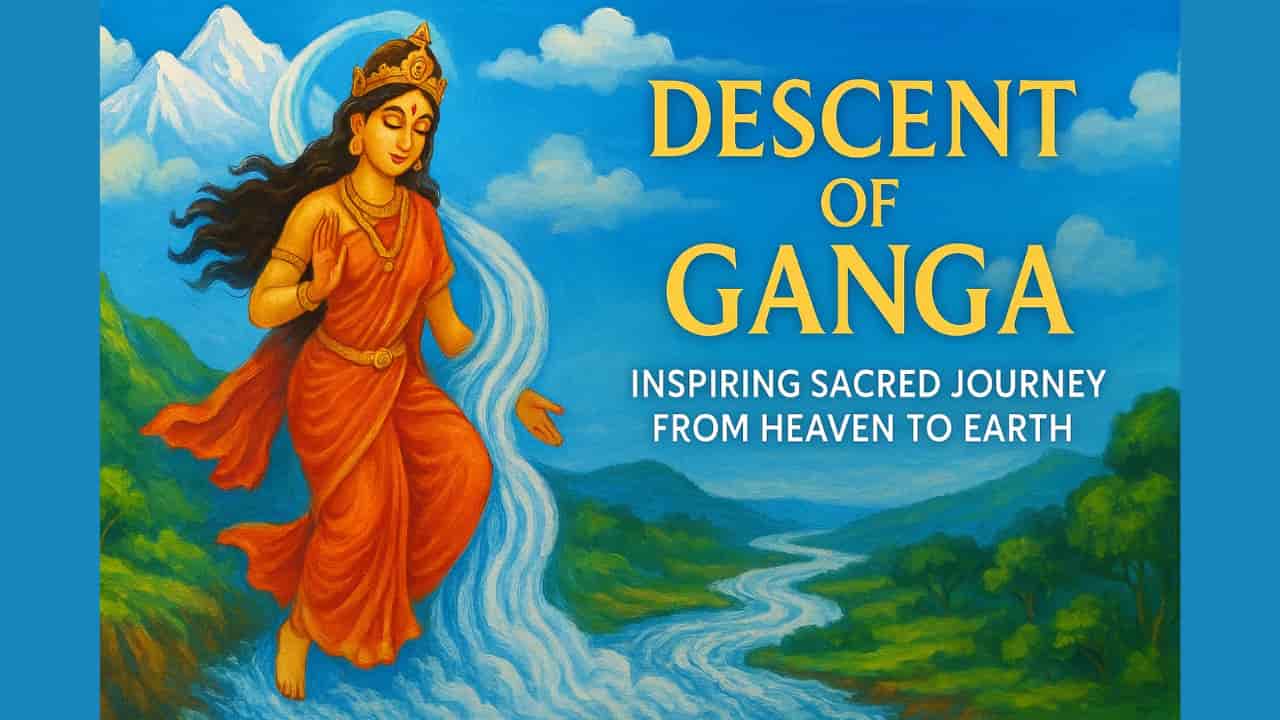
The Ganga is not just a river in India; it is a goddess, a mother, a purifier, and a symbol of spiritual liberation. Her descent from the heavens to the earth is one of the most revered and poetic stories in Hindu mythology.
This tale is not only about divine intervention but also about human perseverance, cosmic balance, and the sacred relationship between nature and spirituality. Her journey from the celestial realms to the earthly plains continues to inspire devotion, art, and ecological awareness.
Bhagiratha's Penance: A King’s Sacred Duty
The story begins with King Bhagiratha, a descendant of the solar dynasty. His ancestors had been cursed by Sage Kapila and reduced to ashes. Their souls wandered restlessly, unable to attain moksha (liberation).
Bhagiratha vowed to bring the celestial river Ganga to earth so her waters could purify their souls. He renounced royal comforts and performed severe penance for thousands of years, praying to Lord Brahma to release Ganga from the heavens.
Reluctance and Divine Power
Brahma was pleased with Bhagiratha’s devotion and agreed to send Ganga to earth. But he warned that her descent would be so powerful it could shatter the planet. She, proud of her strength, agreed to descend but with a playful arrogance.
Bhagiratha then turned to Lord Shiva, the cosmic mediator, and requested him to absorb the force of Ganga’s fall. Shiva consented and stood atop Mount Kailash, ready to receive her.
Shiva's Intervention: Containing the Torrent
When Ganga descended, she did so with immense force, intending to sweep away everything in her path. Shiva caught her in his matted locks, trapping her wild energy.
He gently released her in streams, allowing her to flow peacefully across the earth. This act of containment symbolizes the need for balance between power and grace, between nature’s fury and divine control.
The Journey Across the Earth
Bhagiratha led her across mountains, forests, and plains. Her waters carved valleys and nourished lands. Eventually, they reached the spot where his ancestors’ ashes lay.
As Ganga’s waters touched the ashes, the souls were liberated.
Bhagiratha’s mission was fulfilled, and Ganga became a permanent presence on earth, flowing from the Himalayas to the Bay of Bengal.
Symbolism of Ganga’s Descent
The descent is rich in metaphor and meaning:
- Bhagiratha’s penance – the power of persistence and selfless duty
- Shiva’s intervention – the importance of restraint and balance
- The flow – the journey of purification, grace, and transformation
Her story teaches that even divine blessings require humility, effort, and guidance.
Rituals and Worship
Ganga is worshipped daily by millions. Her waters are considered sacred and are used in:
- Religious ceremonies – from weddings to temple rituals
- Funeral rites – to aid the soul’s journey to liberation
- Festivals – such as Ganga Dussehra, Makar Sankranti, and Kartik Purnima
- Daily ablutions – for spiritual cleansing and renewal
Devotees believe that bathing in the Ganga washes away sins and brings spiritual merit. Her water is often stored in homes and temples for sacred use.
Temples and Sacred Sites Along the Sacred River
The river flows through some of India’s most sacred cities:
- Gangotri – the mythological source of the river in the Himalayas
- Haridwar – where the river enters the plains and pilgrims gather
- Varanasi – the city of moksha, where death meets liberation
- Prayagraj (Allahabad) – the confluence of Ganga, Yamuna, and Saraswati, and site of the Kumbh Mela
Each city has its own rituals, legends, and spiritual significance tied to the river.
In Art, Literature, and Music
Ganga has inspired countless works of art and literature. She appears in:
- Vedic hymns and Puranic stories
- Classical music and devotional songs
- Miniature paintings and temple carvings
- Modern poetry, novels, and films
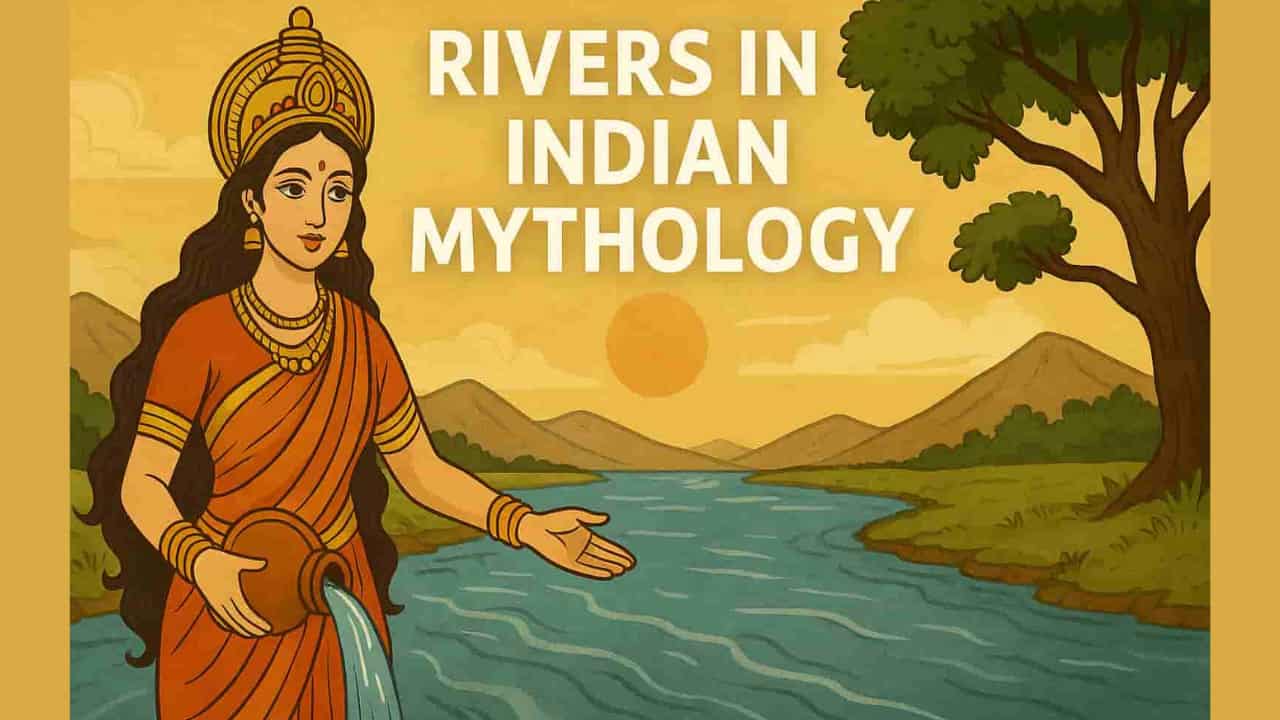
Artists often depict her as a graceful goddess riding a crocodile, holding a water pot and a lotus. Her image is both divine and maternal, nurturing, cleansing, and protective.
The Ecological Importance
Beyond mythology, the Ganga is a vital ecological resource. She supports:
- Agriculture – irrigating vast stretches of farmland
- Drinking water – for millions of people
- Biodiversity – sustaining fish, birds, and aquatic life
- Livelihoods – for fishermen, farmers, and boatmen
However, industrial pollution, untreated sewage, and plastic waste have severely impacted her health. The river that once symbolized purity now faces an ecological crisis.
Namami Gange: A Modern Revival Effort

Recognizing the need to restore Ganga’s sanctity, the Indian government launched the Namami Gange mission. This initiative focuses on:
- Sewage treatment and waste management
- Riverfront development and afforestation
- Public awareness and community participation
- Monitoring water quality and biodiversity
While progress has been made, the challenge remains immense. Her revival requires not just policy but public devotion and ecological responsibility.
Ganga and the Cycle of Life and Death
Ganga is deeply tied to the Hindu understanding of life and death. Her waters are used in last rites, and ashes are immersed in her flow to aid the soul’s journey to liberation.
She represents the cycle of birth, death, and rebirth. Her constant movement mirrors the impermanence of life and the eternal nature of the soul.
- To die in Varanasi and be cremated on the banks of the Ganga is considered the ultimate liberation.
Spiritual Lessons from Ganga’s Descent
Ganga’s story offers timeless wisdom:
- Persistence leads to grace – Bhagiratha’s penance shows the power of dedication
- Divine help comes with responsibility – Shiva’s role teaches restraint
- Purity is a journey – Ganga’s flow reflects inner transformation
- Nature and spirituality are intertwined – her presence bridges the physical and the divine
She teaches that true cleansing is not just external, but internal, emotional, and spiritual.
Ganga in Modern India: A Living Legacy
In modern India, Ganga remains central to identity and spirituality. She is invoked in prayers, featured in national symbols, and protected by law.
Yet, she also faces modern challenges, urbanization, climate change, and neglect. Her story urges us to reconnect with nature, not just through worship, but through action. Clean rivers are not just sacred, they are essential.
Cultural Continuity and Global Reverence
Ganga’s descent is not just a myth; it is a living tradition. From ancient scriptures to contemporary activism, her presence continues to inspire.
She is a bridge between past and present, between heaven and earth. Her legacy is carried not just in water, but in memory, ritual, and reverence.
Even outside India, she is respected in Buddhist and Jain traditions, and her symbolism appears in Southeast Asian art and architecture.
The River That Liberates
Ganga is more than water; she is memory, movement, and meaning. Her descent from heaven to earth is a story of devotion, divine grace, and the eternal flow of life.
In every ripple of her flow, there is a whisper of ancient wisdom. She connects generations, cultures, and consciousness. Whether in myth or in reality, Ganga continues to nourish, cleanse, and inspire.
To stand by her banks is to stand in the presence of grace. And to follow her journey is to understand that true liberation flows not from escape, but from immersion in truth, devotion, and the rhythm of life itself. Ganga is not just a river. She is a teacher, a healer, and a timeless reminder that the sacred is always flowing, if only we choose to step in.