
Villain or a Misunderstood Genius?
Ravana is often remembered as the ten-headed demon king of Lanka and the villain of the Ramayana. But his story is far more layered than a simple battle between good and evil. He was a brilliant scholar, a devout follower of Lord Shiva, a capable ruler, and a tragic figure whose downfall was shaped by pride and desire.
His life offers a rich narrative filled with complexity, contradiction, and consequence. His character continues to fascinate readers, scholars, and spiritual seekers, not just for his role in the epic but for the moral and philosophical questions he raises.
Born of Wisdom and Power
The demon princess Kaikesi and the sage Vishrava were the parents of Ravana. His father was a Brahmin known for his wisdom, while his mother came from the Rakshasa clan, known for strength and ambition.
This dual heritage shaped Ravana’s personality; he inherited intellect and discipline from his father, and aggression and ambition from his mother.
From a young age, he displayed extraordinary talent in learning, warfare, and spiritual practices. His upbringing was steeped in both ascetic discipline and royal ambition, making him a unique blend of sage and sovereign. He was not just physically strong but also mentally sharp, mastering sacred texts and complex philosophies.
Devotion to Lord Shiva
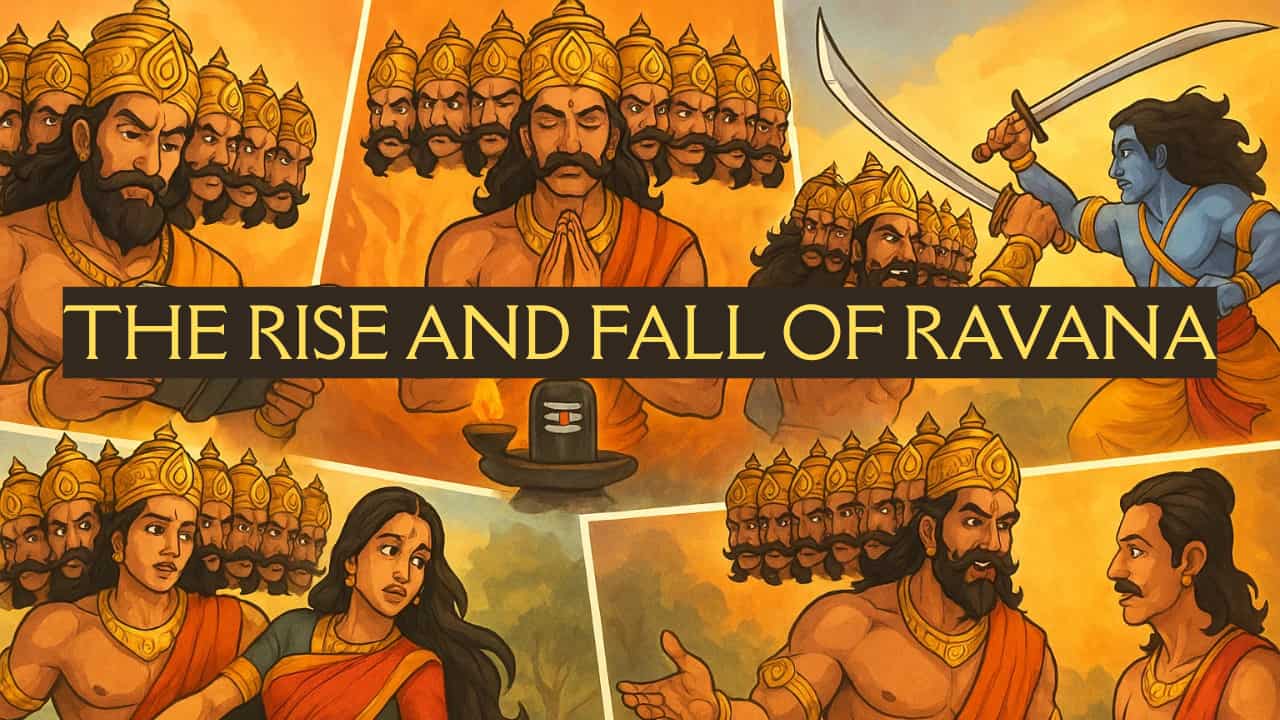
Ravana’s devotion to Lord Shiva was intense and legendary. In one of the most famous stories, he offered each of his ten heads to Shiva during a ritual. Pleased by his sacrifice, Shiva granted him immense power and boons.
This act earned him the name “Dashanana,” meaning “ten-headed one.”
His ten heads are symbolic of his vast knowledge and mastery over scriptures, but also of his internal struggles, ego, anger, desire, and pride. He also composed the Shiva Tandava Stotram, a hymn that reflects his deep spiritual connection and poetic brilliance.
The Golden Kingdom of Lanka
Ravana ruled Lanka, a city described in the Ramayana as golden and prosperous. Under his leadership, Lanka flourished. He was a visionary ruler who built strong infrastructure, promoted the arts, and maintained law and order.
His administration was efficient, and his people lived in comfort. He respected scholars, encouraged learning, and ensured justice. His court included wise ministers and powerful warriors, such as his brother Kumbhakarna and son Indrajit. The city of Lanka was said to be technologically advanced, with flying machines and fortified palaces.
Scholar, Musician, and Mystic
Ravana was not just a warrior and ruler; he was also a scholar and a musician. He authored several works, including the Ravana Samhita, a treatise on astrology. He is credited with inventing the Ravanahatha, a bowed string instrument still used in parts of India today.
His musical compositions and hymns, especially the Shiva Tandava Stotram, reflect his deep spiritual connection and poetic talent. His intellectual pursuits ranged from metaphysics to medicine, and his contributions to classical music and literature are still studied in some traditions. Ravana’s knowledge was vast, and he was considered one of the most learned beings of his time.
The Abduction of Sita
The turning point in Ravana’s story came with the abduction of Sita, the wife of Lord Rama. This act was driven by ego and a desire for revenge. His sister, Shurpanakha, had been insulted by Rama and Lakshmana, and Ravana sought to retaliate by kidnapping Sita.
Despite his power and wisdom, this decision was impulsive and reckless. His brother Vibhishana warned him against it, urging him to return Sita and avoid war. But Ravana, blinded by desire and arrogance, refused to listen.
This act not only triggered a war but also revealed the tragic flaw in his character, his inability to distinguish between personal vendetta and moral responsibility.
The Epic War with Rama
Rama, with the help of Hanuman, Sugriva, and an army of vanaras (monkey warriors), marched to Lanka to rescue Sita. The battle was fierce and dramatic. Ravana fought valiantly, displaying strategic brilliance and unmatched courage.
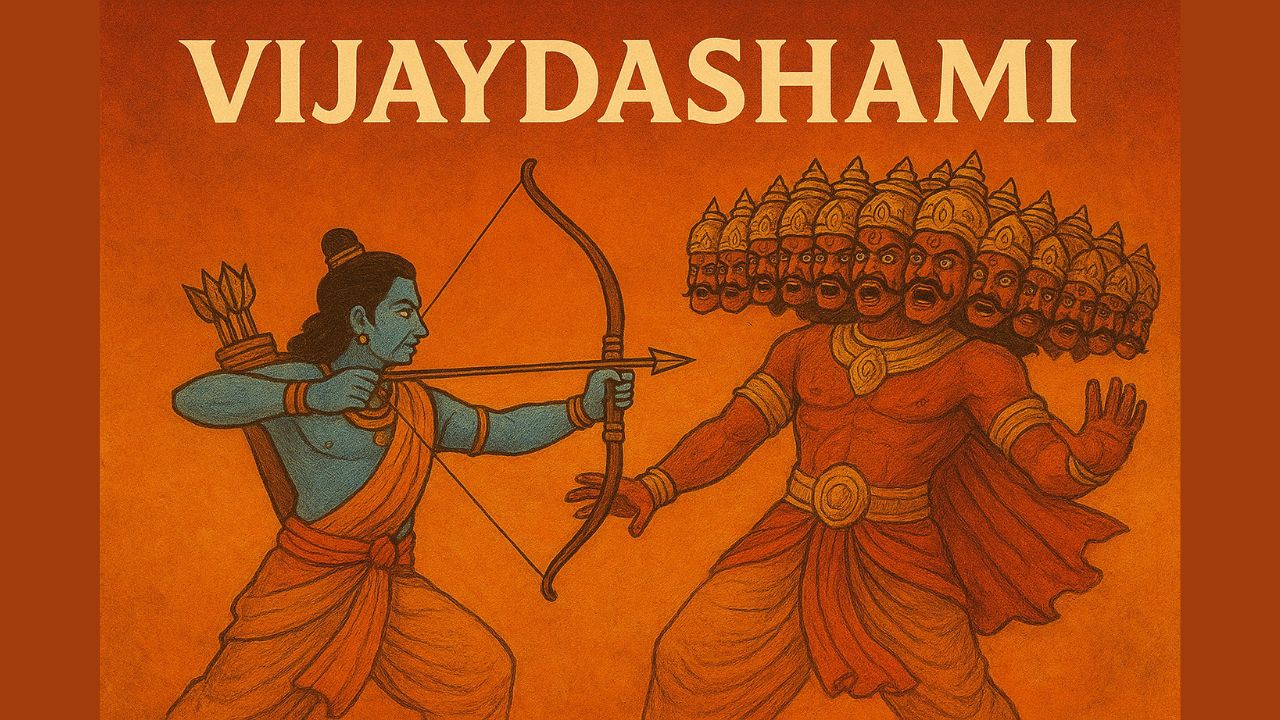
His son Indrajit used illusion and sorcery to challenge Rama’s forces, and Kumbhakarna’s strength was legendary. Yet, despite their efforts, his army was defeated. In the final battle, Rama killed Ravana with a divine arrow, symbolizing the triumph of dharma (righteousness) over adharma (unrighteousness). The war also serves as a metaphor for the inner battle between wisdom and ego.
Wisdom in Death
His death was not one of disgrace. Rama, recognizing Ravana’s greatness, instructed Lakshmana to learn from the dying king. Ravana, even in his final moments, shared wisdom about governance and life. He emphasized the importance of timely action, humility, and listening to wise counsel.
This gesture by Rama highlights the nuanced portrayal of Ravana in the Ramayana. He was not a monster to be hated, but a powerful figure whose flaws led to his fall. His final teachings are often cited in discussions of leadership and management.
The Symbolism of Ten Heads
Ravana’s ten heads are rich in symbolism. They represent his mastery over the six shastras and four Vedas. They also reflect his multifaceted personality, intellect, creativity, ambition, and emotion. At the same time, they symbolize his internal conflicts.
Ravana’s story teaches that knowledge and power must be balanced with humility and self-control. Without this balance, even the greatest can fall. The heads also serve as a reminder that human nature is complex, and greatness often comes with inner turmoil.
Legacy Across Cultures
Ravana’s legacy is complex.
- In many parts of India, his effigies are burned during Dussehra to symbolize the victory of good over evil.
- But in other regions, especially in South India and Sri Lanka, Ravana is seen in a more positive light.
Some communities revere him as a hero, a symbol of resistance, and a misunderstood genius. His story is retold with variations that emphasize his virtues rather than his vices.
Modern interpretations often explore his psychological depth, portraying him as a tragic hero, a man of immense potential undone by his inability to control his desires.
Lessons from Ravana’s Life
Ravana’s life offers many lessons. He shows that brilliance and devotion can coexist with pride and downfall. His story is a cautionary tale about the dangers of unchecked ambition and the importance of listening to wise counsel. It also reminds us that even those who fall can teach us valuable lessons.
Ravana’s character challenges the binary of hero and villain, inviting readers to look deeper into the motivations and emotions that drive human behavior. His life encourages introspection and the pursuit of balance between intellect and humility.
A Complex Legacy
Ravana’s tale is one of brilliance, devotion, pride, and tragedy. He was a king who built a golden city, a scholar who mastered sacred texts, a devotee who worshipped with intensity, and a warrior who fought with valor. His inability to control his desires and listen to reason led to his downfall.
Ravana’s life is a mirror that reflects the complexity of human nature. He is not just a villain in a story; he is a reminder of the choices that shape our destiny and the balance needed between power and humility.
His story continues to resonate, offering insights into leadership, spirituality, and the eternal struggle between ego and wisdom.
Vijayadashami: The Triumph of Good over Evil and Its Modern Relevance