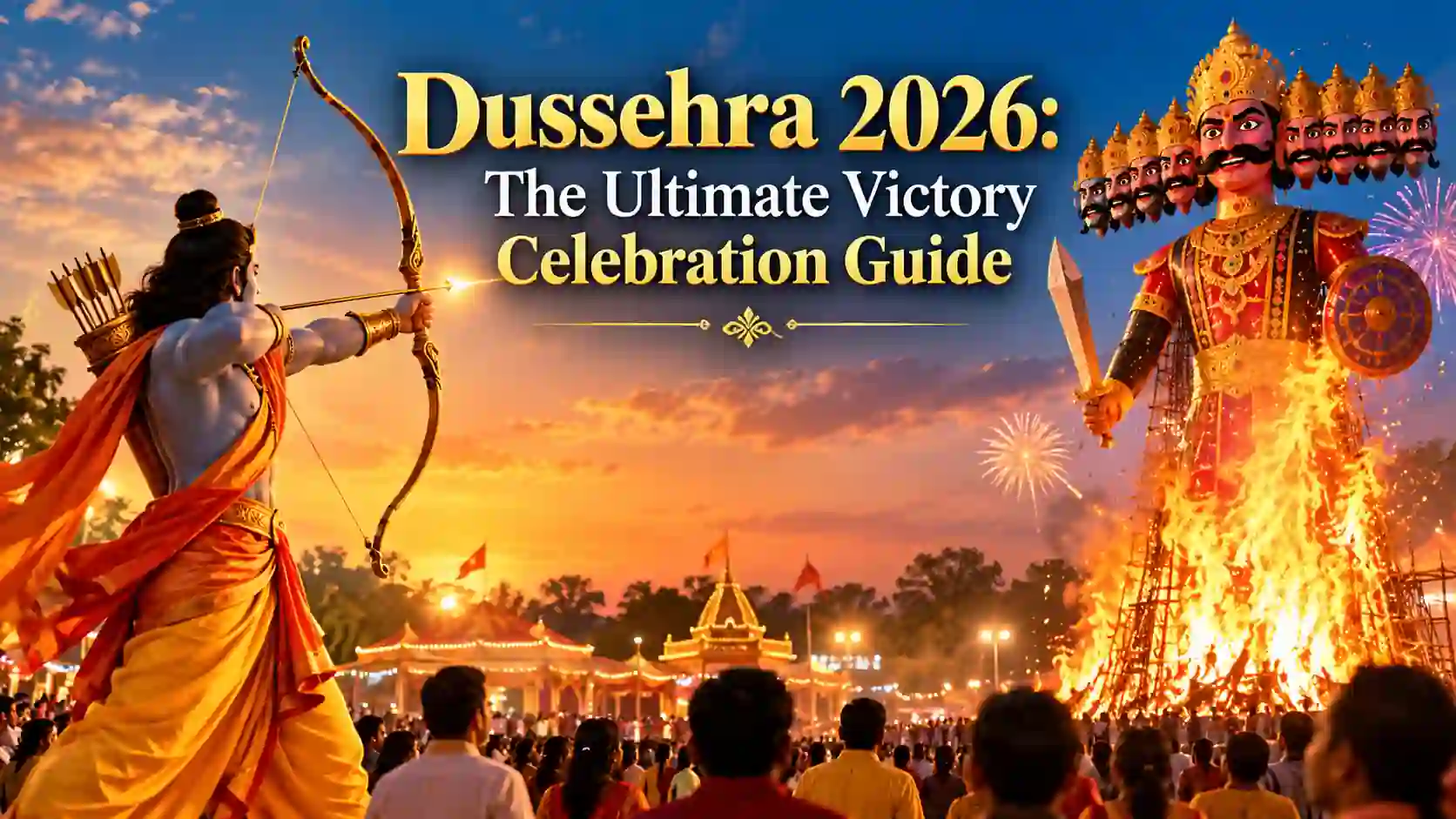

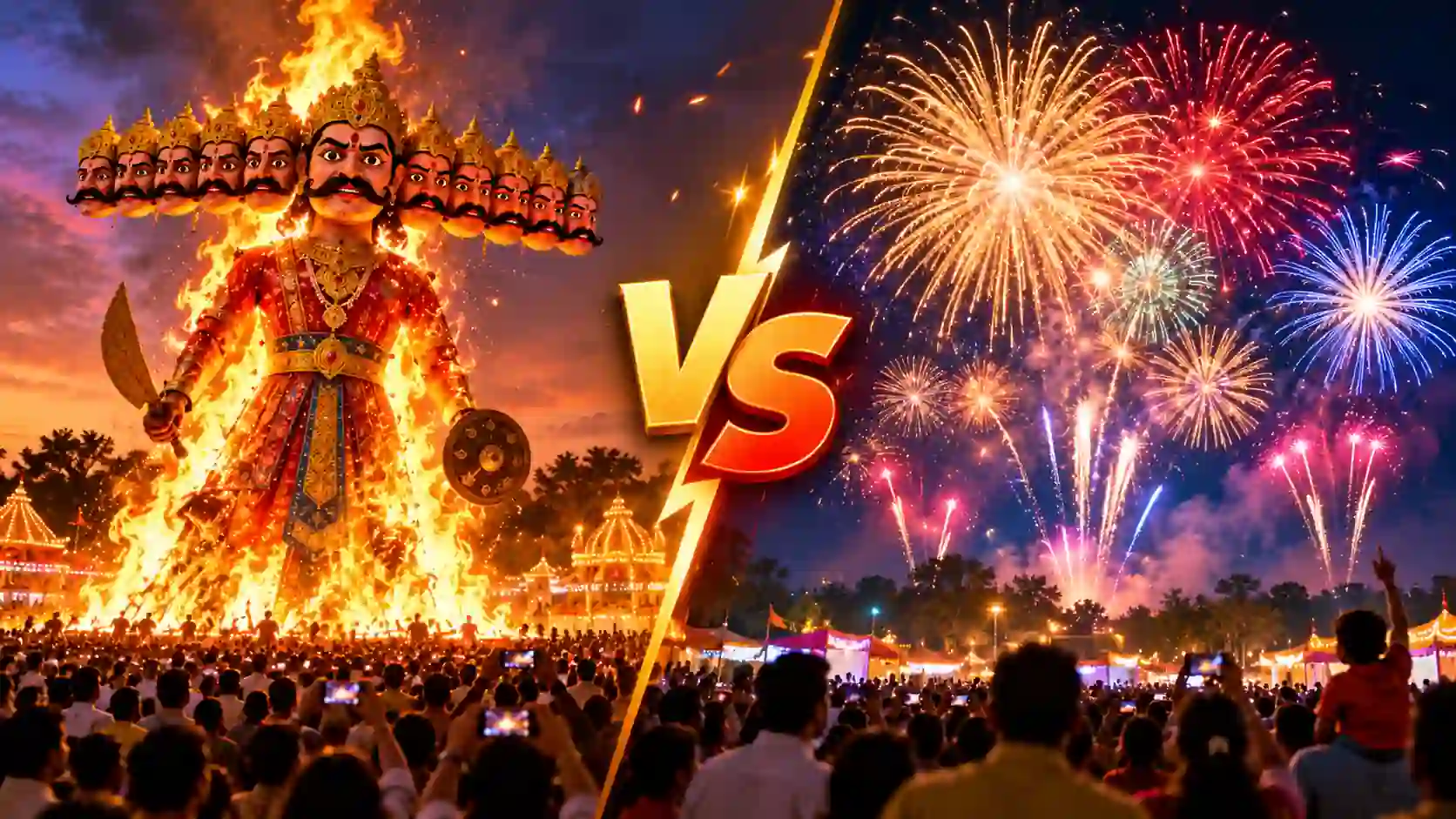
For most people in North India, Ravan Dahan is Dussehra: a towering effigy of Ravana, flanked by Kumbhakarna and Meghnad, set alight at dusk in a roar of crackers. But the effigy and the fireworks are two different things, with different meanings and very different costs. On Tuesday, 20 October 2026, as grounds across the country prepare for the evening, it’s worth asking which of the two actually carries the festival. The short answer: the effigy wins. The fireworks are optional, and increasingly, many communities are choosing fewer of them.
Why the Effigy Matters
Burning Ravana’s image is the climax of Ramlila, the staged retelling of the Ramayana that runs through Navratri. It brings the story to a visible conclusion: the arrow strikes, the figure falls, the crowd cheers. The effigy is also a symbol people can read for themselves. A popular interpretation sees Ravana’s ten heads as human failings such as pride, anger and greed, so the burning becomes a public promise to let go of them. That is why even a small effigy in a colony park can feel meaningful.
The effigies themselves are folk art. Made of bamboo, paper, cloth and paste, they are built by craftspeople, many working in clusters such as Titarpur in West Delhi, widely known for its Ravana-making workshops. Each Dussehra keeps those skills, and livelihoods, alive.
Where Fireworks Came In
Firecrackers packed inside the effigies add drama, but they aren’t part of any scripture or ritual requirement. They are a modern spectacle layered onto an older tradition. That distinction matters, because it is the fireworks rather than the effigy that bring most of the downsides:
- Air quality. In late October, many North Indian cities already struggle with poor air quality. Crackers add smoke and fine particles at exactly the wrong time.
- Noise. Large bursts are hard on young children, the elderly, people with heart or breathing conditions, and animals.
- Safety. Stray sparks and crowd surges cause injuries every year.
- Rules. Several states and cities restrict firecrackers or allow only “green crackers” during the festive season. The rules change from year to year, so organisers should check current local orders.
Greener Ways to Hold a Ravan Dahan
Communities that want to keep the drama without the downsides have a few options:
- Use smaller effigies made only of bamboo, paper and natural fibres, avoiding plastic, foam and synthetic cloth that release toxic smoke.
- Fill effigies with fewer crackers, or with permitted green crackers only.
- Pair the burning with music, a light show or the final Ramlila scene, so the emotional climax doesn’t depend on explosions.
- Hold one shared neighbourhood Ravan Dahan instead of many small ones, with a fire extinguisher and a clear safety perimeter.
Not Everyone Burns Ravana
It’s worth remembering that Ravan Dahan is one regional form of Dussehra. In Mysuru, the day is marked by the Jamboo Savari procession; in Kullu, by the gathering of village deities; in Bengal, by Durga visarjan; in Kerala, by Vidyarambham. Some communities even honour Ravana, remembering him as a learned devotee of Shiva. Our article on why Ravana was both a villain and a devotee explores that view, and why Dussehra is not just about burning Ravana looks at the wider festival.
The Verdict
The effigy carries the meaning of Ravan Dahan: the end of the story, the defeat of pride, a community gathered to watch. Fireworks add volume, not meaning. If your celebration has to choose, keep the effigy and scale back the crackers. Nothing about the festival’s significance is lost.
Frequently Asked Questions
What time is Ravan Dahan on Dussehra 2026?
Ravan Dahan is usually held after sunset on Tuesday, 20 October 2026. Exact timings depend on the local Ramlila committee.
Are fireworks part of the Dussehra ritual?
No. Fireworks are a modern addition to the effigy-burning, not a religious requirement.
Why are three effigies burned on Dussehra?
The effigies usually represent Ravana, his brother Kumbhakarna and his son Meghnad (Indrajit), the three great warriors of Lanka defeated in the Ramayana war.
How can I celebrate an eco-friendly Dussehra?
Choose effigies made of natural materials, avoid or limit crackers, attend a shared community event, and focus on the puja, Shami leaf exchange and family rituals. See 7 Dussehra traditions you’re probably skipping.
Keep the Story, Lower the Smoke
Dussehra has always adapted, from royal processions to neighbourhood Ramlilas. A quieter Ravan Dahan is just the next adaptation. For dates, muhurat and the full story of the day, read our Dussehra 2026 guide.