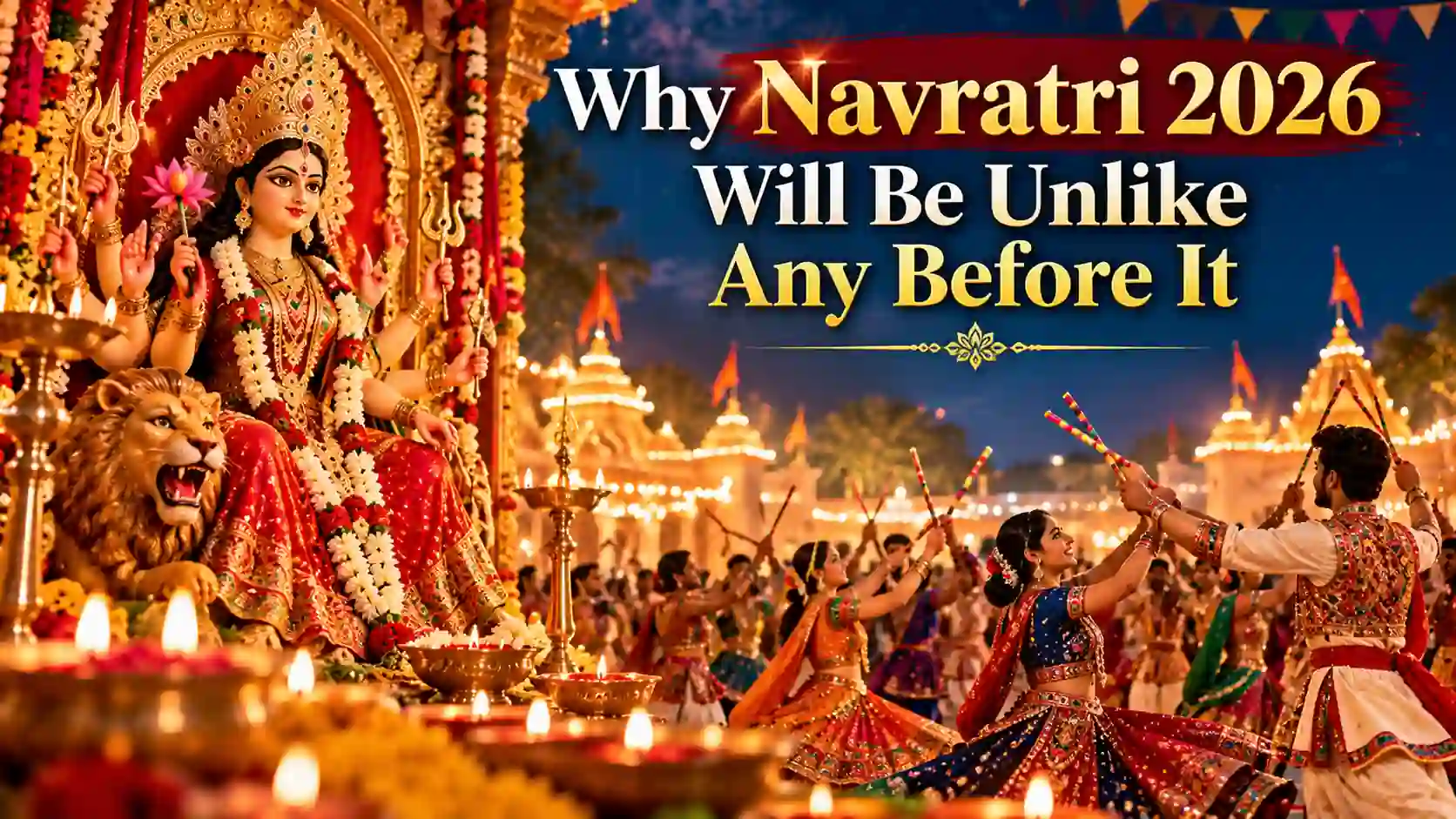

Dussehra 2026 falls on Tuesday, 20 October. Also called Vijayadashami, “the victorious tenth”, it comes on the tenth day of the bright fortnight of Ashwin, right after the nine nights of Navratri. For New Delhi, the Vijay Muhurat is about 2:00 PM to 2:46 PM and the Aparahna Puja window about 1:14 PM to 3:32 PM (IST). The day marks two victories central to Hindu tradition, Rama’s over Ravana and the Goddess Durga’s over Mahishasura, and it’s celebrated with Ravan Dahan, Shami puja, Ayudha puja, Durga visarjan and much more.
Dussehra 2026 Date and Muhurat
| Dussehra / Vijayadashami | Tuesday, 20 October 2026 |
| Dashami tithi begins | About 12:50 PM, 20 October (IST) |
| Dashami tithi ends | About 2:11 PM, 21 October (IST) |
| Vijay Muhurat (New Delhi) | About 2:00 PM – 2:46 PM |
| Aparahna Puja (New Delhi) | About 1:14 PM – 3:32 PM |
Why the afternoon? Panchang makers decide the date of Dussehra by checking whether Dashami tithi is present during Aparahna, the afternoon portion of the day. In 2026, Dashami begins around midday on 20 October and covers that afternoon window, which is why the festival falls on Tuesday even though the tithi technically starts after sunrise. Times above are for New Delhi; check a local panchang such as DrikPanchang for your city.
Two Victories, One Day
Rama’s victory over Ravana
Across most of North and Central India, Dussehra is remembered as the day Rama defeated Ravana, the king of Lanka, after a long war to rescue Sita. The Ramayana tells the story of the war; the association of the victory with the Dashami of Ashwin comes through later tradition and the Ramlila performances that build up to it over the nine nights of Navratri. Ravana is often remembered as a scholar and devotee of Shiva whose pride brought him down, a complexity explored in our article on why Ravana was both a villain and a devotee.
Durga’s victory over Mahishasura
In eastern India and in Shakta traditions more broadly, Vijayadashami completes the Goddess’s victory over Mahishasura described in the Devi Mahatmya, the text recited through Navratri. In West Bengal, Odisha, Assam and Tripura, the day is marked by Durga visarjan, the immersion of the Goddess’s image after the four days of Durga Puja. For the nine nights that lead here, see our Navratri 2026 celebration guide.
Key Dussehra Rituals
Ravan Dahan
After sunset, effigies of Ravana, his brother Kumbhakarna and his son Meghnad are set alight at Ramlila grounds, usually at the end of the final Ramlila performance.
Shami and Aparajita puja
The Shami tree is worshipped, recalling the Mahabharata episode in which the Pandavas hid their weapons in a Shami tree during their year in disguise. In Maharashtra and Karnataka, Shami or Apta leaves are exchanged as “gold” with wishes for prosperity. Many households also worship Goddess Aparajita, “the unconquered”, in the afternoon.
Ayudha puja
Tools, vehicles, books and instruments of work are cleaned and worshipped, especially in South India, where Ayudha Puja often falls on Navami. Read more in our piece on Ayudha Pooja.
Vidyarambham
In Kerala and parts of South India, young children are formally introduced to letters on Vijayadashami, often by tracing their first syllables in rice. See our guide to Vidyarambham.
Durga visarjan and Sindoor Khela
In Bengal, married women smear sindoor on the Goddess and each other before the immersion procession, a farewell that is as emotional as it is festive.
How India Celebrates Dussehra
Dussehra looks different in almost every region. Ramlila in North India, and especially in Varanasi, is a centuries-old theatre tradition; UNESCO lists “Ramlila, the traditional performance of the Ramayana” as Intangible Cultural Heritage. In Mysuru, Karnataka’s state festival culminates in the Jamboo Savari procession, with the idol of Goddess Chamundeshwari carried on a caparisoned elephant (read our Mysore Dasara guide). In Himachal Pradesh, Kullu Dussehra begins on Vijayadashami itself and runs for a week, as local deities gather in the Dhalpur maidan around Raghunath ji. And in Chhattisgarh, Bastar Dussehra stretches across many weeks and centres on the goddess Danteshwari rather than on Rama.
After Dussehra
Dussehra opens the stretch of the festive calendar that leads to Diwali on Sunday, 8 November 2026, just 19 days later. In Varanasi, the Bharat Milap re-enactment of Rama’s reunion with his brother Bharat follows soon after; see Kashi Bharat Milap.
Frequently Asked Questions
When is Dussehra in 2026?
Dussehra (Vijayadashami) is on Tuesday, 20 October 2026.
What is the Vijay Muhurat for Dussehra 2026?
For New Delhi, the Vijay Muhurat is approximately 2:00 PM to 2:46 PM IST on 20 October. Timings change by city.
Is Dussehra the same as Vijayadashami?
Yes. Both names refer to the tenth day of Ashwin Shukla Paksha. “Dussehra” is more common in the north; “Vijayadashami” is used across India, especially in the south and east.
Why is the Shami tree worshipped on Dussehra?
Tradition links it to the Mahabharata, where the Pandavas hid their weapons in a Shami tree and retrieved them at the end of their exile. Its leaves are exchanged as a symbol of victory and goodwill.
How many days after Dussehra is Diwali 2026?
Diwali falls on 8 November 2026, 19 days after Dussehra.
Celebrate the Victory, Remember the Meaning
Dussehra is loud, bright and joyful, but at its core it marks something quiet: the idea that right action eventually prevails over pride and cruelty. Watch the Ravan Dahan, exchange Shami leaves, worship your tools and books, and give a thought to the stories that make the day matter. For the festival profile, visit our Dussehra festival page.