


Diwali 2026 falls on Sunday, November 8, and is one of the most widely celebrated festivals in Hinduism. Known as the Festival of Lights, Diwali marks the victory of light over darkness and good over evil, and is observed by Hindus, Jains, Sikhs and Hindu communities across the world with diyas, Lakshmi Puja, sweets and family gatherings.
Diwali 2026 Date and Tithi
Diwali 2026 falls on Kartik Amavasya, the no-moon night of the Hindu month of Kartik, which this year corresponds to Sunday, 8 November 2026. Amavasya is considered the most spiritually significant night for Lakshmi Puja, when homes are lit with rows of diyas to welcome the goddess of wealth and prosperity.
Significance of Diwali
Diwali carries several layers of spiritual, cultural and regional meaning. The lighting of lamps is traditionally understood as a reminder that inner wisdom can overcome ignorance and darkness. Homes are cleaned and decorated, entrances are adorned with rangoli, and rows of diyas are placed around the house as symbols of auspiciousness and divine illumination.
The evening of Diwali is particularly associated with Goddess Lakshmi, the deity of prosperity, abundance and well-being. Devotees prepare their homes and places of worship before performing Lakshmi Puja. Lord Ganesha is commonly worshipped alongside Lakshmi as the remover of obstacles and the deity invoked at the beginning of auspicious activities.
Diwali also carries different stories and customs across India. In many North Indian traditions, it is connected with Lord Rama’s return to Ayodhya after defeating Ravana. In several traditions, the festival is associated with Lakshmi’s emergence during the churning of the cosmic ocean. In western India, it has strong associations with prosperity and the beginning of a new financial year, while in eastern India, Kali Puja is an important part of the same Amavasya period. Diwali is more than a festival of lamps — it brings together devotion, family traditions, gratitude, prosperity, charity and the renewal of hope.
Diwali Puja Vidhi (Lakshmi Puja Rituals)

The traditional Lakshmi Puja can be performed with regional variations. A simple sequence followed in most Diwali celebrations is:
- Clean and prepare the home – Clean the house and decorate the entrance with rangoli, flowers and diyas.
- Prepare the Puja area – Place a clean cloth and arrange idols or images of Goddess Lakshmi and Lord Ganesha.
- Light the lamps – Light diyas around the home and near the Puja space.
- Sankalp – Begin the worship with a personal prayer or sankalp for peace, prosperity and well-being.
- Ganesh Puja – Worship Lord Ganesha before beginning the main Lakshmi Puja.
- Lakshmi Puja – Offer flowers, kumkum, turmeric, rice, fruits, sweets and other traditional offerings to Goddess Lakshmi.
- Dhan and account-book worship – In many business communities, new account books, financial records and tools of work are worshipped.
- Offer incense and deep – Perform dhup and deep offerings while reciting prayers or Lakshmi mantras.
- Lakshmi Aarti – Perform the traditional aarti with a lit lamp.
- Prasad and family prayers – Distribute prasad and seek blessings for prosperity, health and harmony.
Traditional observances may also include fasting, remembrance of ancestors and worship of family deities.
Diwali Puja Muhurat 2026
For Delhi, the 2026 Lakshmi Puja muhurat is approximately 5:54 PM to 7:50 PM on Sunday, 8 November 2026. Timings differ by city — for example, Kolkata: 5:20 PM–7:18 PM, and Mumbai: 6:27 PM–8:27 PM. Always check the Panchang for your specific city before performing the Puja.
Regional Celebrations of Diwali
Diwali is celebrated throughout India, with distinct regional customs:
- North India: Lakshmi Puja, diyas, fireworks and traditions associated with Lord Rama.
- West India: Strong emphasis on Lakshmi worship, prosperity and business traditions.
- East India: Kali Puja is especially prominent in West Bengal and parts of eastern India.
- South India: Diwali traditions often begin earlier in the day and include oil baths, new clothes and special foods.
- Central India: Lakshmi-Ganesha worship, home decoration and community celebrations are widespread.
- Across India: Lighting diyas, exchanging sweets, visiting family and offering prayers remain central themes.
Frequently Asked Questions About Diwali
When is Diwali in 2026?
Diwali 2026 falls on Sunday, 8 November 2026, on Kartik Amavasya tithi.
What is the significance of Diwali?
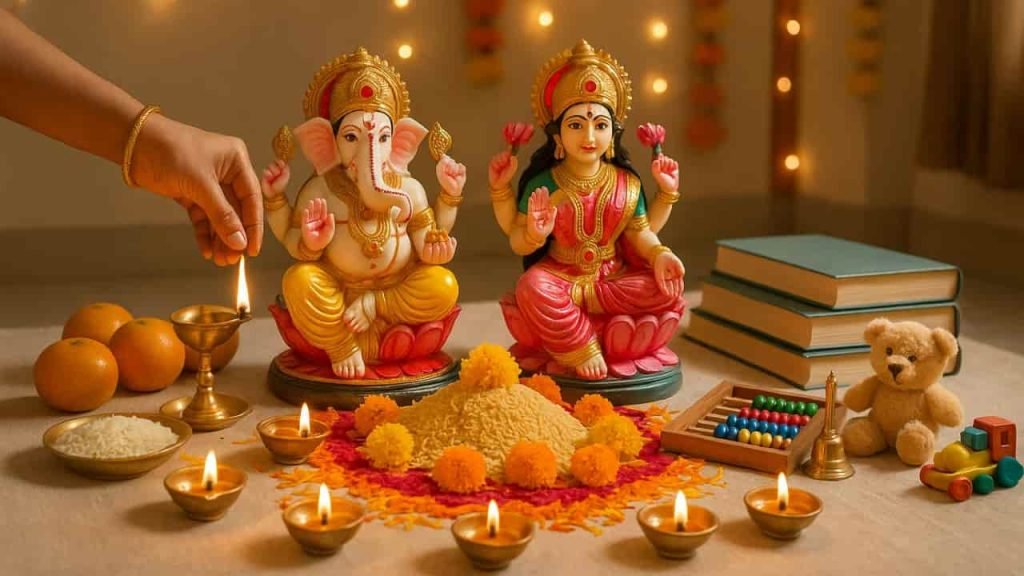
Diwali represents the victory of light over darkness and good over evil. Families illuminate their homes with diyas, worship Goddess Lakshmi for prosperity, and celebrate the beginning of a spiritually renewed and auspicious phase.
Where is Diwali celebrated?
Diwali is celebrated across India and by Hindu communities worldwide, with regional variations in rituals and emphasis, from Lakshmi Puja in the north and west to Kali Puja in the east.
Diwali marks the culmination of the festive season that begins with Navratri and Dussehra. Explore more Hindu festival dates and rituals on Mythology Mantra. Puja muhurat timings are cross-checked with DrikPanchang.