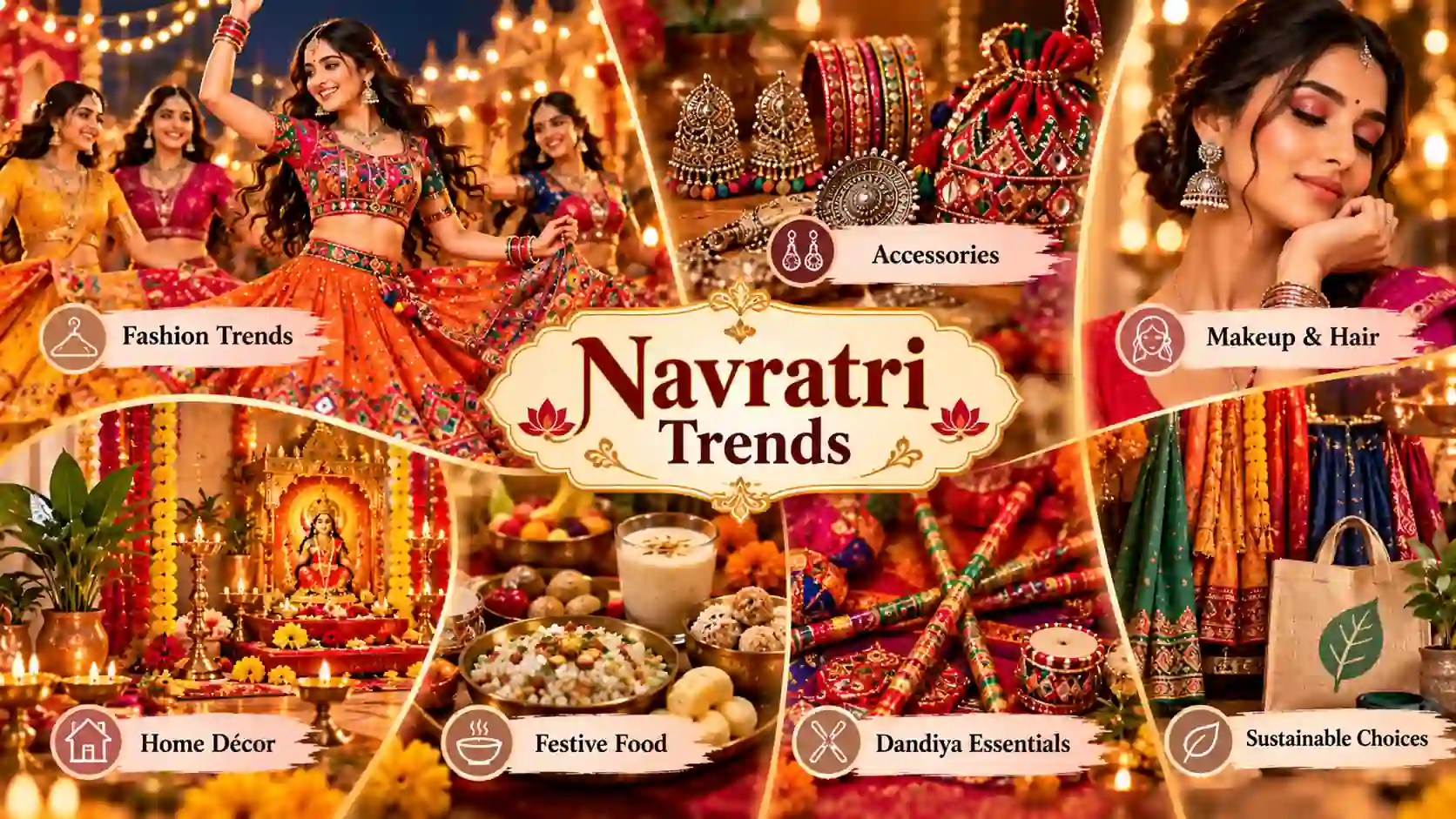
Every October, Navratri takes over feeds, search bars and family group chats, and Navratri 2026 is already following the pattern ahead of its start on Sunday, 11 October. The reasons behind these Navratri trends aren’t mysterious. Few festivals combine as many shareable elements: a different colour for each day, a dance anyone can join, two traditions recognised by UNESCO, extraordinary Durga Puja pandal art, and a nine-day story with a clear climax on Dussehra.
Here’s what drives the festival’s reach online, and what sits beneath it.
1. Nine Colours, Nine Days, Endless Photos
The popular custom of wearing a set colour each day of Navratri, especially strong in Maharashtra, turns the festival into a nine-part visual series. Offices, colleges and friend groups coordinate outfits, and each morning brings a fresh wave of group photos. For 2026, the sequence opens with orange on Sunday and closes with peacock green on Monday, 19 October.
It’s worth keeping in mind that the colour list is a modern cultural practice, not a scriptural requirement, and it changes each year with the starting weekday. It has spread precisely because it’s easy to take part in. See our Navratri 2026 outfit ideas for the full list.
2. Garba Is a Dance Anyone Can Join
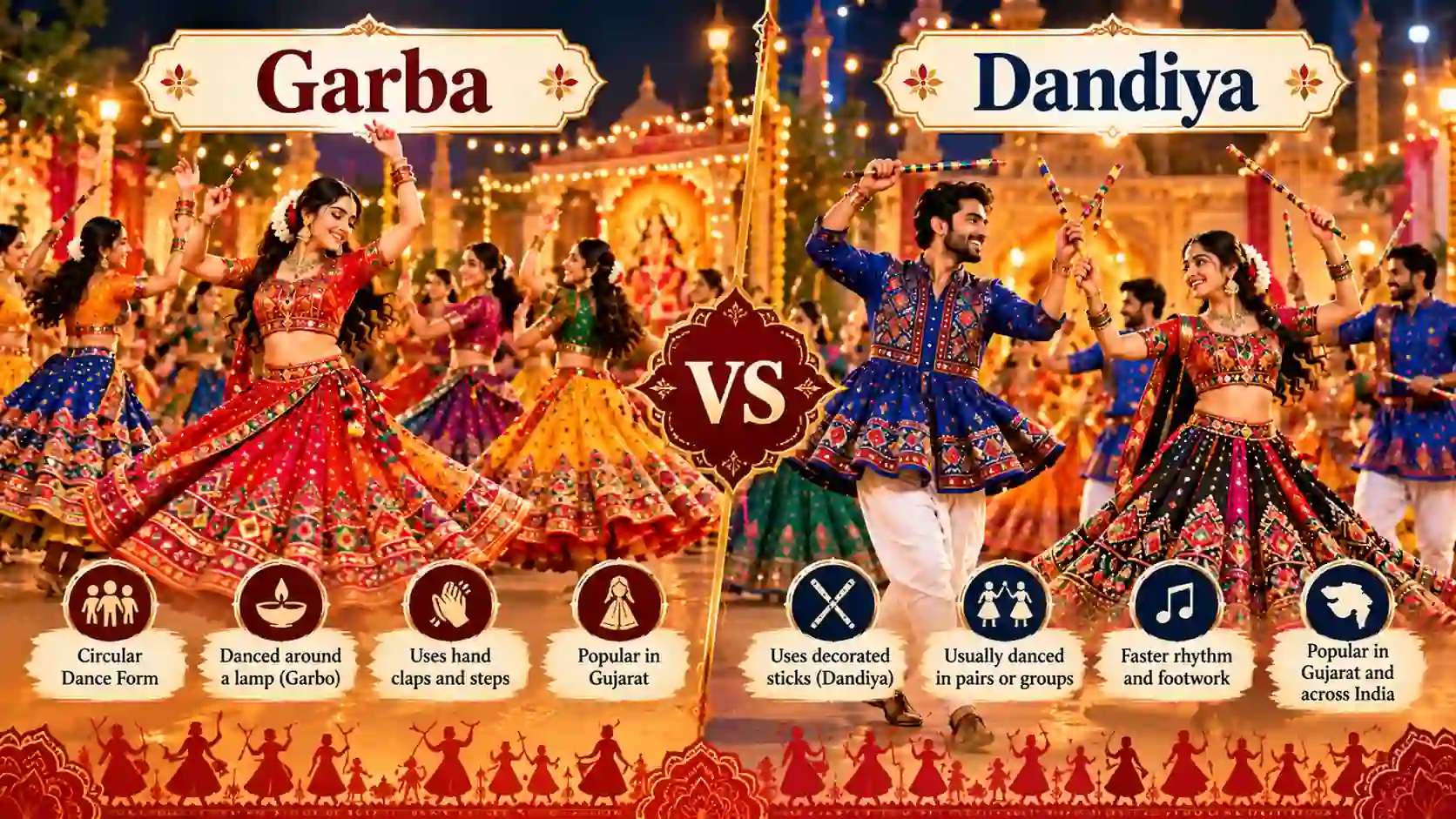
Most dance trends ask you to learn choreography. Garba asks you to step into a circle and follow the person in front of you. That openness, combined with the striking visuals of hundreds of people moving in concentric rings, makes Garba some of the most widely shared festival footage from India and the diaspora. In December 2023, UNESCO inscribed Garba of Gujarat on its Representative List of the Intangible Cultural Heritage of Humanity, and that recognition has brought the tradition wider attention since. Our explainer on Garba vs Dandiya covers how the two dances differ.
3. Durga Puja Turns Cities Into Galleries
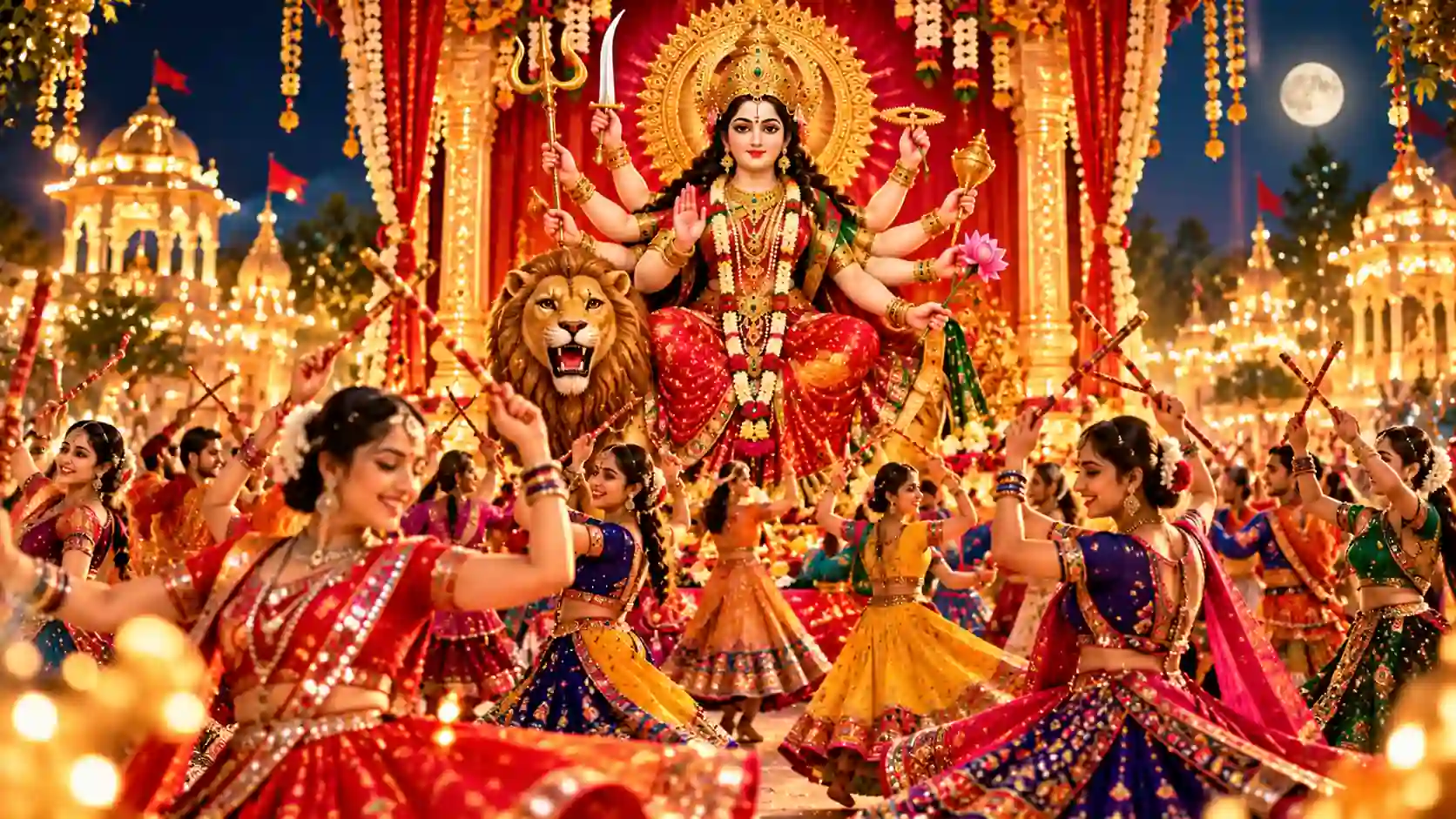
In Kolkata and across eastern India, Durga Puja pandals are temporary works of art, often built around elaborate themes, with idols crafted by artisans from places such as Kumartuli. Durga Puja in Kolkata was inscribed on UNESCO’s Intangible Cultural Heritage list in 2021. With Maha Shashthi on 16 October and the Saptami–Ashtami peak on the weekend of 17–18 October in 2026, expect pandal-hopping photos and videos to reach their height over that weekend.
4. The Calendar Creates Daily Curiosity
Because Navratri follows the lunar calendar, people search for the details every year: When does it start? What’s the Ghatasthapana muhurat? Which goddess is worshipped today? Is Ashtami on Sunday? Each day has its own goddess, from Shailaputri to Siddhidatri, so there’s a reason to look things up every morning. Traditional talking points, such as the belief that the Goddess arrives on an elephant when Navratri begins on a Sunday, add to the conversation. You’ll find all the 2026 details in our Navratri 2026 dates article.
5. Vrat Food Has Its Own Following
Navratri fasting has a distinctive cuisine built around kuttu, singhara, samak rice, sabudana and sendha namak. Recipes for sabudana khichdi, kuttu puri and makhana kheer circulate every year, along with questions about what’s allowed. That practical need keeps Navratri in conversation well beyond the dance floor.
6. A Festival That Travels With the Diaspora
Garba nights and Durga Puja celebrations are now regular features in cities with large Indian communities, from the UK and the US to Canada, the Gulf and Australia. Families abroad share their celebrations with relatives at home, and vice versa, so the festival is seen and shared across time zones for nine days straight.
What Sits Beneath the Navratri Trends
For all its online life, Navratri remains a religious festival. Its central narrative comes from the Devi Mahatmya, the account in the Markandeya Purana of the Goddess’s victory over Mahishasura, recited during these nine nights as the Durga Saptashati. The lamp at the centre of the Garba circle, the kalash installed on the first morning, and the young girls honoured in Kanya Pujan all point back to the same idea: the Goddess as the power that sustains and protects the world. The colours, reels and recipes are ways in which people today express a very old devotion.
Frequently Asked Questions
Why is Navratri so popular on social media?
It combines daily dress-colour themes, a highly visual and inclusive dance, elaborate Durga Puja pandals, and a nine-day calendar with a new goddess each day, giving people something to share every single day.
Which Navratri traditions are recognised by UNESCO?
Durga Puja in Kolkata was inscribed in 2021, and Garba of Gujarat in 2023, both on UNESCO’s Representative List of the Intangible Cultural Heritage of Humanity.
When does Navratri 2026 start?
Navratri 2026 starts on Sunday, 11 October and ends with Vijayadashami on Tuesday, 20 October.
Are the Navratri colours part of tradition?
They are a popular modern custom rather than a scriptural rule. Many families follow them for fun; others don’t follow them at all.
Join In, Then Look Deeper
Navratri’s popularity online is a sign of how alive the festival is. Enjoy the colours and the Garba, and take a moment to understand the worship behind them. Start with our Navratri 2026 celebration guide and our page on Maa Durga.