

Table of Contents
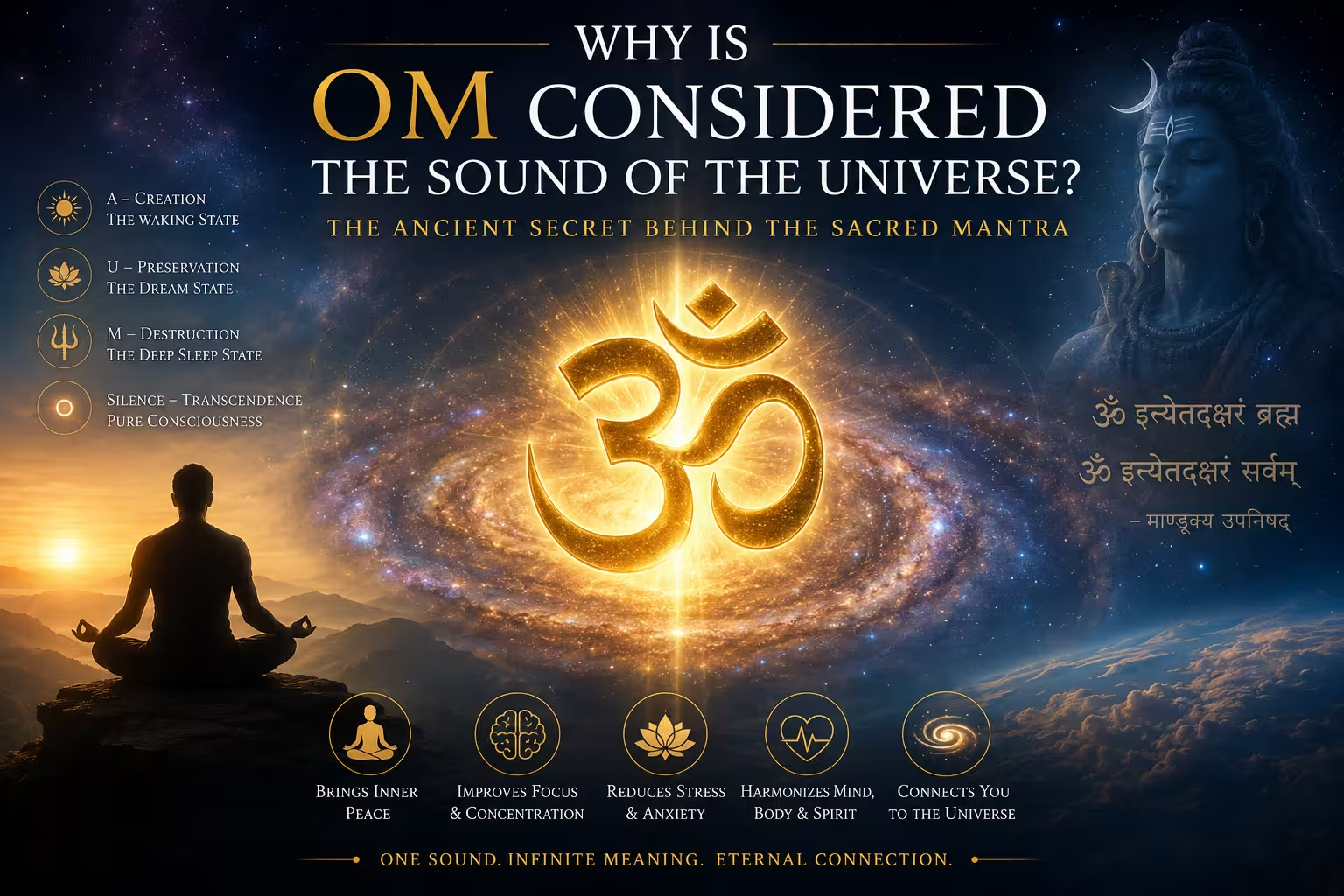
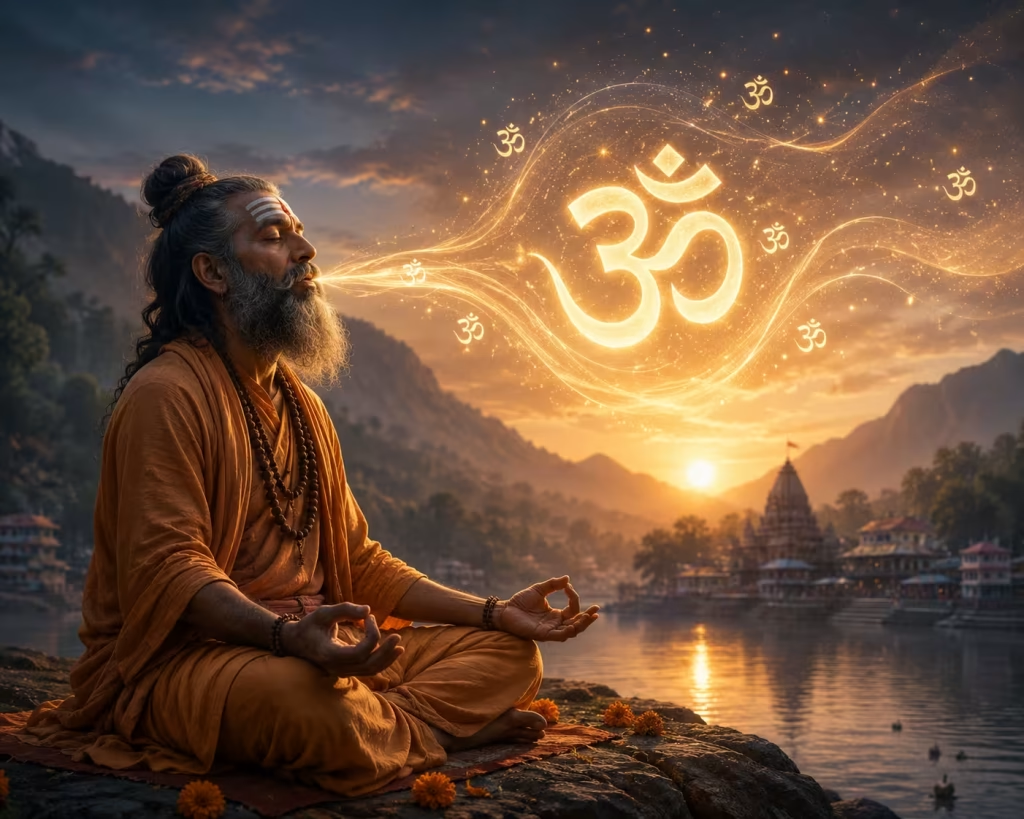
For thousands of years, a single sound has echoed through temples, forests, meditation halls, and spiritual traditions across India—Om (ॐ). Revered as the most sacred syllable in Hinduism, Om is far more than a simple chant. Ancient scriptures describe it as the primordial vibration from which the entire universe emerged.
But why is Om considered the sound of the universe? Is it merely a religious belief, or does it carry deeper philosophical and scientific significance?
In this article, we will explore the origins, symbolism, spiritual power, and fascinating interpretations of Om, revealing why this sacred sound continues to inspire millions around the world.
What Is Om?
Om, often written as Aum, is considered the most sacred mantra in Hinduism. It is believed to be the original vibration that existed before the creation of the cosmos.
According to Hindu philosophy, the universe did not begin with a physical object but with a vibration. That vibration manifested as Om, the eternal sound that underlies all existence.
The sacred symbol ॐ represents this cosmic vibration and is frequently seen in temples, scriptures, yoga centers, and meditation spaces.
The ancient sages regarded Om as:
- The sound of creation
- The essence of all mantras
- The voice of the Divine
- The vibration of universal consciousness
The Meaning of A-U-M
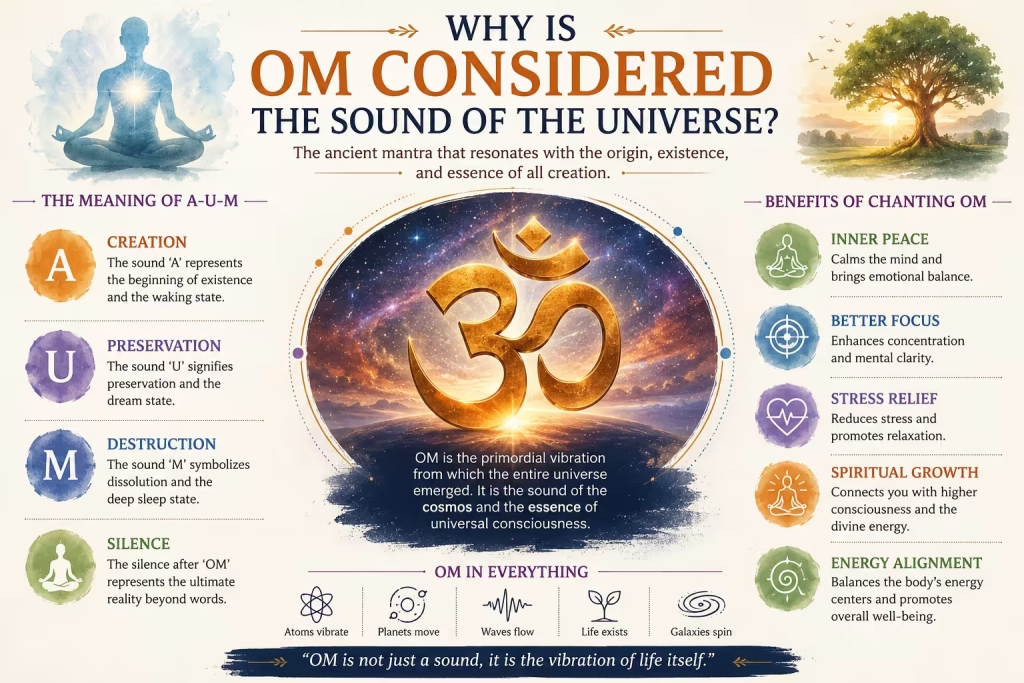
Although commonly pronounced as “Om,” the mantra consists of three distinct sounds:
A (अ)
The sound “A” represents creation and the beginning of existence.
It is associated with:
- Lord Brahma
- Birth
- The waking state of consciousness
- The physical world
U (उ)
The sound “U” symbolizes preservation and continuity.
It is associated with:
- Lord Vishnu
- Sustenance
- The dream state
- Mental existence
M (म)
The sound “M” represents dissolution and transformation.
It is associated with:
- Lord Shiva
- Destruction of old forms
- Deep sleep
- Spiritual withdrawal
The Silence After Om
Perhaps the most profound aspect is the silence that follows the chant.
This silence symbolizes:
- Infinite consciousness
- The Absolute Reality (Brahman)
- Pure awareness beyond words and thoughts
Thus, Om represents the entire cycle of existence: creation, preservation, destruction, and transcendence.
Om in the Ancient Scriptures
The importance of Om is repeatedly emphasized in Hindu scriptures.
Mandukya Upanishad
The Mandukya Upanishad, one of the shortest yet most profound Upanishads, is entirely devoted to explaining Om.
It declares that:
Om is the past, present, future, and everything beyond time.
The text teaches that understanding Om is equivalent to understanding the nature of reality itself.
Bhagavad Gita
In the Bhagavad Gita, Lord Krishna identifies Himself with Om.
Krishna states that among words and sounds, He is Om, indicating that the sacred syllable represents divine consciousness.
Vedas
The Vedas describe Om as the essence of sacred knowledge and the foundation of all Vedic chants.
Most Hindu prayers and rituals begin with Om because it is believed to invoke divine energy and align the practitioner with cosmic vibrations.
Why Is Om Called the Sound of the Universe?
The concept originates from the ancient belief that all creation emerged through vibration.
Modern science teaches that everything in the universe vibrates at some frequency. At the atomic level, matter is in constant motion.
Thousands of years ago, Hindu sages arrived at a similar philosophical insight through meditation and spiritual experience. They perceived that beneath all forms, sounds, and movements existed a single universal vibration.
That vibration was identified as Om.
According to Hindu cosmology:
- Before creation, only pure consciousness existed.
- A primordial vibration emerged.
- This vibration generated energy.
- Energy evolved into matter.
- The universe came into existence.
Om symbolizes this first cosmic vibration.
The Connection Between Om and Brahman
In Hindu philosophy, Brahman is the ultimate reality—the infinite source from which everything arises.
Om is considered the audible expression of Brahman.
Just as sunlight reflects the presence of the sun, Om reflects the presence of the Divine.
When devotees chant Om, they seek to connect their individual consciousness (Atman) with universal consciousness (Brahman).
This union is one of the highest goals of spiritual practice.
Scientific Perspectives on Om
While science cannot verify spiritual claims about Om being the original cosmic sound, several studies have examined its effects on the human body and mind.
Researchers have observed that chanting Om may:
- Reduce stress levels
- Calm the nervous system
- Improve concentration
- Lower anxiety
- Enhance emotional stability
- Promote relaxation
The prolonged vibration generated during chanting stimulates various parts of the body, especially around the throat, chest, and skull.
Many practitioners report experiencing:
- Mental clarity
- Inner peace
- Heightened awareness
- Deep meditative states
Although science approaches Om from a physiological perspective, many people find that its benefits align with ancient spiritual teachings.
The Symbolism of the Om Symbol (ॐ)
The Om symbol itself contains profound meaning.
The Lower Curve
Represents the waking state where consciousness is directed outward toward the physical world.
The Middle Curve
Represents the dream state, where awareness turns inward.
The Upper Curve
Represents deep sleep, where consciousness rests without dreams.
The Crescent Shape
Represents illusion (Maya), which prevents us from realizing our true nature.
The Dot
Represents enlightenment or pure consciousness.
Together, these elements depict the journey from ordinary awareness to spiritual awakening.
Om in Meditation
Om chanting is one of the most powerful meditation techniques in Hinduism.
How Om Meditation Works
- Sit comfortably.
- Take slow, deep breaths.
- Chant Om slowly and mindfully.
- Focus on the vibration.
- Observe the silence afterward.
The practice helps quiet mental chatter and encourages inner stillness.
Many yogic traditions believe that regular Om meditation harmonizes the body, mind, and spirit.
Spiritual Benefits of Chanting Om
Devotees and spiritual practitioners attribute numerous benefits to chanting Om.
1. Inner Peace
The vibration helps calm restless thoughts and emotions.
2. Enhanced Concentration
Repeated chanting improves focus and mindfulness.
3. Spiritual Connection
Om creates a sense of connection with the Divine and the universe.
4. Emotional Balance
Many practitioners experience reduced anxiety and increased positivity.
5. Energy Alignment
Yogic traditions teach that Om helps balance the body’s subtle energy centers (chakras).
Om Across Different Religions
Although Om is most closely associated with Hinduism, it also holds significance in other Indian traditions.
Buddhism
Many Buddhist mantras begin with Om, including the famous mantra:
“Om Mani Padme Hum.”
Jainism
Om is used as a sacred symbol representing spiritual perfection and reverence.
Sikhism
The concept of the divine cosmic sound is reflected in Sikh teachings through the understanding of the universal Creator.
This widespread presence highlights Om’s influence across multiple spiritual traditions.
Is Om Related to the Big Bang Theory?
Many people compare Om with the scientific concept of the Big Bang.
According to modern cosmology, the universe originated from an incredibly dense state that expanded rapidly.
Ancient Hindu philosophy similarly describes creation as emerging from a primordial vibration.
While these concepts come from different frameworks—scientific and spiritual—the comparison fascinates many scholars and seekers.
It is important to remember that the identification of Om with the Big Bang is symbolic rather than scientifically proven.
Lessons We Can Learn from Om
Beyond religion, Om offers timeless wisdom.
It reminds us that:
- Everything in existence is interconnected.
- Silence is as important as sound.
- Life moves through cycles of creation and transformation.
- Inner peace can be found through awareness and mindfulness.
- The universe is far more profound than what we perceive through the senses.
These lessons make Om relevant even in the modern world.
So, why is Om considered the sound of the universe?
According to Hindu philosophy, Om is the primordial vibration from which all creation emerged. It represents the eternal cycle of creation, preservation, destruction, and transcendence. Ancient scriptures describe it as the essence of reality itself, while modern practitioners experience its calming and transformative effects through meditation.
Whether viewed spiritually, philosophically, or symbolically, Om remains one of humanity’s most profound sacred sounds. It serves as a bridge between the individual and the cosmos, reminding us that beneath the diversity of life lies a single universal vibration.
The next time you hear or chant Om, remember that you are participating in a tradition that has inspired seekers for thousands of years—a tradition that sees the entire universe resonating within a single sacred sound.