

Table of Contents
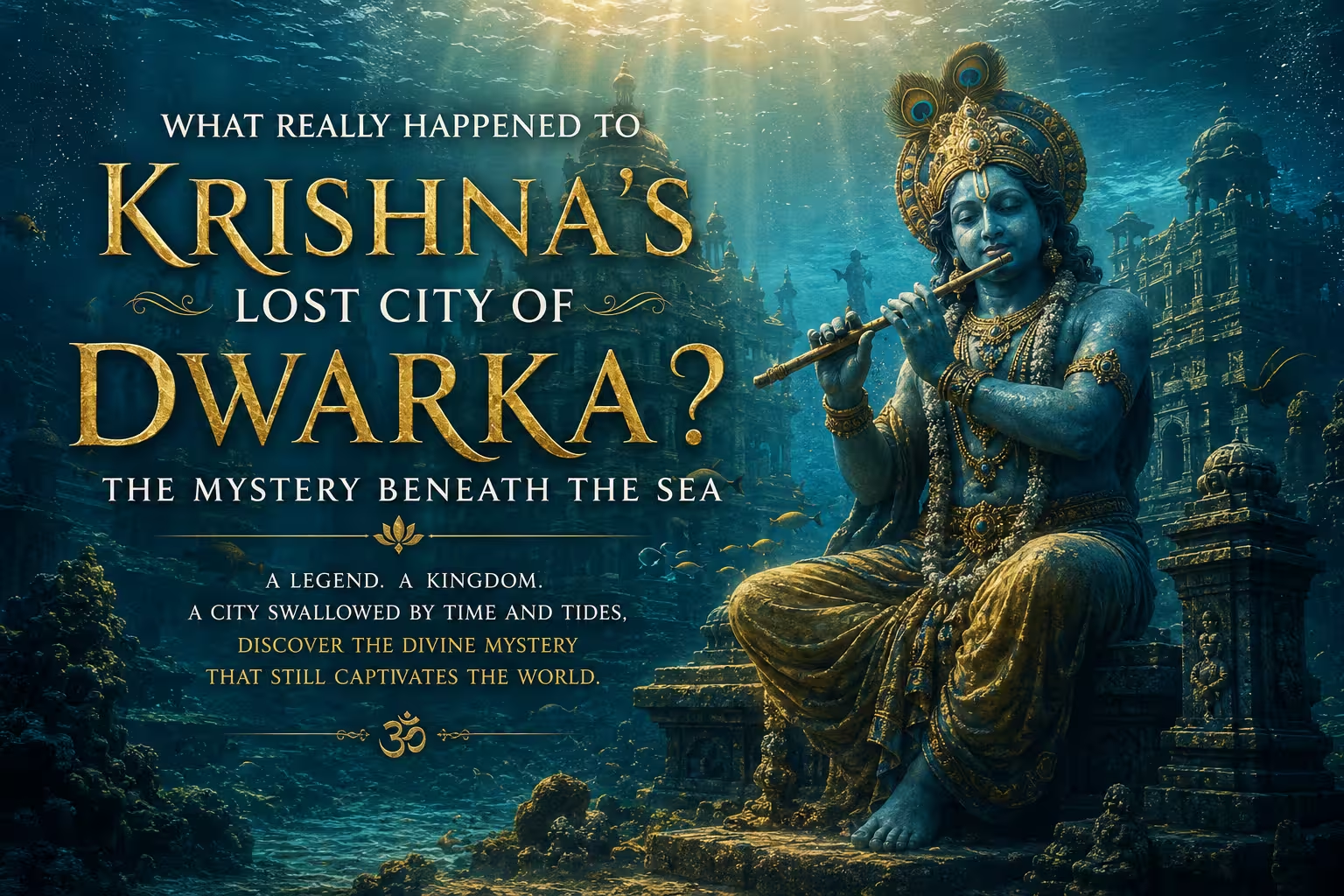
For thousands of years, the story of Dwarka has fascinated devotees, historians, and archaeologists alike. According to Hindu scriptures, This city was the magnificent kingdom of Lord Krishna—a city built with divine architecture, golden palaces, and unparalleled prosperity. Yet, after Krishna departed from Earth, this glorious city is said to have vanished beneath the waters of the Arabian Sea.
Was Dwarka merely a mythological tale, or was it a real city that once existed? Modern underwater discoveries have reignited this ancient mystery, leading many to ask: What really happened to Krishna’s Lost City of Dwarka?
Let us explore the history, mythology, archaeological evidence, and theories surrounding one of the world’s most fascinating lost cities.
The Divine Creation of Dwarka
According to the ancient Hindu epic, the Mahabharata, Lord Krishna ruled the kingdom of Mathura. However, repeated attacks by the powerful king Jarasandha threatened the safety of the Yadava clan.
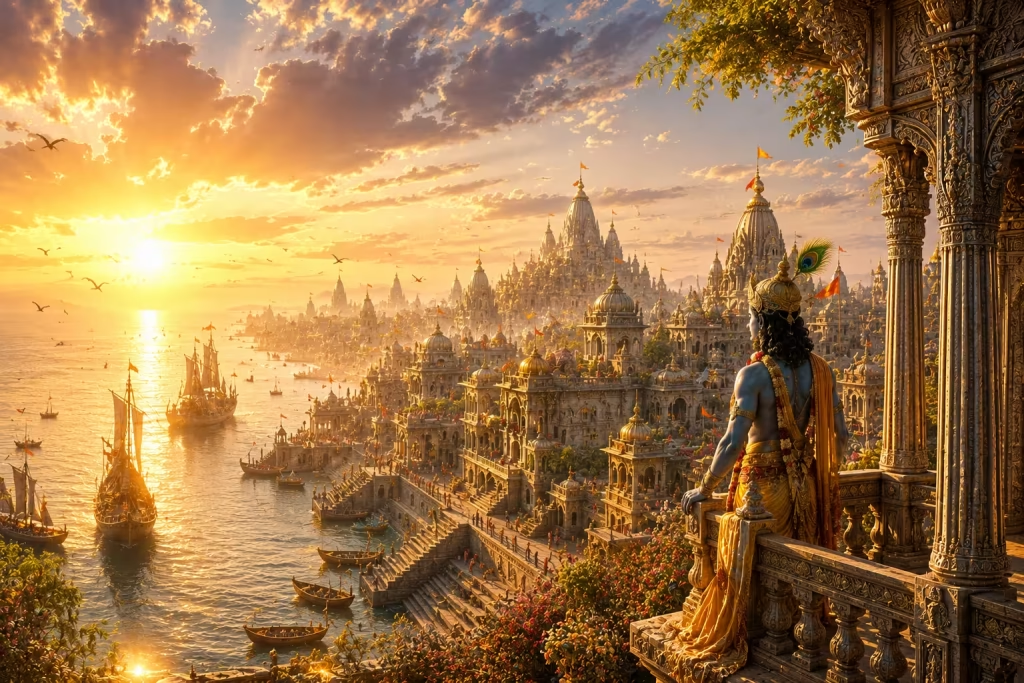
To protect his people, Krishna decided to establish a new capital far from danger. He prayed to the sea god and received land from the ocean. The divine architect Vishwakarma then constructed a magnificent city known as Dwarka.
The scriptures describe as:
- A city made of gold and precious stones
- Protected by strong walls and gates
- Filled with beautiful gardens and lakes
- Home to grand palaces and temples
- Connected by wide roads and harbors
This City quickly became one of the most prosperous kingdoms of ancient India and served as Lord Krishna’s capital for many years.
Hindu Scriptures
The story of Dwarka appears in several sacred texts, including:
- Mahabharata
- Bhagavata Purana
- Vishnu Purana
- Harivamsha
These texts consistently describe Dwarka as a magnificent coastal city ruled by Lord Krishna.
The Bhagavata Purana narrates that after Krishna left his earthly form, the city was swallowed by the sea. The ocean gradually rose and submerged the entire kingdom, leaving only memories behind.
One famous verse describes how the sea reclaimed the city soon after Krishna’s departure, fulfilling a divine prophecy.
For centuries, many people considered this account symbolic rather than historical. However, recent discoveries have caused scholars to reconsider.
The Fall of Krishna’s Kingdom
The destruction of the city is closely linked to the final days of the Yadava dynasty.
According to Hindu tradition, the Yadavas became arrogant and morally corrupt. A curse was placed upon them, leading to internal conflict and eventual destruction.
A tragic civil war erupted among the Yadavas at Prabhasa. Most of Krishna’s clan perished during the conflict.
Soon afterward:
- Lord Balarama departed from the world.
- Lord Krishna entered deep meditation.
- Krishna was struck by a hunter’s arrow.
- He left his earthly incarnation and returned to his divine abode.
After Krishna’s departure, the sea began engulfing Dwarka exactly as predicted in the scriptures.
Arjuna, the great Pandava warrior, reportedly visited the city afterward and witnessed its submergence.
This dramatic event marked the end of the Dwapara Yuga and the beginning of the Kali Yuga.
Archaeological Discoveries Beneath the Sea
For centuries, the story of Dwarka remained largely a matter of faith. Everything changed in the late 20th century when underwater archaeological investigations began along the coast of Gujarat.
Marine archaeologists discovered:
- Stone structures
- Ancient walls
- Anchors
- Pottery fragments
- Evidence of harbor installations
These findings were located near modern Dwarka and Bet Dwarka in Gujarat.
The discoveries suggested the presence of an ancient settlement beneath the sea, sparking worldwide interest.
Researchers found large stone blocks arranged in patterns that appeared to be man-made rather than natural formations.
Some scholars proposed that these remains might belong to an ancient port city that once flourished on the coast before being submerged.
Could the Underwater Ruins Be Krishna’s Dwarka?
This remains one of the most debated questions in Indian archaeology.
Arguments Supporting the Theory
Many believers and researchers point to several intriguing facts:
1. Location Matches Ancient Texts
The underwater structures were found near the location traditionally associated with Krishna’s Dwarka.
2. Evidence of Ancient Maritime Activity
Numerous stone anchors indicate a thriving port city, consistent with scriptural descriptions.
3. Signs of Submergence
Geological studies suggest that changes in sea levels may have submerged parts of the ancient coastline.
4. Multiple Ancient Settlements
Evidence indicates that several settlements existed in the region over different periods, some of which were eventually claimed by the sea.
What Do Skeptics Say?
Not all archaeologists agree that the discovered ruins are Krishna’s legendary city.
Critics argue that:
- The structures may belong to different historical periods.
- Some formations could be natural rather than man-made.
- Direct evidence connecting the ruins specifically to Krishna has not yet been found.
- Dating methods have produced varying results.
Many scholars believe further excavation and research are necessary before definitive conclusions can be reached.
As a result, Dwarka remains a fascinating blend of archaeology, mythology, and mystery.
Scientific Explanations for Dwarka’s Submergence
If Dwarka was indeed a real city, several natural processes could explain its disappearance beneath the sea.
Rising Sea Levels
Throughout history, sea levels have changed significantly due to climate shifts and melting glaciers.
A gradual rise in sea level could have submerged coastal settlements.
Coastal Erosion
The Gujarat coastline is vulnerable to erosion caused by waves, tides, and storms.
Over centuries, large portions of land can disappear into the sea.
Tectonic Activity
Earthquakes and geological movements can alter coastlines dramatically.
Western India lies in a region that has experienced seismic activity throughout history.
Tsunami Events
Some researchers suggest that ancient tsunami-like events may have contributed to flooding and destruction along the coast.
Any combination of these factors could have led to the loss of an ancient city.
The Spiritual Meaning of Dwarka’s Disappearance
Beyond history and archaeology, Dwarka carries profound spiritual symbolism.
The city represents:
- The temporary nature of material wealth
- The cycle of creation and destruction
- Divine will beyond human control
- The transition from one age to another
Despite its grandeur, even Krishna’s magnificent kingdom was not meant to last forever.
The story reminds devotees that worldly achievements are temporary, while spiritual truth remains eternal.
This deeper philosophical message is one reason the legend continues to inspire millions.
Modern Dwarka: A Living Pilgrimage Site
Today, Dwarka in Gujarat remains one of the most sacred destinations in Hinduism.
The famous Dwarkadhish Temple attracts millions of pilgrims every year.
It is one of the revered Char Dham pilgrimage sites established in Hindu tradition.
Visitors come to:
- Seek blessings of Lord Krishna
- Explore ancient traditions
- Visit Bet Dwarka
- Experience the spiritual atmosphere of the holy city
Many devotees believe that the modern city stands near the remains of Krishna’s original kingdom.
Why the Mystery Continues to Fascinate the World
The story of Dwarka combines everything that captures human imagination:
- Ancient mythology
- Divine legends
- Lost civilizations
- Underwater archaeology
- Unanswered questions
Unlike many ancient myths, Dwarka has archaeological findings that partially align with scriptural descriptions. This unusual overlap between faith and science keeps the mystery alive.
Every new underwater discovery raises fresh questions:
- Was Krishna’s Dwarka a real historical city?
- How advanced was this ancient civilization?
- What caused its destruction?
- How much remains hidden beneath the sea?
The answers may still lie deep beneath the waters of the Arabian Sea.
The mystery of Krishna’s Lost City of Dwarka remains one of the most captivating stories in human history. Hindu scriptures describe a magnificent kingdom built by divine design and ultimately swallowed by the sea after Lord Krishna’s departure.
Modern archaeological discoveries have revealed submerged structures off the coast of Gujarat, lending new intrigue to this ancient legend. While definitive proof remains elusive, the evidence suggests that a significant ancient settlement once existed in the region.
Whether viewed through the lens of faith, history, or science, Dwarka continues to inspire wonder and curiosity. Its story serves as a powerful reminder that even the greatest earthly cities can vanish, while their legacy lives on through centuries of devotion, storytelling, and discovery.
As researchers continue to explore the ocean depths, the lost city of Krishna may yet reveal more of its secrets to the world.