

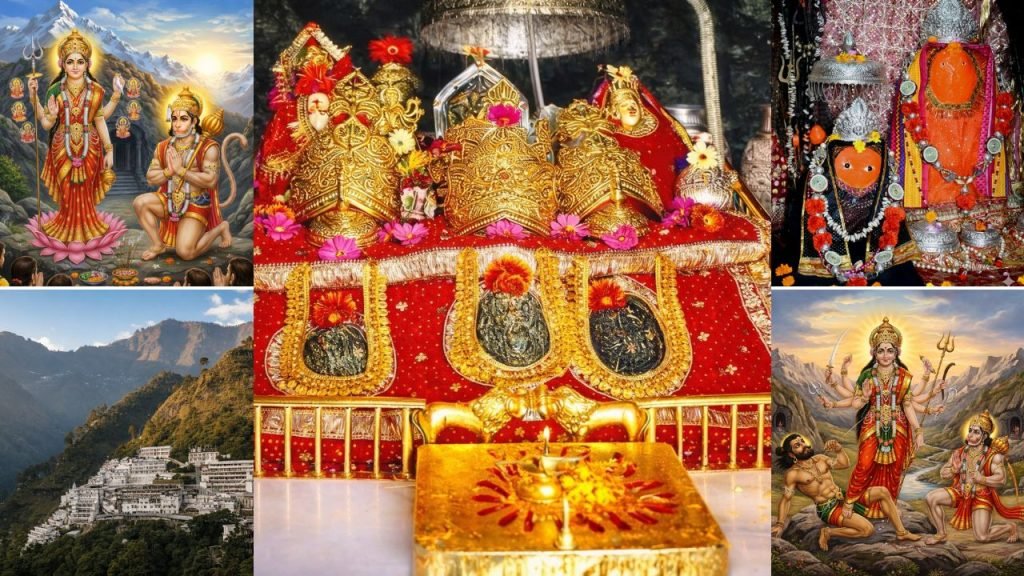
Hindu mythology is rich with divine stories that guide humanity toward faith, courage, and righteousness. Among these sacred narratives, the story of Mata Vaishno Devi, the embodiment of Adi Shakti, and Lord Hanuman, the immortal symbol of devotion and strength, holds a special spiritual significance. Though they appear in different divine traditions, their stories beautifully intersect through the eternal principles of Dharma, protection, and unwavering faith.
This blog explores the legendary story of Mata Vaishno Devi, the role and spiritual presence of Lord Hanuman, and how their divine paths unite to inspire devotees even today.
The Birth of Mata Vaishno Devi – The Descent of Divine Shakti
According to ancient legends, when evil forces began to disturb the balance of the universe, Adi Shakti decided to descend on Earth to restore Dharma. She took birth as a divine child named Vaishnavi, born to a pious Brahmin couple.
From a very young age, Vaishnavi displayed extraordinary spiritual powers. Unlike ordinary children, she showed no attachment to worldly pleasures. Her heart was filled with devotion, meditation, and the desire to serve humanity.
Vaishnavi soon left her home to pursue intense spiritual practice, dedicating her life to penance and divine service.
Table of Contents
Vaishnavi Meets Lord Rama – A Turning Point
During the period of Treta Yuga, when Lord Rama was in exile, Vaishnavi met him during his journey. Recognizing Lord Rama as the Supreme Being, she requested permission to serve him eternally.
Lord Rama, aware of her divine identity, gently told her:
“In this lifetime, your role is to establish Shakti on Earth. In Kali Yuga, I will come to you as Kalki, and you shall merge back into your divine form.”
Before departing, Lord Rama blessed Vaishnavi and instructed her to take refuge in the Trikuta Mountains, where she would continue her penance.
The Role of Lord Hanuman in Vaishnavi’s Journey
Before leaving, Lord Rama also gave Vaishnavi a divine assurance:
“My greatest devotee, Hanuman, will always protect you.”
Hanuman Ji, the symbol of selfless service and devotion, accepted this divine duty. Though not always mentioned explicitly in temple folklore, spiritual traditions believe that Lord Hanuman safeguards all Shakti Peethas, including the sacred abode of Mata Vaishno Devi.
His invisible presence ensures that:
No evil energies disturb the Goddess
Devotees remain protected on their spiritual journey
Dharma remains intact
Vaishnavi’s Penance in the Trikuta Mountains
Vaishnavi meditated intensely in the caves of the Trikuta Mountains. Her divine energy attracted both seekers and demons. While saints and sages sought her blessings, a demon named Bhairon Nath became obsessed with her beauty and power.
Despite repeated warnings, Bhairon Nath followed Vaishnavi with impure intentions.
The Divine Chase and the Intervention of Shakti
Vaishnavi fled to protect her sanctity, moving through forests and mountains. Along her path, she created sacred places such as:
Banganga – where she struck the earth to create water
Charan Paduka – marking her divine footsteps
Throughout this journey, it is believed that Lord Hanuman guarded her path, ensuring she remained unharmed while allowing Dharma to unfold naturally.
The Slaying of Bhairon Nath
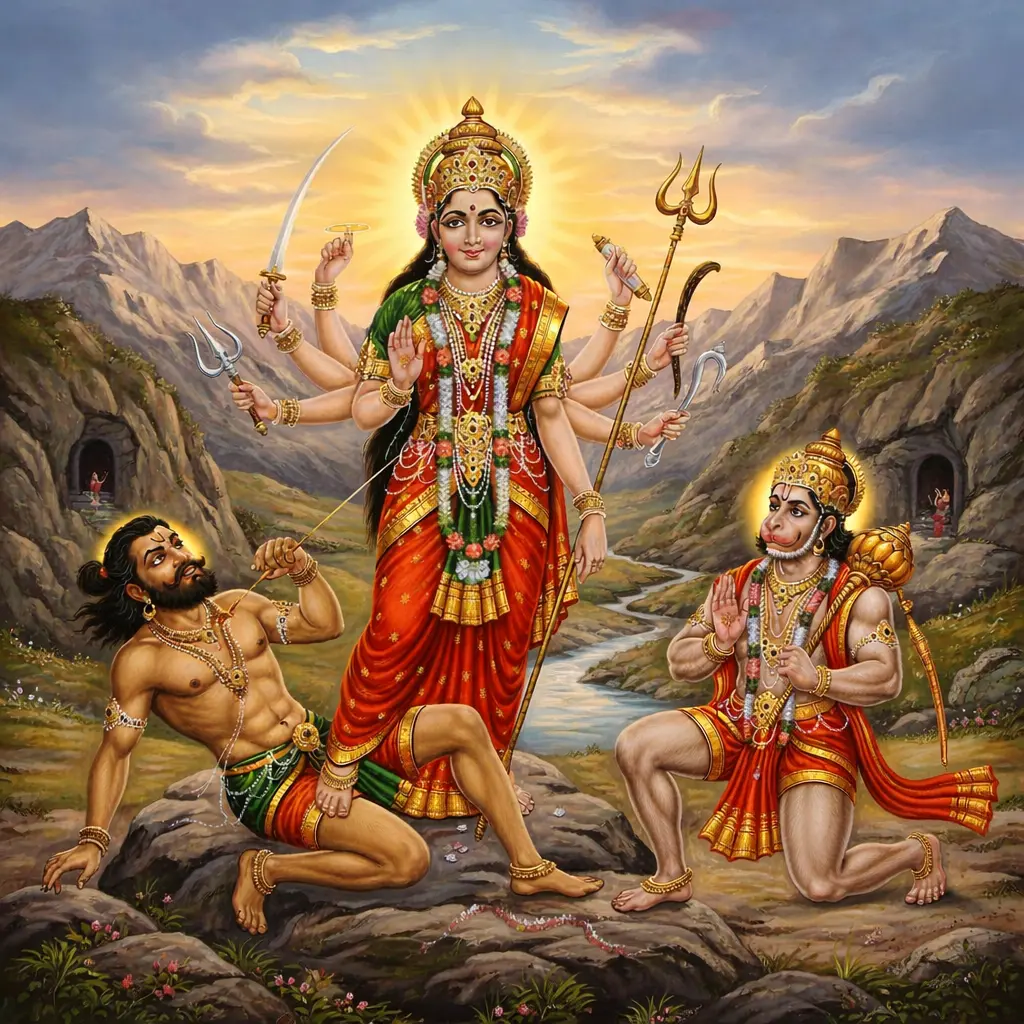
Eventually, Vaishnavi reached the sacred cave in the Trikuta Mountains. When Bhairon Nath entered the cave with evil intent, Vaishnavi revealed her true form as Mata Vaishno Devi, the fierce embodiment of Adi Shakti.
In a divine moment:
She beheaded Bhairon Nath
His head fell several kilometers away
Realizing his mistake, Bhairon Nath sought forgiveness
Mata Vaishno Devi forgave him and granted liberation, declaring that devotees must complete his darshan after visiting her shrine.
This act symbolized justice balanced with compassion.
Hanuman Ji as the Eternal Guardian of the Shrine
After the divine event, it is believed that Lord Hanuman took an eternal vow to:
Protect the sacred cave
Safeguard pilgrims on their journey
Destroy negative energies around the shrine
Even today, devotees chant Hanuman Chalisa during the Vaishno Devi Yatra to gain strength and fearlessness.

Spiritual Symbolism of Mata Vaishno Devi and Hanuman Ji
Shakti and Bhakti United
Mata Vaishno Devi represents cosmic power
Hanuman Ji represents devotion and service
Together, they symbolize that divine power must be guided by humility, and devotion must be empowered by grace.
Protection and Surrender
Mata grants blessings, while Hanuman ensures their protection—creating a complete spiritual shield for devotees.
Devotional Practices Linked to Their Story
Chanting “Jai Mata Di” during the yatra
Reciting Hanuman Chalisa for strength and protection
Observing fasts during Navratri
Surrendering ego and fear during pilgrimage
These practices help devotees align with divine energy.
Relevance of Their Story in Modern Times
In today’s challenging world:
Mata Vaishno Devi inspires inner strength and resilience
Hanuman Ji teaches courage, discipline, and humility
Their story reminds us that faith combined with action can overcome any obstacle.
The divine story of Mata Vaishno Devi and Lord Hanuman is not just a tale of mythology but a spiritual guide for humanity. It teaches that Shakti protects Dharma, and Bhakti preserves it.
By remembering Mata Vaishno Devi and invoking the blessings of Hanuman Ji, devotees receive strength, protection, and spiritual clarity.
May Mata Vaishno Devi guide us with her grace, and may Lord Hanuman protect us with his boundless devotion.
ॐ ऐं ह्रीं क्लीं चामुण्डायै विच्चे॥
Om Aim Hreem Kleem Chamundayai Vichche
Meaning:
“I bow to Goddess Chamunda, the supreme Shakti, who removes fear, destroys evil, and grants strength, wisdom, and protection.
Frequently Asked Questions (FAQs) on the Story of Hanuman Ji & Mata Vaishno Devi
1. What is the connection between Lord Hanuman and Mata Vaishno Devi?
Lord Hanuman is believed to be the eternal protector of Dharma and Shakti. According to spiritual traditions, Lord Rama entrusted Hanuman Ji with the divine duty of protecting sacred places of the Goddess, including Mata Vaishno Devi’s abode in the Trikuta Mountains.
2. Did Lord Hanuman meet Mata Vaishno Devi?
In her earlier form as Vaishnavi, Mata Vaishno Devi met Lord Rama during the Treta Yuga. Since Hanuman Ji was always with Lord Rama, it is believed that Hanuman Ji was aware of Vaishnavi’s divine mission and spiritually connected to her journey.
3. Why is Hanuman Ji associated with Shakti Peethas?
Hanuman Ji represents pure devotion, strength, and protection. He is traditionally regarded as a guardian of Shakti Peethas, ensuring that divine energy remains protected from negative forces and that devotees remain safe.
4. Is there any temple of Hanuman Ji near Vaishno Devi?
Yes, there are several Hanuman temples and shrines along the Vaishno Devi Yatra route and in nearby regions, where pilgrims seek strength and protection before or after their pilgrimage.
5. What role did Hanuman Ji play during Vaishnavi’s penance?
Spiritual beliefs suggest that Hanuman Ji acted as an invisible guardian, protecting Mata Vaishnavi during her meditation and journey, while allowing divine justice to unfold naturally.
6. Why is Bhairon Nath’s temple visited after Mata Vaishno Devi darshan?
After slaying Bhairon Nath, Mata Vaishno Devi forgave him and granted liberation. She declared that a devotee’s pilgrimage is incomplete without visiting Bhairon Nath’s temple, symbolizing forgiveness and redemption.
7. What is the spiritual meaning of Shakti and Bhakti in their story?
Mata Vaishno Devi represents Shakti (divine power), while Lord Hanuman represents Bhakti (selfless devotion). Their story teaches that devotion must be guided by divine grace, and power must be guided by humility.
8. Why do devotees chant Hanuman Chalisa during Vaishno Devi Yatra?
Pilgrims chant Hanuman Chalisa to gain physical strength, mental courage, and protection during the difficult mountain trek. It is believed to remove fear, fatigue, and obstacles.