

Hindu temples are masterpieces of spirituality, symbolism, and sacred architecture. Every structure within a temple complex serves a purpose beyond aesthetics. Among these sacred elements is the Garuda Stambha, a towering pillar often found standing directly in front of the main sanctum of many Vishnu temples.
For countless devotees, the Garuda Stambha is a familiar sight, yet few understand its profound spiritual meaning. Why is it placed there? What does it represent? And why has it remained an important feature of temple architecture for centuries?
Let us explore the fascinating mystery and spiritual significance of the Garuda Stambha.
What Is a Garuda Stambha?
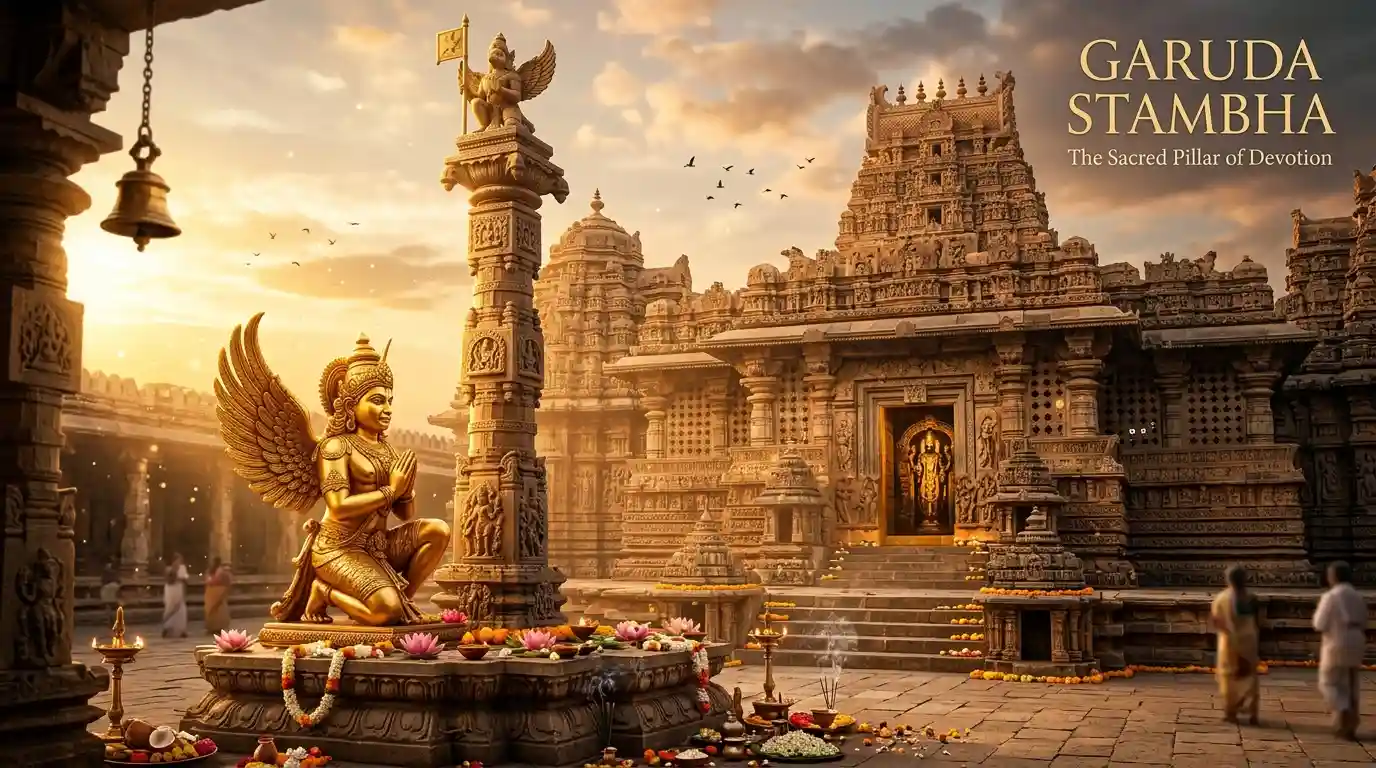
A Garuda Stambha is a sacred pillar dedicated to Garuda, the divine eagle and celestial vehicle (Vahana) of Lord Vishnu.
Typically positioned directly in front of the temple’s main sanctum (Garbhagriha), the pillar often features a statue of Garuda seated or standing in a posture of deep reverence toward Lord Vishnu.
The pillar serves as a symbolic bridge between devotees and the deity, reminding visitors of unwavering devotion and surrender to God.
Who Is Garuda in Hindu Mythology?
Garuda is one of the most revered beings in Hindu mythology.
He is described as:
- King of Birds
- Vehicle of Lord Vishnu
- Destroyer of evil forces
- Enemy of serpents (Nagas)
- Symbol of strength, courage, and devotion
According to the ancient scriptures, Garuda was born to Sage Kashyapa and Vinata. His life story demonstrates sacrifice, bravery, and complete dedication to righteousness.
Garuda’s devotion to Lord Vishnu was so profound that Vishnu granted him immortality and made him His eternal companion.
This divine relationship forms the foundation of the Garuda Stambha’s significance.
Why Is the Garuda Stambha Placed Before the Sanctum?
One of the most intriguing aspects of temple architecture is the placement of the Garuda Stambha.
The pillar is intentionally positioned facing the deity because Garuda is eternally engaged in worship of Lord Vishnu.
When devotees enter the temple, they often first offer respects to Garuda before approaching the deity.
This arrangement symbolizes an important spiritual lesson:
Devotion Leads to Divine Vision
Garuda’s gaze remains fixed upon Vishnu without distraction. Similarly, devotees are encouraged to focus their minds solely on God while entering the temple.
The Garuda Stambha serves as a reminder that true devotion requires concentration, humility, and surrender.
The Spiritual Symbolism of Garuda Stambha
The Garuda Stambha contains multiple layers of symbolism.
1. Symbol of Pure Devotion
Garuda represents unwavering faith and loyalty.
His constant worship of Vishnu teaches devotees that spiritual growth begins with complete dedication to the Divine.
2. Gateway Between Earth and Heaven
The vertical structure of the pillar symbolizes a connection between the earthly world and the celestial realm.
It acts as a spiritual axis linking human consciousness with divine consciousness.
3. Victory of Good Over Evil
Garuda is often depicted defeating serpents, which symbolize ignorance, fear, and negativity.
The pillar reminds devotees that spiritual wisdom ultimately triumphs over darkness.
4. Strength Combined with Humility
Despite possessing immense power, Garuda remains humble before Lord Vishnu.
This teaches that true greatness lies not in power but in devotion and service.
Historical Origins of Garuda Stambha
The tradition of erecting Garuda Stambhas dates back many centuries.
Ancient Hindu kingdoms built these pillars as expressions of faith and devotion to Lord Vishnu.
Some of the earliest examples can be traced to:
- Gupta Period temples
- Chalukya architecture
- Hoysala temples
- Vijayanagara Empire temples
Many rulers considered Garuda a symbol of divine protection and royal authority.
As a result, Garuda pillars became important architectural elements in Vaishnava temples throughout India.
Architectural Features of a Garuda Stambha
Although designs vary across regions, most Garuda Stambhas share common features.
Height and Structure
The pillar is usually tall and prominently placed along the temple’s central axis.
Its elevated position signifies spiritual ascent.
Garuda Idol
A beautifully carved image of Garuda is often placed at the top or front of the pillar.
Garuda is generally shown:
- Kneeling
- Folding his hands in prayer
- Facing the deity
Decorative Carvings
Many pillars feature intricate carvings depicting:
- Lotus motifs
- Sacred symbols
- Mythological scenes
- Vishnu’s emblems
These carvings enhance the pillar’s spiritual significance.
Difference Between Garuda Stambha and Dwaja Stambha
Many devotees confuse the Garuda Stambha with the Dwaja Stambha (Flagstaff).
However, they serve different purposes.
| Garuda Stambha | Dwaja Stambha |
|---|---|
| Dedicated to Garuda | Dedicated to the temple deity |
| Features Garuda idol | Holds ceremonial flag |
| Symbolizes devotion | Symbolizes divine presence |
| Common in Vishnu temples | Found in many Hindu temples |
In some temples, both structures may exist together.
Famous Temples Known for Their Garuda Stambha
Several temples across India are renowned for their magnificent Garuda Stambhas.
Jagannath Temple
One of the most famous Garuda Stambhas stands within the temple complex and attracts millions of devotees annually.
Tirumala Venkateswara Temple
The sacred Garuda shrine is deeply revered by pilgrims visiting Lord Venkateswara.
Srirangam Ranganathaswamy Temple
This ancient temple features an impressive Garuda image worshipped as an embodiment of devotion.
Chennakesava Temple
Known for its exquisite Hoysala architecture, the temple includes remarkable depictions of Garuda.
Why Devotees Pray to Garuda First
In many Vishnu temples, devotees offer prayers to Garuda before approaching the deity.
This tradition reflects a spiritual principle:
The Ideal Devotee Guides Other Devotees
Garuda is viewed as the foremost devotee of Vishnu.
By honoring Garuda first, devotees seek:
- Spiritual focus
- Protection
- Humility
- Divine blessings
Garuda is believed to help carry the prayers of devotees to Lord Vishnu.
Garuda Stambha and Energy Alignment
Traditional temple architecture follows principles of sacred geometry and spiritual energy flow.
The Garuda Stambha is often positioned precisely along the central line connecting the temple entrance to the sanctum.
This alignment is believed to:
- Channel divine energy
- Direct the devotee’s attention toward the deity
- Create a spiritually charged pathway
Thus, the pillar serves both symbolic and energetic purposes
Lessons Modern Devotees Can Learn from Garuda
The Garuda Stambha continues to inspire important life lessons:
Stay Focused
Just as Garuda fixes his gaze upon Vishnu, individuals should remain focused on their higher goals.
Practice Humility
True greatness comes from service, not pride.
Cultivate Faith
Garuda’s unwavering devotion demonstrates the transformative power of faith.
Overcome Negativity
Like Garuda defeating serpents, devotees are encouraged to conquer fear, ignorance, and ego.
The Garuda Stambha is far more than a decorative pillar in Hindu temples. It is a powerful symbol of devotion, humility, strength, and spiritual aspiration.
Standing before the sanctum, Garuda reminds every devotee that the path to divine realization begins with unwavering faith and surrender. His eternal gaze toward Lord Vishnu teaches us to remain focused on the Divine amidst the distractions of life.
The next time you visit a Vishnu temple and see a Garuda Stambha standing proudly before the sanctum, pause for a moment and reflect on its message. It is not merely stone or metal—it is a timeless lesson in devotion carved into sacred architecture.