

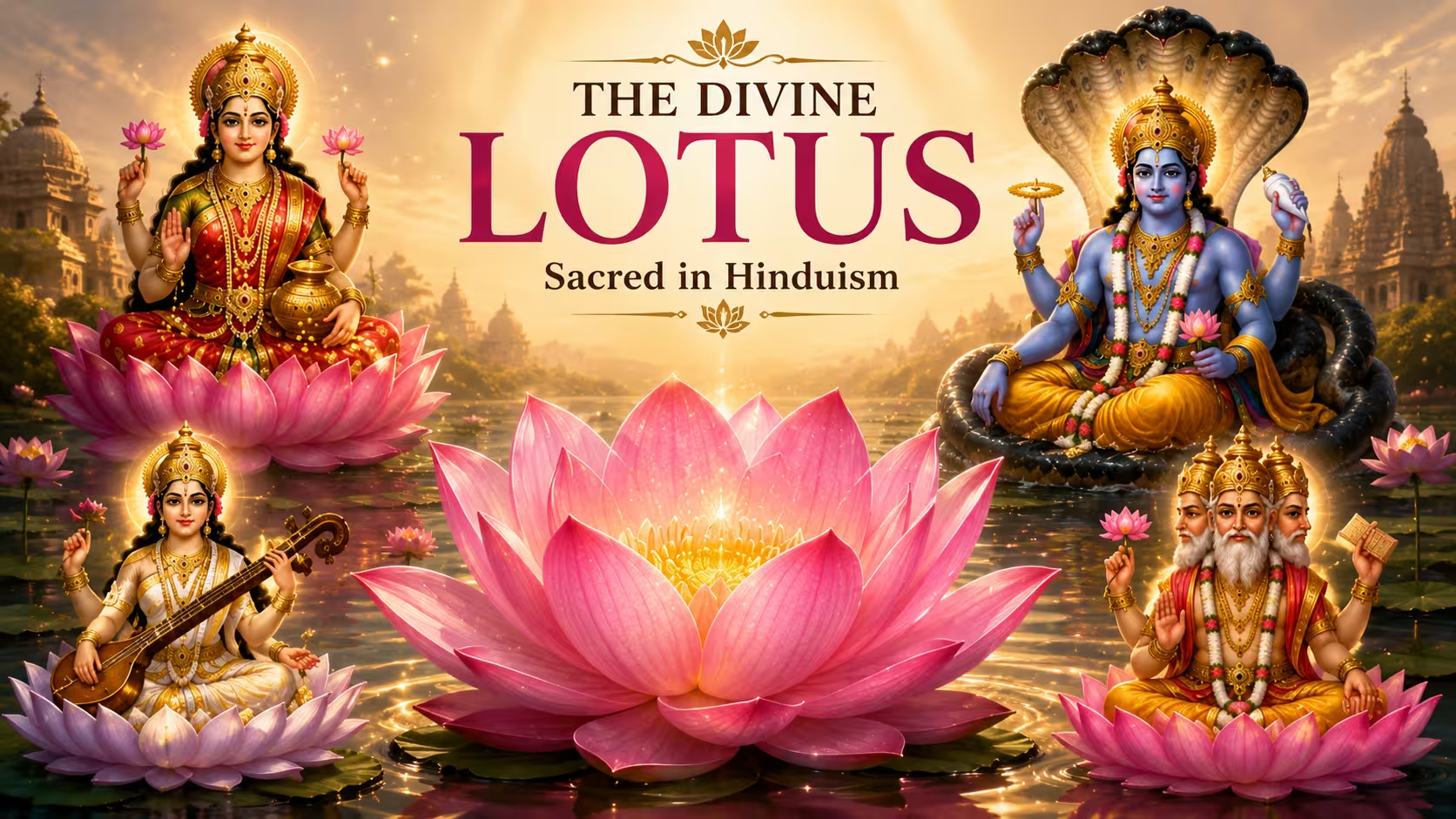
The lotus is one of the most revered and sacred symbols in Hinduism. From ancient scriptures and temple architecture to spiritual practices and depictions of deities, the lotus occupies a special place in Hindu culture and philosophy. Its beauty, purity, and ability to bloom in muddy waters make it a powerful spiritual symbol that conveys profound lessons about life, enlightenment, and divine consciousness.
But why exactly is the lotus considered sacred in Hinduism? What deeper meanings does it carry? Why are so many Hindu gods and goddesses associated with this beautiful flower?
In this article, we explore the spiritual significance of the lotus in Hinduism, its symbolism, its presence in sacred texts, and why it continues to inspire millions of devotees around the world.
The Lotus: Nature’s Spiritual Masterpiece
The lotus flower grows in ponds and lakes, rooted deep in mud. Yet despite emerging from murky waters, it blossoms into a stunning flower untouched by dirt or impurity.
This unique characteristic forms the foundation of its spiritual symbolism in Hinduism.
The lotus teaches that a person can rise above worldly attachments, negativity, and challenges while remaining pure in thoughts and actions. Just as the lotus remains unstained by the mud in which it grows, human beings can live in the material world without becoming trapped by it.
This idea perfectly aligns with Hindu philosophy, which encourages spiritual growth while fulfilling worldly responsibilities.
Symbolism of the Lotus in Hinduism
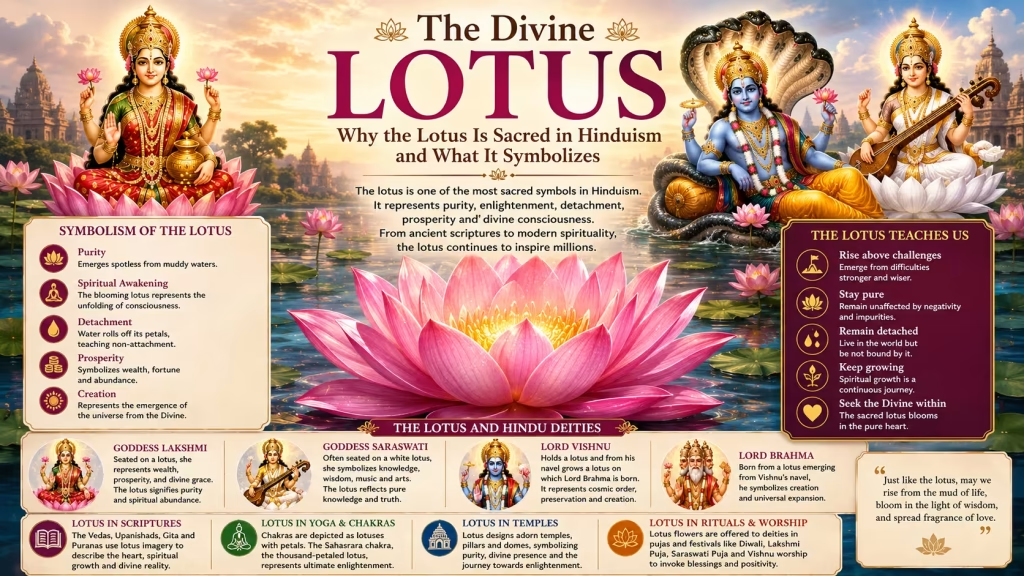
The lotus represents multiple spiritual concepts that are central to Hindu teachings.
1. Purity and Divine Beauty
The lotus is often viewed as a symbol of purity because it emerges spotless from muddy waters.
This reflects the Hindu belief that the soul remains inherently pure despite being surrounded by the imperfections of the material world.
The flower reminds devotees that true purity comes from within and can be maintained regardless of external circumstances.
2. Spiritual Awakening
A lotus bud slowly opens its petals as it blooms.
Similarly, spiritual growth is seen as a gradual unfolding of consciousness. The journey from ignorance to wisdom is often compared to the blooming of a lotus flower.
Each petal symbolizes a stage of spiritual development leading toward self-realization and enlightenment.
3. Detachment
Water droplets roll off lotus petals without sticking to them.
This characteristic symbolizes the Hindu concept of non-attachment (Vairagya).
Devotees are encouraged to participate fully in life while remaining detached from excessive desires, ego, and material possessions.
4. Prosperity and Abundance
The lotus is also associated with wealth, fortune, and prosperity.
Many Hindu rituals use lotus flowers as offerings to invoke divine blessings and positive energy.
5. Creation and Cosmic Order
The lotus plays a vital role in Hindu cosmology and creation myths.
It symbolizes the unfolding of the universe from divine consciousness and the emergence of life from the cosmic source.
The Lotus in Hindu Scriptures
The lotus is mentioned extensively in Hindu scriptures, including the Vedas, Upanishads, Puranas, Ramayana, and Mahabharata.
Ancient sages frequently used lotus imagery to describe spiritual truths and divine realities.
In many sacred texts, the human heart is compared to a lotus where the Divine resides.
The Upanishads describe the heart as a sacred lotus containing the eternal Self (Atman), emphasizing that spiritual realization comes from looking within.
The Bhagavad Gita also uses lotus symbolism to teach detachment and selfless action.
Lord Krishna advises devotees to perform their duties while remaining unattached to the results, much like a lotus leaf remains untouched by water.
Lord Vishnu and the Lotus
Among Hindu deities, Lord Vishnu is closely associated with the lotus.
Many images portray him holding a lotus flower in one of his four hands.
The lotus represents:
- Divine purity
- Cosmic order
- Spiritual knowledge
- Creation and preservation
According to Hindu mythology, a lotus emerged from the navel of Lord Vishnu while he rested on the cosmic serpent Ananta Shesha.
From this lotus appeared Lord Brahma, the creator of the universe.
This famous image symbolizes creation emerging from divine consciousness.
Goddess Lakshmi and the Lotus
Perhaps no deity is more strongly linked to the lotus than Goddess Lakshmi, the goddess of wealth, prosperity, fortune, and beauty.
She is almost always depicted standing or seated upon a fully blossomed lotus flower.
The lotus symbolizes:
- Purity amidst worldly life
- Spiritual wealth
- Divine grace
- Prosperity and abundance
Lakshmi’s association with the lotus teaches that true prosperity should be accompanied by purity, wisdom, and righteousness.
Many devotees offer lotus flowers during Lakshmi Puja to seek blessings for both material and spiritual prosperity.
Goddess Saraswati and the Lotus
Goddess Saraswati, the deity of wisdom, knowledge, music, and learning, is often portrayed sitting on a white lotus.
The white lotus symbolizes:
- Pure knowledge
- Truth
- Enlightenment
- Higher consciousness
Her lotus seat indicates that wisdom blossoms when the mind becomes pure and disciplined.
Lord Brahma and the Lotus
According to Hindu mythology, Lord Brahma emerged from a lotus growing from Lord Vishnu’s navel.
This lotus symbolizes:
- Divine creation
- Cosmic birth
- Universal expansion
The image conveys the belief that all creation originates from the Supreme Divine.
It remains one of the most iconic symbols in Hindu cosmology.
The Lotus and the Chakra System
The lotus holds immense importance in yogic and tantric traditions.
The body’s energy centers, known as chakras, are represented as lotus flowers with varying numbers of petals.
Examples include:
Muladhara Chakra
Represented by a four-petaled lotus.
Anahata Chakra
Represented by a twelve-petaled lotus associated with love and compassion.
Sahasrara Chakra
Known as the Thousand-Petaled Lotus.
Located at the crown of the head, it symbolizes ultimate spiritual awakening and union with the Divine.
The lotus imagery in chakras represents the expansion of consciousness and spiritual evolution.
Lotus in Hindu Temple Architecture
Lotus motifs appear extensively in Hindu temples across India.
Temple ceilings, pillars, domes, entrances, and sanctums often feature intricate lotus carvings.
Architects used lotus designs to symbolize:
- Purity
- Divine presence
- Spiritual ascent
- Cosmic harmony
Many temple domes resemble blooming lotus flowers, signifying the devotee’s journey toward enlightenment.
The lotus also serves as a reminder that the temple itself is a sacred space where spiritual consciousness blossoms.
Lotus in Hindu Rituals and Worship
Lotus flowers are frequently used in Hindu ceremonies and festivals.
They are considered among the most auspicious offerings to deities.
Devotees offer lotus flowers because they symbolize:
- Pure devotion
- Surrender
- Spiritual awakening
- Divine love
Lotus flowers are especially popular during:
- Lakshmi Puja
- Diwali celebrations
- Saraswati Puja
- Vishnu worship
- Navratri rituals
Offering a lotus is believed to attract divine blessings and positive energy.
Spiritual Lessons from the Lotus
The lotus provides timeless guidance for spiritual seekers.
Rise Above Challenges
Just as the lotus emerges from mud, individuals can overcome difficulties and transform adversity into growth.
Stay Pure
External circumstances should not define one’s inner character.
Remain Detached
Like water rolling off lotus petals, one should not become overwhelmed by worldly distractions.
Keep Growing
The blooming lotus reminds us that spiritual growth is a continuous process.
Seek the Divine Within
The lotus symbolizes the sacred heart where the Divine resides.
The Lotus as India's National Flower
The lotus is also the national flower of India.
Its selection reflects the flower’s deep cultural, spiritual, and historical significance.
For thousands of years, it has symbolized purity, resilience, wisdom, and spiritual awakening across Indian traditions.
Its presence in art, literature, temples, and scriptures highlights its enduring importance in Indian civilization.
The lotus is far more than a beautiful flower in Hinduism—it is a profound spiritual symbol that embodies purity, enlightenment, detachment, prosperity, and divine consciousness. Its remarkable ability to bloom untouched by mud mirrors the spiritual journey of the soul rising above worldly limitations.
From Lord Vishnu and Goddess Lakshmi to yoga, chakras, temple architecture, and sacred scriptures, the lotus appears everywhere in Hindu tradition as a reminder of humanity’s highest potential.
Its message remains timeless: live in the world, but do not be bound by it; grow through challenges; and allow the soul to blossom toward divine realization.
As long as Hindu spirituality continues to inspire seekers, the sacred lotus will remain one of its most cherished and meaningful symbols.
FAQ: Lotus Sacred in Hinduism
Why is the lotus sacred in Hinduism?
The lotus symbolizes purity, spiritual awakening, detachment, prosperity, and divine consciousness.
Which Hindu goddess is associated with the lotus?
Goddess Lakshmi is most closely associated with the lotus, though Saraswati and other deities are also linked to it.
What does the lotus symbolize spiritually?
It represents the soul’s journey from ignorance to enlightenment and the ability to remain pure despite worldly challenges.
Why is Lord Vishnu associated with the lotus?
The lotus symbolizes creation, purity, and cosmic order. According to mythology, Lord Brahma emerged from a lotus growing from Vishnu’s navel.
What is the significance of the lotus in yoga?
The chakras are depicted as lotus flowers, representing the expansion of consciousness and spiritual evolution.