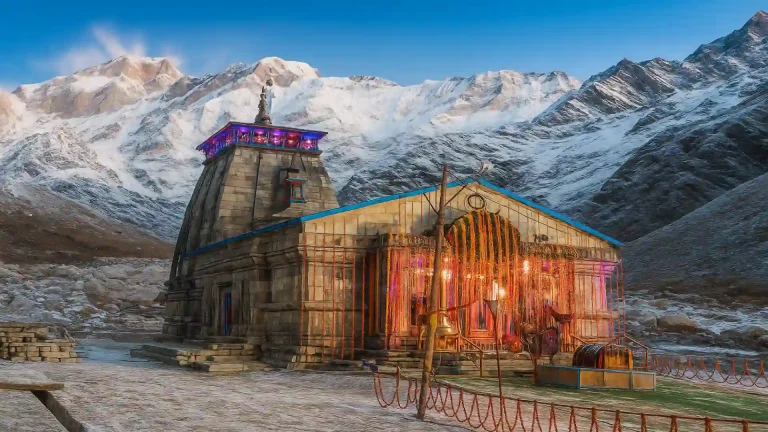

Trimbakeshwar Temple
Nashik District, Maharashtra – 422212
One of the 12 Jyotirlingas of Lord Shiva and one of the Char Dham pilgrimage sites, nestled in the lap of the Himalayas at an altitude of 3,583 meters.
Location
Nashik District, Maharashtra – 422212
Full Address
Shrimant Peshwe Path, Trimbak, Trimbakeshwar Tehsil, Nashik District, Maharashtra – 422212
Latitude
19.93°N (approx. 19°55'56"N)
Longitude
73.53°E (approx. 73°31'51"E)
Built By/ Era
Present structure built by Peshwa Balaji Baji Rao (Nana Saheb), 1740–1760, on the site of a much older shrine
Elevation
Roughly 750 m (2,460 ft) above sea level, at the foot of Brahmagiri hill
Associated Deity
Lord Shiva (Jyotirlinga)
Opening Time
5:30 am
Closing Time
9:00 pm
Timing Notes
The temple typically runs two darshan windows — roughly 5:30 AM to 12:30 PM and 4:00/4:30 PM to 9:00 PM, with a midday gap for rituals. Timings can shift on festival days, Mahashivratri, and during Shravan, so it's worth checking the official Trimbakeshwar Devasthan Trust site before you travel.
Overview
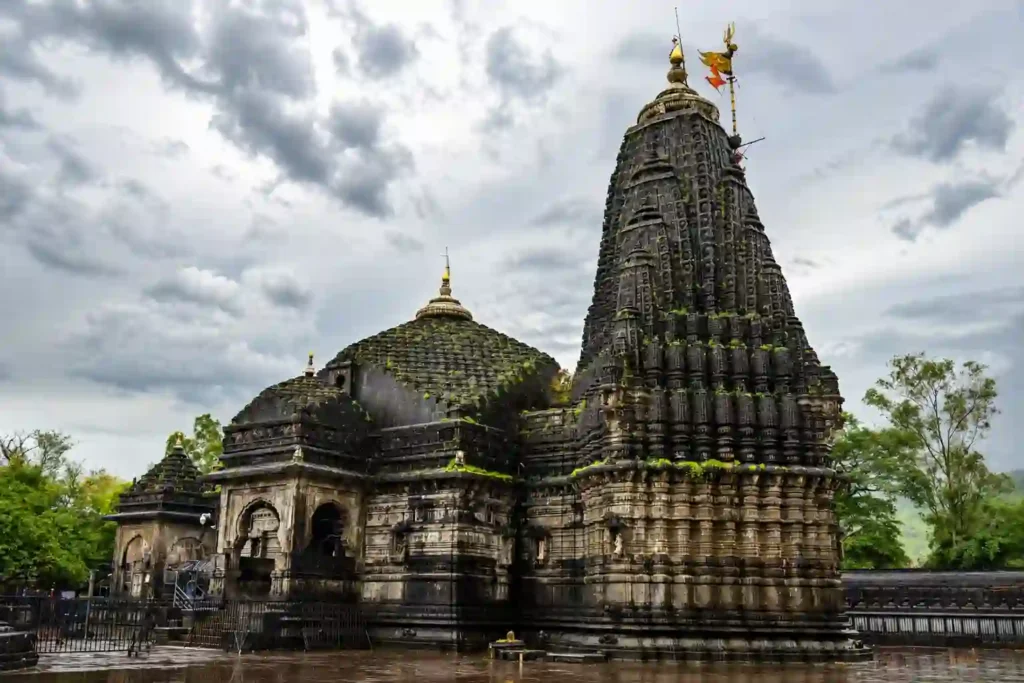
Trimbakeshwar sits in the small town of Trimbak, about 28 km northwest of Nashik city, cradled by three hills — Brahmagiri, Nilagiri, and Kalagiri. Built entirely from black stone in the Hemadpanthi architectural style, the temple has four entrance gates facing the cardinal directions, each carrying its own symbolic meaning: east for beginnings, west for maturity, south for fulfillment, and north for revelation.
What sets this Jyotirlinga apart is the linga itself. Instead of a single Shiva form, it bears three small faces embodying Brahma, Vishnu, and Shiva — a rare and distinctive feature not found at any other Jyotirlinga in India. Over the centuries, continuous ritual bathing (abhishek) has gradually worn down the linga’s surface, something devotees interpret as a quiet reminder of impermanence. A jewel-studded crown, said to date back to the era of the Pandavas and set with diamonds and emeralds, is placed over the linga and put on public display every Monday evening.
Beyond the sanctum, the temple complex houses shrines to Gangadevi, Rameshwara, Kedarnath, Rama-Krishna, and Lakshmi-Narayana, and its courtyards regularly hum with priests performing specialized rituals — Trimbakeshwar is especially renowned for pujas like Narayan Nagbali, Kalsarpa Shanti, and Tripindi Shraddha, drawing people from across the country specifically for these ceremonies.
⛰ 12 Jyotirlingas
🕉 Char Dham
✨ Sacred Place
History
Trimbakeshwar’s story begins long before the current temple structure. Puranic tradition ties the site to the sage Gautama and to Sage Gautama’s penance to Lord Shiva, which is said to have led to the descent of the Godavari — one of India’s longest rivers — from the Brahmagiri hills. This is why Trimbak is revered not just as a Jyotirlinga site but as the river’s spiritual point of origin, a place where geography and mythology are woven into one.
The temple that pilgrims visit today isn’t the original structure. It was commissioned in the mid-18th century by Balaji Baji Rao, the third Peshwa of the Maratha Empire, who rebuilt it on the foundation of an older shrine. Construction is believed to have taken nearly three decades, and the resulting black-stone temple, with its intricate carvings and Nagara-style shikhara, remains one of the finest examples of Peshwa-era temple architecture in Maharashtra.
Trimbak’s religious significance extends beyond the temple walls. The town was originally the site of the Nashik-Trimbakeshwar Simhastha Kumbh Mela’s bathing rituals. After a clash between different sects over precedence in 1789, the Peshwa administration moved one group’s bathing ceremonies to Ramkund in Nashik city — a decision that still shapes how the Kumbh Mela unfolds across both locations today. The town is also historically significant to the Nath tradition and the Varkari Sampradaya, with links to Sant Nivruttinath, elder brother and guru of the poet-saint Dnyaneshwar.
Temple Timings
Opening Time
5:30 am
Closing Time
9:00 pm
Aarti Timings
Morning Aarti
5:30 am
Evening Aarti
7:00 pm
Timing Notes
How to Reach
By Air: The nearest airport is Nashik’s Ozar Airport (also called Gandhinagar Airport), roughly 30–40 km away, with limited domestic connectivity. For wider flight options, Mumbai’s Chhatrapati Shivaji Maharaj International Airport (about 180 km away) or Pune Airport (around 210–220 km away) are the more practical choices, followed by a road journey to Trimbakeshwar.
By Rail: Nashik Road Railway Station is the main rail gateway, well connected to Mumbai, Pune, and other major Indian cities. From the station, Trimbakeshwar is roughly 35–40 km away by road, reachable via taxi, auto, or state transport bus.
By Road: Trimbakeshwar is well served by Maharashtra State Road Transport Corporation (MSRTC) buses running frequently from Nashik city (about 28–30 km, roughly 45 minutes to an hour). Private taxis and cabs are readily available from Nashik, and the drive itself — through open fields and the green foothills of the Sahyadris — is one of the pleasant parts of the trip. From Mumbai, it’s about 180 km; from Pune, around 210–220 km, both manageable as a day trip or with an overnight stay.
Nearby Places
Frequently Asked Questions
Kedarnath Temple is famous as one of the 12 Jyotirlingas and part of the Char Dham pilgrimage.
It is believed to have been built by the Pandavas and later reconstructed by Adi Shankaracharya.
The temple closes due to heavy snowfall making the region inaccessible; the deity is moved to Ukhimath.
The temple is open from May to October, with pleasant weather during these months.
Via road to Gaurikund, followed by a 16 km trek, or by helicopter services available seasonally.
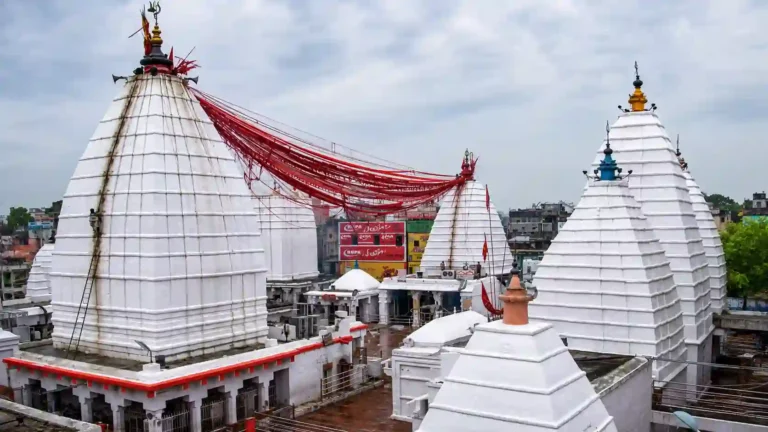
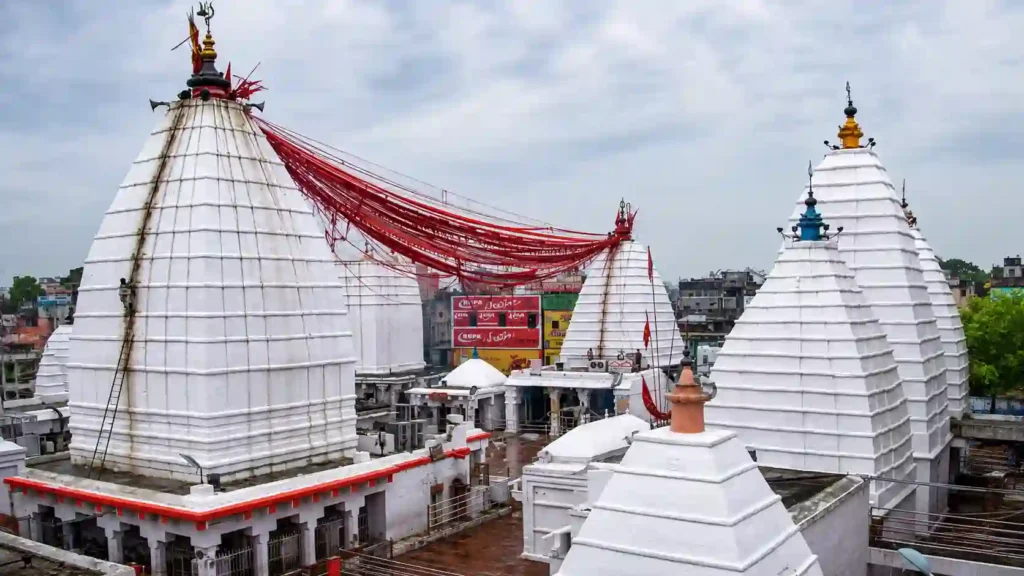
Vaidyanath Temple
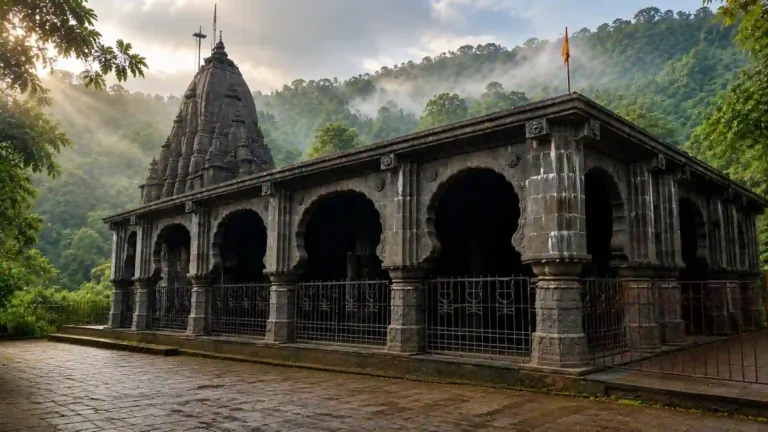
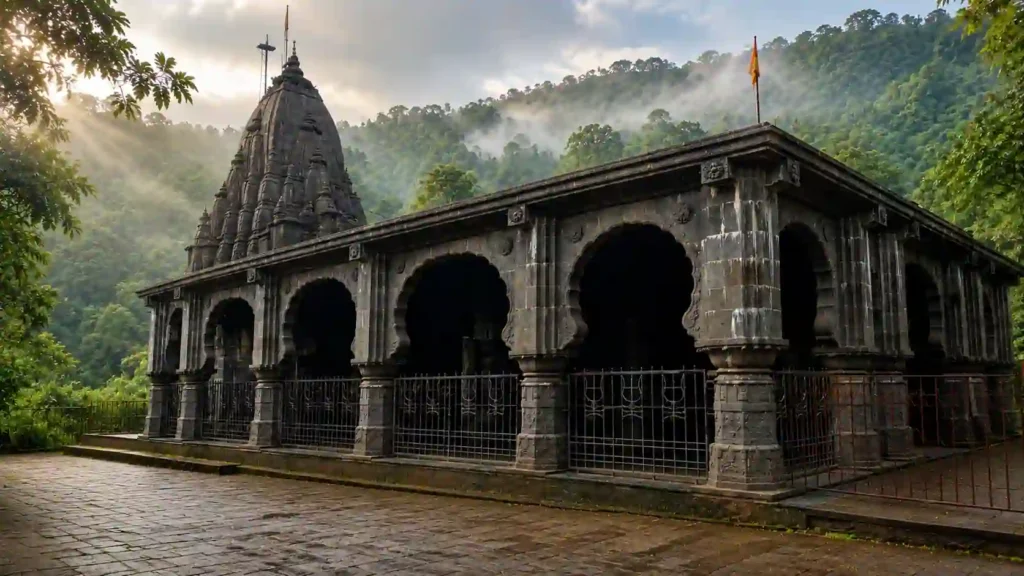
Bhimashankar Temple
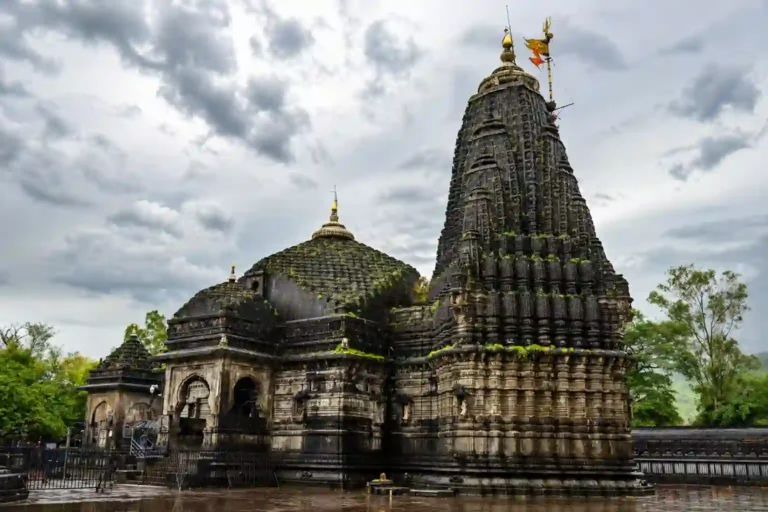
Trimbakeshwar Temple
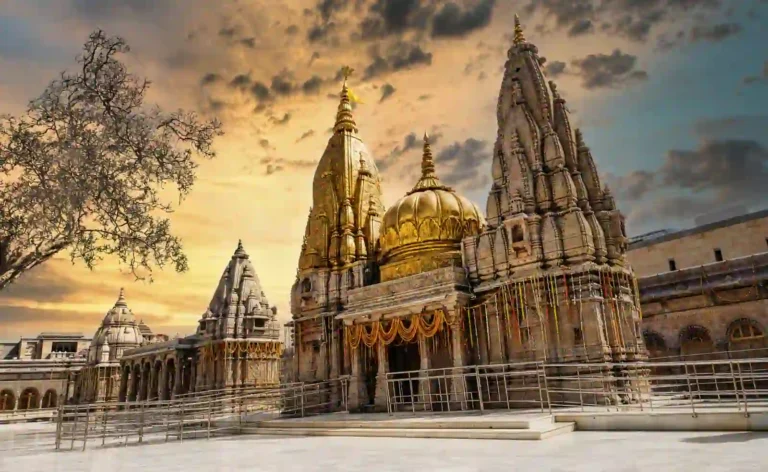
Kashi Vishwanath Temple