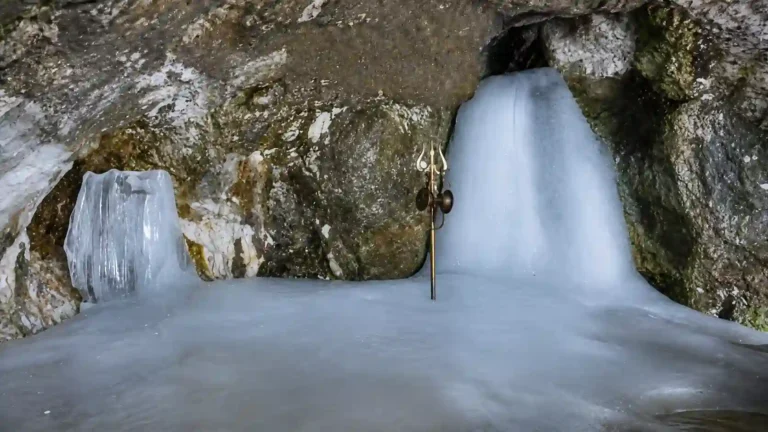

Omkareshwar Temple
Mandhata Island, on the Narmada River, near Khandwa city, Madhya Pradesh
One of the 12 Jyotirlingas of Lord Shiva and one of the Char Dham pilgrimage sites, nestled in the lap of the Himalayas at an altitude of 3,583 meters.
Location
Mandhata Island, on the Narmada River, near Khandwa city, Madhya Pradesh
Full Address
Shri Omkareshwar Mandir Trust, Omkareshwar, Tehsil Punasa, Khandwa District, Madhya Pradesh – 450554, India
Latitude
22.246°N
Longitude
76.151°E
Built By/ Era
Ancient site referenced in the Shiva Purana; the present temple structure is generally credited to the Paramara rulers of Malwa in the 11th century CE, with later renovations by subsequent dynasties
Elevation
Approximately 175–200 metres above sea level, at the riverside level of the Narmada valley
Associated Deity
Lord Shiva (Jyotirlinga)
Opening Time
5:00 am
Closing Time
9:00 pm
Timing Notes
Jalabhishek and morning rituals begin shortly after opening; the evening Shringar Aarti is typically performed around 8:20–8:30 PM, just before the temple closes for the night
Overview
At the point where the Narmada River curves around a small rocky island in western Madhya Pradesh, an entire landform is said to trace the shape of a sacred syllable. Mandhata Island, on which Omkareshwar Temple stands, is popularly believed to be shaped like “ॐ” — the primal sound at the heart of Hindu cosmology — and it’s this striking natural coincidence, layered onto centuries of devotion, that has made Omkareshwar one of the most visited of the twelve Jyotirlingas in India.
Unlike many Jyotirlinga shrines that stand alone, Omkareshwar is part of a paired sacred geography: directly across the river sits Mamleshwar Temple, considered by some traditions to house the “true” twelfth Jyotirlinga, leading to gentle debate among scholars and devotees over the centuries about which shrine holds that exact distinction. Regardless, both temples are treated as inseparable parts of the same pilgrimage, and most visitors make it a point to see both.
The setting itself adds to the experience — a temple built into a riverine landscape, reached by crossing the Narmada, surrounded by hills, older caves, and the more recent presence of the Omkareshwar Dam, which has reshaped the river’s flow around the island in the last two decades.
Notes
Omkareshwar sits on Mandhata Island in the Narmada — an island whose very shape is said to resemble the Devanagari “ॐ” symbol, which is part of what makes the site so revered.
The island holds two important shrines: Omkareshwar itself, and Mamleshwar (also called Amareshwar) on the southern riverbank, and many pilgrims choose to visit both in the same trip.
Timings can extend or shift during Mahashivratri, the month of Shravan, and Kartik Purnima, when crowds swell significantly.
Footwear must be removed before entering, and modest clothing is expected, as at most Hindu temple complexes.
Photography is generally restricted inside the sanctum; VIP or “Vishesh” darshan tickets are available at a nominal fee for those wanting to skip the general queue.
Reaching the temple involves crossing a footbridge or boat over the Narmada to the island — factor this into your travel time, especially during peak season.
⛰ 12 Jyotirlingas
🕉 Char Dham
✨ Sacred Place
History
Omkareshwar’s roots run deep into scriptural tradition. The temple and its Jyotirlinga are mentioned in the Shiva Purana, where it is described as one of the twelve places where Shiva manifested as a column of light — a Jyotirlinga — to end a dispute over supremacy among the gods. Local legend also credits the ancient King Mandhata, an ancestor associated with the Ikshvaku dynasty, with performing intense penance at this very location, giving the island one of its enduring names.
The island carries even older historical layers — it has at times been identified with ancient Mahishmati, once the capital of the Avanti Mahajanapada, one of the sixteen great kingdoms of early Indian history, underscoring how long this stretch of the Narmada has held political and spiritual significance.
The temple structure that pilgrims visit today is generally attributed to the Paramara dynasty of Malwa, who were active patrons of temple-building across the region during the 11th century CE. Over the following centuries, the shrine saw further repairs and additions from various regional rulers, as is common with temples that have remained in continuous worship for close to a thousand years.
The island also holds a quieter but significant place in the history of Hindu philosophy — tradition holds that it was here, in a small cave still accessible by a flight of steps below the temple, that the philosopher Adi Shankaracharya first met his guru, Govinda Bhagavatpada, an encounter that shaped the course of Advaita Vedanta.
Temple Timings
Opening Time
5:00 am
Closing Time
9:00 pm
Aarti Timings
Morning Aarti
Evening Aarti
Timing Notes
How to Reach
By Air: The nearest airport is Indore’s Devi Ahilyabai Holkar Airport, roughly 75–80 km away, with regular domestic connections to major Indian cities. From Indore, taxis and buses cover the distance to Omkareshwar in about two hours.
By Train: Omkareshwar Road railway station, on the Akola–Ratlam line, is the closest railhead, located about 10–12 km from the temple. From the station, autos and taxis run regularly to the temple town, where the final approach to the island is made on foot or by boat across the Narmada.
By Road: Omkareshwar is well connected by road to Indore (about 77 km) and Khandwa city, with state buses and private taxis operating frequently on these routes. The drive from Indore takes roughly two hours through pleasant Malwa countryside.
Once in Omkareshwar town, reaching the temple itself typically involves crossing a footbridge (or occasionally a boat, depending on water levels) onto Mandhata Island, since the sanctum stands apart from the mainland.
Nearby Places
Frequently Asked Questions
Kedarnath Temple is famous as one of the 12 Jyotirlingas and part of the Char Dham pilgrimage.
It is believed to have been built by the Pandavas and later reconstructed by Adi Shankaracharya.
The temple closes due to heavy snowfall making the region inaccessible; the deity is moved to Ukhimath.
The temple is open from May to October, with pleasant weather during these months.
Via road to Gaurikund, followed by a 16 km trek, or by helicopter services available seasonally.
You Might Also Like -
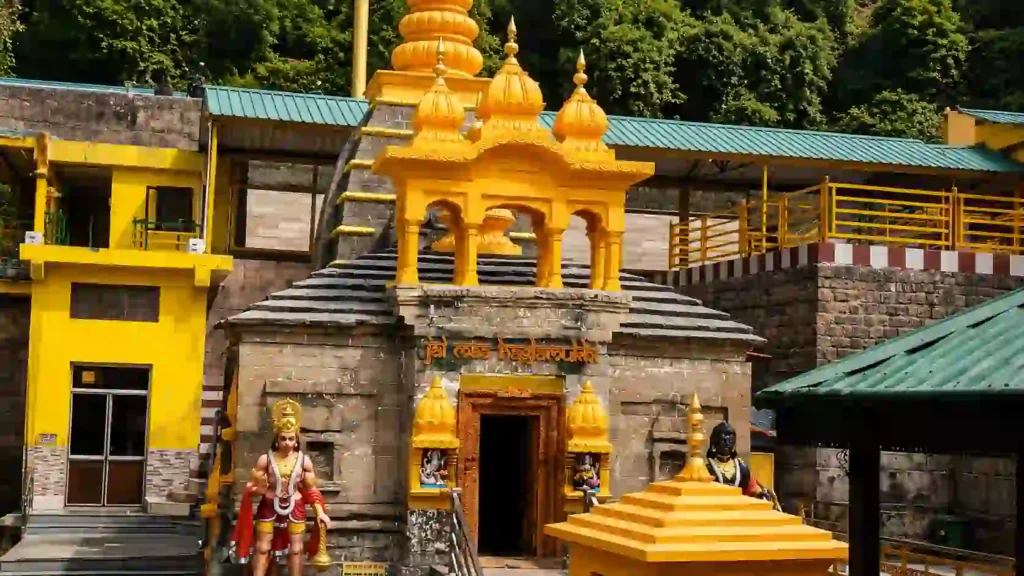
Maa Baglamukhi Temple
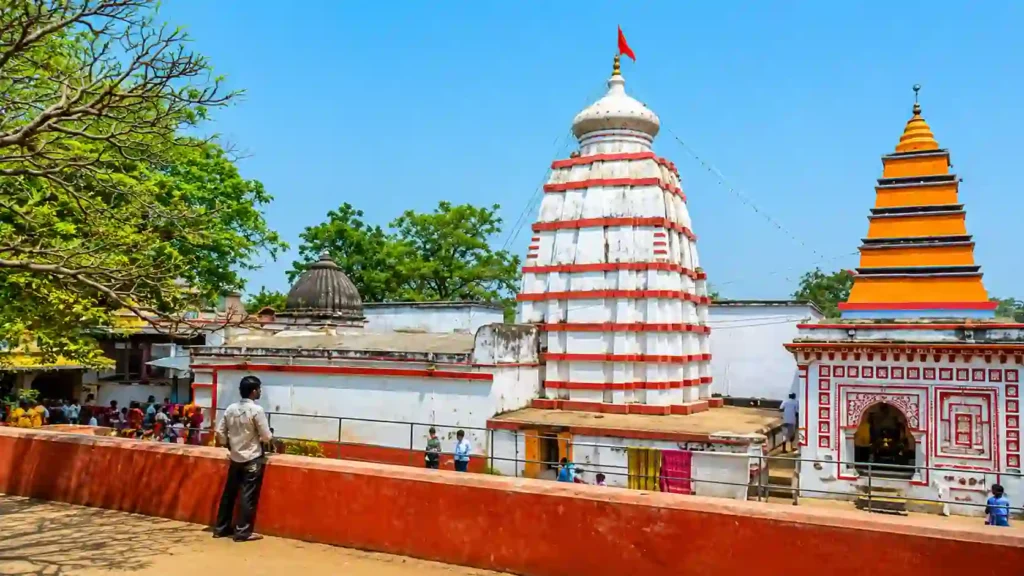
Bakreshwar Temple
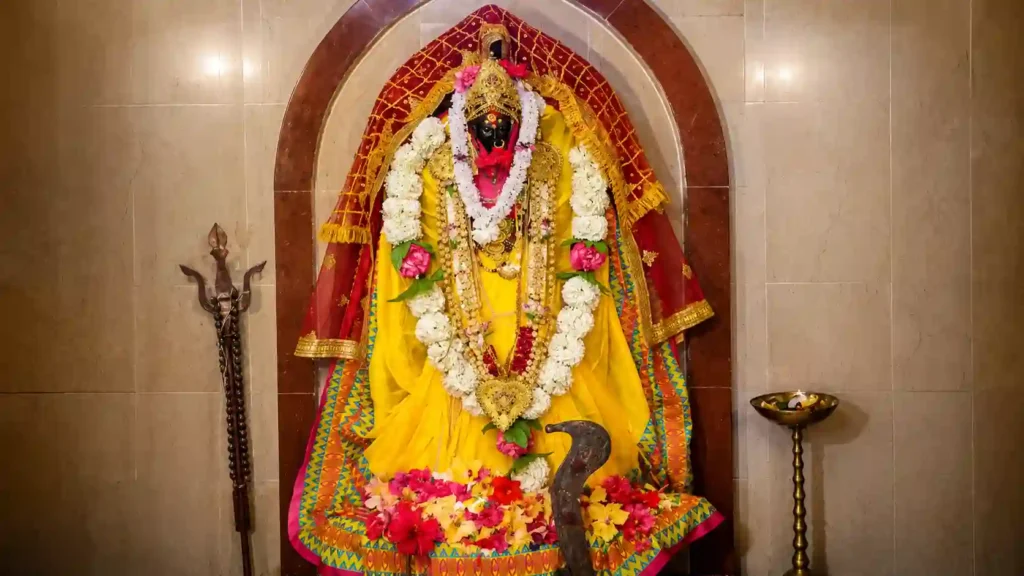
Bahula Devi Temple (Shakti Peeth)
Attahas Temple (Phullara Shakti Peeth), Birbhum