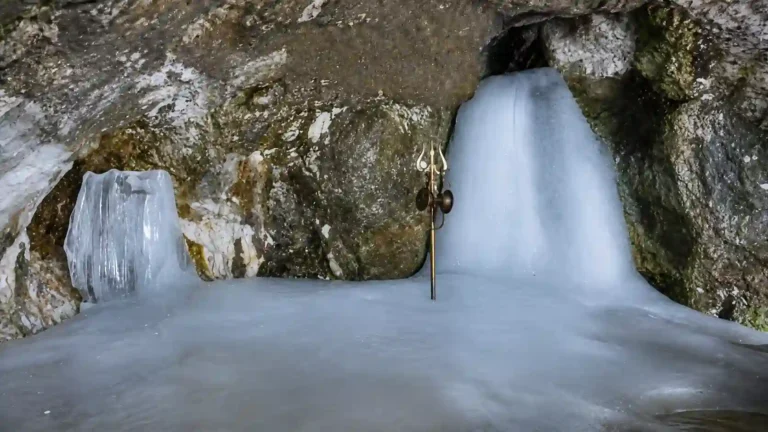

Mallikarjuna Temple
Srisailam, Andhra Pradesh
One of the 12 Jyotirlingas of Lord Shiva and one of the Char Dham pilgrimage sites, nestled in the lap of the Himalayas at an altitude of 3,583 meters.
Location
Srisailam, Andhra Pradesh
Full Address
Sri Bhramaramba Mallikarjuna Swamy Varla Devasthanam, Srisailam, Nandyal District, Andhra Pradesh – 518101, India
Latitude
16.074°N
Longitude
78.868°E
Built By/ Era
Shrine references date back over a thousand years, with the oldest sanctum traced to around the 7th century; substantially expanded through the Kakatiya, Reddy, and especially the Vijayanagara period, including additions credited to Chhatrapati Shivaji in the 17th century
Elevation
Approximately 476 metres (about 1,562 feet) above sea level
Associated Deity
Lord Shiva (Jyotirlinga)
Opening Time
4:30 am
Closing Time
10:00 pm
Timing Notes
General darshan runs roughly 6:30 AM – 1:00 PM and 6:30 PM – 9:00 PM, with rituals continuing through the rest of the open hours
Overview
High on the flat-topped Nallamala Hills, where the Krishna River carves a deep gorge nearly a kilometre below, sits one of the most distinctive of Shiva’s twelve Jyotirlingas. Srisailam — also called Srigiri, Srinagam, or Sri Parvatham in older texts — is home to the Mallikarjuna Jyotirlinga, but what sets this temple apart from most other Jyotirlinga shrines is that it isn’t dedicated to Shiva alone.
Within the very same temple complex stands Goddess Bhramaramba Devi, honoured as one of the eighteen Shakti Peethas — sacred sites associated with the goddess across the subcontinent. This rare pairing of a Jyotirlinga and a Shakti Peetha under one roof makes Srisailam one of only three such combined sites in the country, drawing devotees from both major Shaivite and Shakta traditions in equal measure.
The temple’s setting only deepens its character. Surrounded by dense forest that is today part of a protected tiger reserve, with the Krishna River winding far below in a valley roughly a hundred metres wide and a thousand metres deep, Srisailam offers a pilgrimage experience shaped as much by its dramatic geography as by its religious history.
Notes
Srisailam is one of only three sites in India where a Jyotirlinga (Shiva’s abode) and a Shakti Peetha (Parvati’s abode) exist within the same temple complex, making it uniquely significant to both Shaivite and Shakta traditions.
The temple’s approach road passes through the Nallamala forest, part of a tiger reserve, and forest-route timings can affect road travel after dark — plan your drive accordingly.
Footwear must be removed before entering, and modest, traditional clothing is recommended throughout the complex.
Timings extend significantly during the 11-day Mahashivratri Brahmotsavam, when the temple sees some of its largest crowds of the year.
Photography rules can vary by area within the complex, so it’s worth checking signage near the sanctum before using a camera or phone.
Entry to general darshan is free of cost; special or VIP darshan options may be available separately through the temple’s Devasthanam counters.
⛰ 12 Jyotirlingas
🕉 Char Dham
✨ Sacred Place
History
Srisailam’s human history stretches back further than most temple towns can claim — prehistoric studies suggest habitation in the area going back tens of thousands of years, though the site’s documented religious significance begins to take shape in the early centuries of the common era. The earliest known historical reference to the hill appears in an inscription of the Satavahana king Vasishthiputra Pulumavi, dated to around the 1st century CE, placing Srisailam among South India’s oldest continuously recognised sacred sites.
The temple itself carries layers built up by successive dynasties over more than a thousand years. The oldest shrine within the complex, housing the Mallikarjuna lingam, is generally dated to around the 7th century. Over the centuries that followed, rulers from the Ikshvaku, Pallava, Vishnukundin, Chalukya, Kakatiya, and Reddy dynasties all contributed to the temple’s growth, each adding structures, inscriptions, or endowments that reflect the political history of the Deccan as much as its religious devotion.
The temple’s most substantial architectural expansion came during the Vijayanagara period, when the distinctive Mukha Mandapa — the ornately pillared hall leading into the sanctum — was constructed, along with much of the sculptural work that still defines the complex’s character today. Even after the Vijayanagara era, the temple continued to receive royal patronage; one of its gopurams (temple towers) is credited to the Maratha ruler Chhatrapati Shivaji in the 17th century, a reminder of how far the temple’s reputation had travelled beyond South India by that time.
Today, the temple is formally known as the Sri Bhramaramba Mallikarjuna Swamy Varla Devasthanam and continues to function as one of Andhra Pradesh’s most significant living pilgrimage sites, drawing devotees from Telangana, Karnataka, Maharashtra, and across South India.
Temple Timings
Opening Time
4:30 am
Closing Time
10:00 pm
Aarti Timings
Morning Aarti
4:30 am
Evening Aarti
10:00 pm
Timing Notes
How to Reach
By Air: The nearest major airport is Rajiv Gandhi International Airport in Hyderabad, roughly 200–212 km away. From the airport, the road journey to Srisailam takes around 5 to 6 hours by taxi or bus, partly through forested hill terrain.
By Train: There are no direct trains into Srisailam itself. The nearest railway station is Markapur Road, from where taxis or buses complete the remaining distance. Many pilgrims instead take a train to Hyderabad, Kurnool, or Nandyal and continue onward by road.
By Road: Srisailam is well connected by regular bus services from Hyderabad, Kurnool, Nandyal, Vijayawada, Tirupati, and Ongole, with the town roughly 212 km from Hyderabad and 179 km from Kurnool. The final stretch of the drive winds through the Nallamala forest, offering scenic views but requiring attention to forest-route timings, especially after dusk.
Once in Srisailam, the temple sits centrally in the town, within easy walking or short auto-rickshaw distance of most accommodations.
Nearby Places
Frequently Asked Questions
Kedarnath Temple is famous as one of the 12 Jyotirlingas and part of the Char Dham pilgrimage.
It is believed to have been built by the Pandavas and later reconstructed by Adi Shankaracharya.
The temple closes due to heavy snowfall making the region inaccessible; the deity is moved to Ukhimath.
The temple is open from May to October, with pleasant weather during these months.
Via road to Gaurikund, followed by a 16 km trek, or by helicopter services available seasonally.
You Might Also Like -
Maa Baglamukhi Temple
Bakreshwar Temple
Bahula Devi Temple (Shakti Peeth)
Attahas Temple (Phullara Shakti Peeth), Birbhum