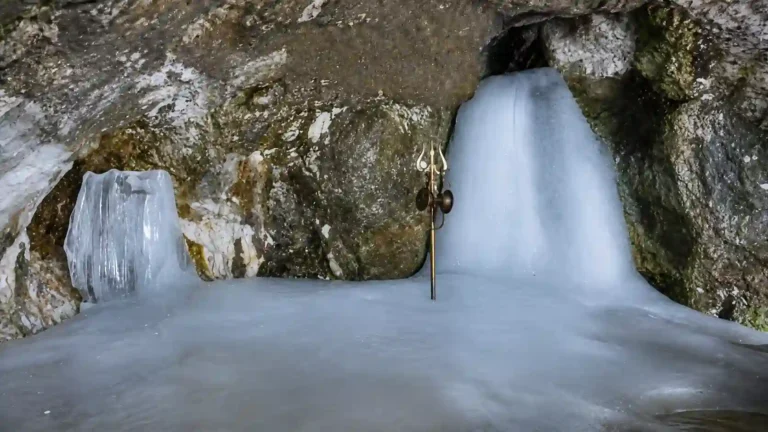

Amarnath Cave (Mahamaya Shakti Peetha)
South Kashmir Himalayas, Jammu & Kashmir
One of the 12 Jyotirlingas of Lord Shiva and one of the Char Dham pilgrimage sites, nestled in the lap of the Himalayas at an altitude of 3,583 meters.
Location
South Kashmir Himalayas, Jammu & Kashmir
Full Address
Shri Amarnathji Cave Shrine, Baltal–Amarnath Trek, Forest Block, Pahalgam, Jammu & Kashmir – 192230, India
Latitude
34.213°N
Longitude
75.500°E
Built By/ Era
Not a constructed temple — a naturally formed Himalayan cave shrine, revered for an estimated 5,000 years, with the earliest textual mention traced to Kalhana's 12th-century chronicle Rajatarangini, and a recorded 11th-century gift of ritual items by Queen Suryamati to the shrine
Elevation
3,888 metres (approximately 12,756 feet) above sea level
Associated Deity
Lord Shiva (Jyotirlinga)
Opening Time
4:00 am
Closing Time
5:00 pm
Timing Notes
The annual Yatra runs for roughly 38 to 60 days depending on the year, typically starting around late June or early July and concluding around Raksha Bandhan / Shravan Purnima in August
Overview
High in the Himalayas of South Kashmir, past glacial valleys and snow-fed rivers, sits a cave that draws hundreds of thousands of pilgrims every summer for a darshan that exists for only a few weeks a year. Amarnath is unlike any other shrine on the Jyotirlinga-adjacent pilgrimage circuit — there is no carved stone sanctum, no centuries-old masonry, no continuous priesthood tending an idol year-round. Instead, nature itself performs the ritual: water dripping from the cave roof freezes into a column of ice, worshipped as a self-formed (Swayambhu) manifestation of Shiva.
What makes the site doubly significant is its dual identity. To Shaivites, it is the cave where Shiva is believed to have revealed the secret of immortality (Amar Katha) to Parvati — the very origin of the cave’s name, Amarnath, “the Eternal Lord.” To Shakta devotees, the same cave is Mahamaya Shakti Peetha, one of the 51 sacred sites where a part of Sati’s body is believed to have fallen to earth after her self-immolation — here, her throat. In this single cave, Shiva is present twice over: as the ice lingam, and as Bhairava in his form of Trisandhyeshwar, guardian of the Goddess.
The pilgrimage to reach it, the Amarnath Yatra, is as much a part of the experience as the darshan itself — a physically demanding trek through some of the most dramatic Himalayan scenery in India, undertaken each year by devotees for whom the journey is itself an act of devotion.
Amarnath is not a conventional built temple — it is a high-altitude natural cave, and the “Shivling” is a stalagmite of ice formed by dripping water freezing on the cave floor, believed by devotees to wax and wane with the lunar cycle, reaching its fullest around the full moon of Shravan.
Because the cave sits at nearly 3,900 metres, the Yatra is physically demanding and carries genuine risk of altitude sickness; mandatory health certificates and registration through the Shri Amarnathji Shrine Board (SASB) are required for all pilgrims.
Two routes lead to the cave: the shorter, steeper 14-km Baltal route (Ganderbal district), typically completed in a single long day, and the longer, gentler 36–48 km Pahalgam route (Anantnag district) via Chandanwari, Sheshnag, and Panchtarni, usually taken over 3 to 5 days.
Registration opens months in advance (commonly mid-March to mid-April) through designated bank branches, the SASB website, or the official mobile app, and is mandatory for every pilgrim regardless of age or route chosen.
Pilgrims must be between roughly 13 and 70 years of age, and women more than six weeks pregnant are not permitted to undertake the Yatra, per Shrine Board guidelines.
Helicopter services operate between base camps and points closer to the cave for those unable to trek the full distance, though a valid health certificate remains mandatory even for helicopter passengers.
As this is one of the 51 Shakti Peethas, many devotees consider the pilgrimage a dual act of worship — honouring both Shiva, present as the ice lingam, and Devi Sati, present as Mahamaya
⛰ 12 Jyotirlingas
🕉 Char Dham
✨ Sacred Place
History
Amarnath’s documented history stretches back further than most Indian pilgrimage sites still in active worship. The earliest known textual reference to the cave — referred to as “Krishaanth” or Amarnath — appears in Kalhana’s 12th-century chronicle Rajatarangini, in Book VII, verse 183, indicating the site’s importance to Kashmiri religious life centuries before the modern Yatra took shape. Historical records also note that in the 11th century, Queen Suryamati is believed to have gifted trishuls, a banaling (sacred stone lingam), and other ritual seals to the shrine, suggesting organised worship at the cave was already well established by that period.
Local folklore offers a different, more recent origin story for how the cave became widely known to pilgrims in the modern era. According to popular telling, in 1850, a Muslim shepherd named Buta Malik was grazing his cattle in the high mountains when he encountered a sadhu (or, in some versions, a Sufi saint) who gave him a bag of coal. On returning home, Buta Malik discovered the coal had turned to gold. Retracing his steps to find the saint and thank him, he instead discovered the entrance to the cave, and the site began drawing pilgrims in far greater numbers from that point onward. In recognition of this legend, a share of the offerings collected at the shrine has traditionally been allocated to Buta Malik’s descendants, a practice that continued for well over a century.
Mythologically, the cave’s significance runs deeper still. It is here, according to Puranic tradition, that Shiva chose to narrate the secret of immortality to Parvati — and, to ensure the secret remained undisturbed, is said to have left behind his bull Nandi, released his snakes, and abandoned the moon from his hair before entering the cave, explaining the presence of several nearby landmarks named after these companions along the Yatra route, such as Sheshnag (the snake) and Panchtarni (the five streams). A pair of pigeons in the cave are believed to have overheard the secret and become immortal as a result — sightings of birds near the cave are still considered auspicious by many pilgrims today.
The cave’s identity as a Shakti Peetha adds a second, older layer of history rooted in the wider Sati legend: after Sati’s self-immolation at her father Daksha’s yagna, a grief-stricken Shiva carried her body across the cosmos until Vishnu, to end his anguish, cut it into 51 pieces with the Sudarshan Chakra, each piece falling at a different location and giving rise to a Shakti Peetha. At Amarnath, tradition holds that her throat fell, giving the site its dual role as both Shiva shrine and Devi shrine within a single sacred cave.
Temple Timings
Opening Time
4:00 am
Closing Time
5:00 pm
Aarti Timings
Morning Aarti
Evening Aarti
Timing Notes
How to Reach
By Air: The nearest airport is Srinagar International Airport, roughly 90–140 km from the cave depending on the route taken, with regular domestic flights connecting to Delhi, Mumbai, and other major Indian cities. From Srinagar, road transport connects onward to the Baltal or Pahalgam base camps.
By Train: The nearest major railhead is Jammu Tawi, from where pilgrims typically continue by road or connecting transport to Srinagar and onward to the base camps at Pahalgam or Baltal.
By Road: Two official Yatra routes lead to the cave, both requiring prior registration with the Shri Amarnathji Shrine Board:
Baltal Route (Ganderbal district) — a shorter, steeper roughly 14-km trek from Baltal, near Sonamarg, often completed in a single long day by fit trekkers.
Pahalgam Route (Anantnag district) — the longer, more traditional path, spanning roughly 36–48 km via Chandanwari, Pissu Top, Sheshnag, the Mahagunas Pass (4,276 m, the route’s highest point), and Panchtarni, typically covered over 3 to 5 days.
Ponies, palanquins (palkis), and porters are available along both routes for those unable to trek the full distance, and helicopter services connect the base camps to points closer to the cave for a faster, less strenuous journey.
Registration: Mandatory for all pilgrims, opening in mid-March to mid-April each year via the SASB website, official mobile app, or designated bank branches, and requiring a valid health certificate from an authorised medical institution.
Nearby Places
Frequently Asked Questions
Kedarnath Temple is famous as one of the 12 Jyotirlingas and part of the Char Dham pilgrimage.
It is believed to have been built by the Pandavas and later reconstructed by Adi Shankaracharya.
The temple closes due to heavy snowfall making the region inaccessible; the deity is moved to Ukhimath.
The temple is open from May to October, with pleasant weather during these months.
Via road to Gaurikund, followed by a 16 km trek, or by helicopter services available seasonally.
You Might Also Like -
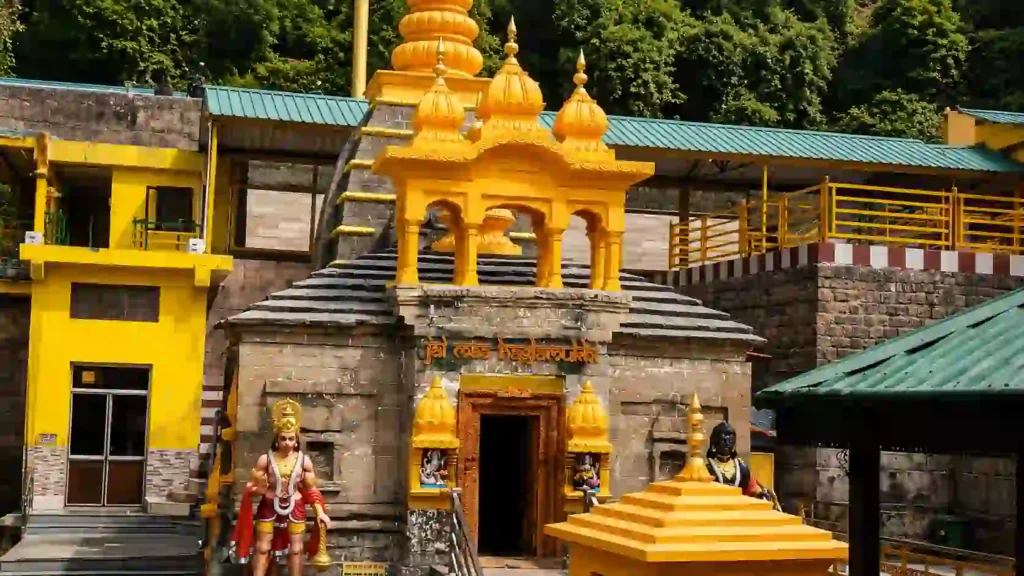
Maa Baglamukhi Temple
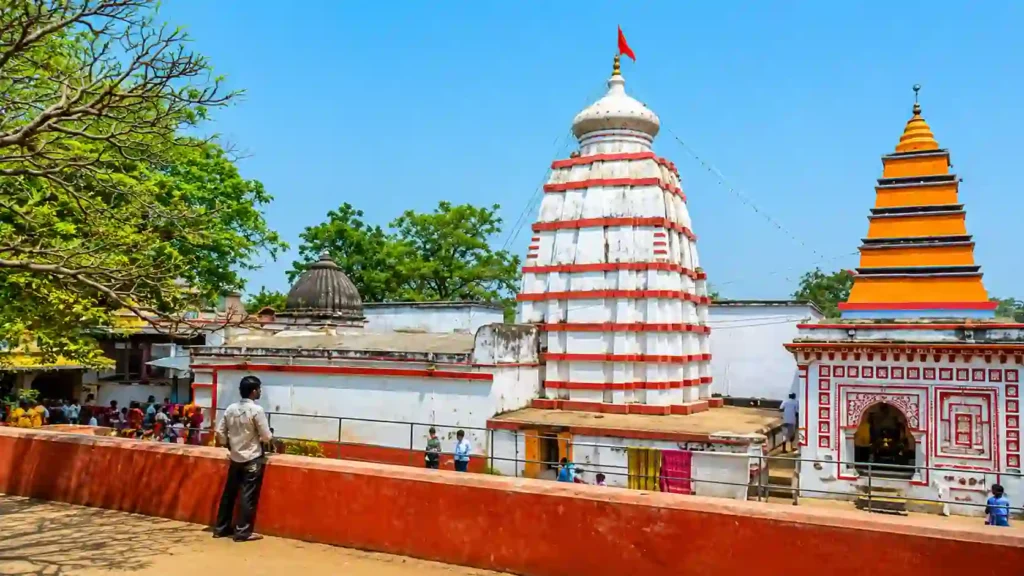
Bakreshwar Temple
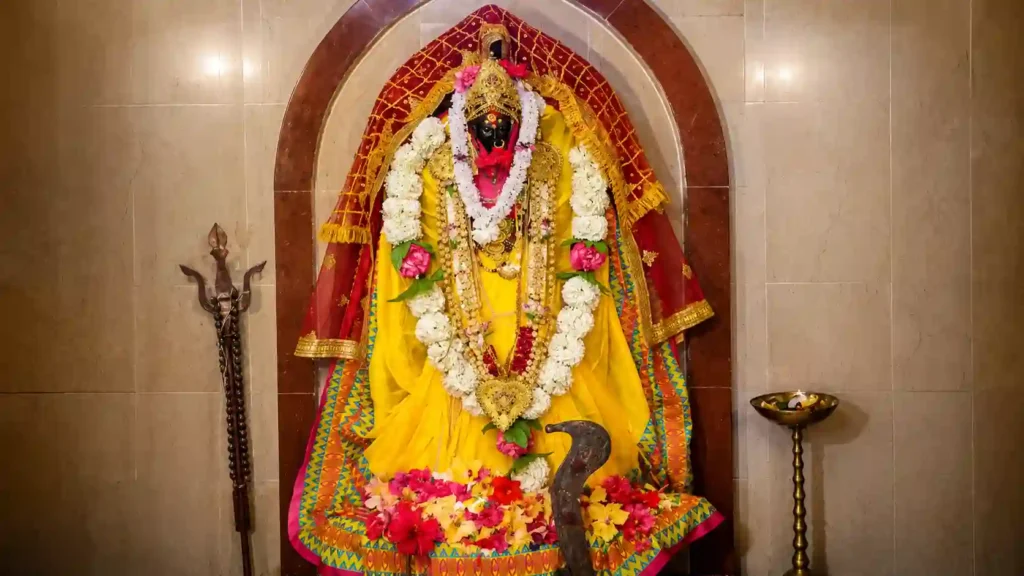
Bahula Devi Temple (Shakti Peeth)
Attahas Temple (Phullara Shakti Peeth), Birbhum