Table of Contents
Lord Shiva Carries the Trishul
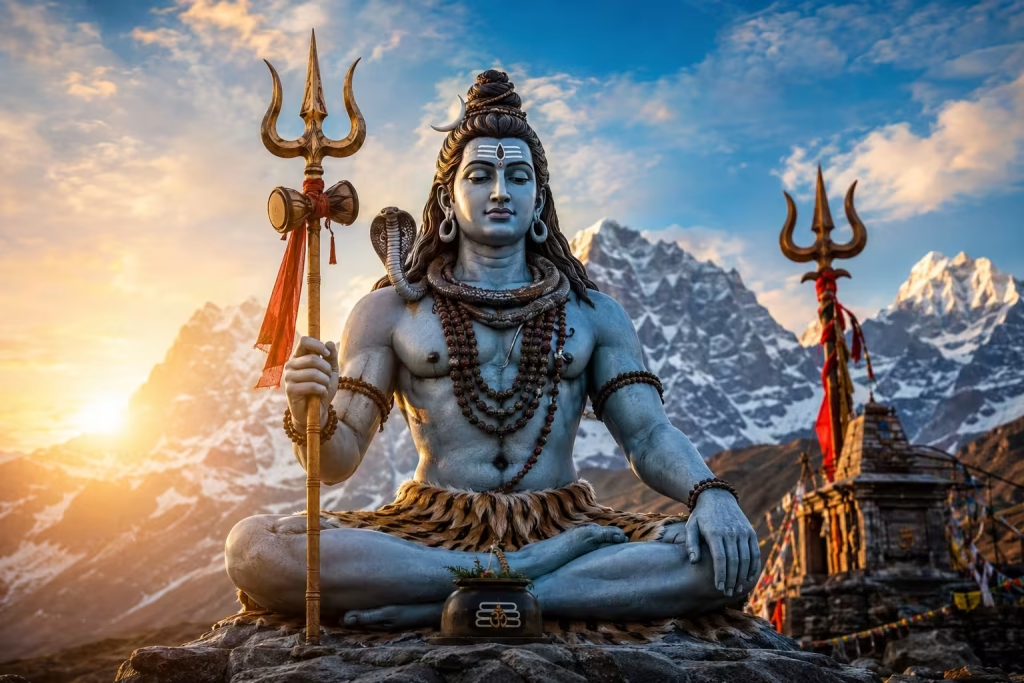
The Trishul (Trident) stands as one of the most powerful and recognizable among all the sacred symbols associated with Lord Shiva. Whenever devotees visualize Mahadev, they often picture him holding a mighty Trishul alongside his damru, wearing a serpent around his neck, and seated in deep meditation upon Mount Kailash.
The Trishul is far more than a weapon. It represents profound spiritual truths, cosmic principles, and the supreme powers that govern the universe. In Hinduism, every aspect of Lord Shiva carries symbolic meaning, and the Trishul is one of the deepest expressions of his divine nature.
This article explores the importance of the Trishul in Shiva worship, its spiritual significance, symbolism, mythological stories, and lessons for devotees.
What is the Trishul?
The word “Trishul” comes from two Sanskrit words:
- “Tri” meaning three
- “Shula” meaning spear or sharp weapon
Thus, Trishul literally means “three-pronged spear.”
The Trishul consists of three sharp points connected to a single shaft. While it appears to be a weapon, Hindu scriptures describe it as a symbol of cosmic balance and divine authority.
Lord Shiva’s Trishul represents his control over all dimensions of existence and demonstrates his role as the supreme force governing creation, preservation, and destruction.
The Symbol of the Hindu Trinity
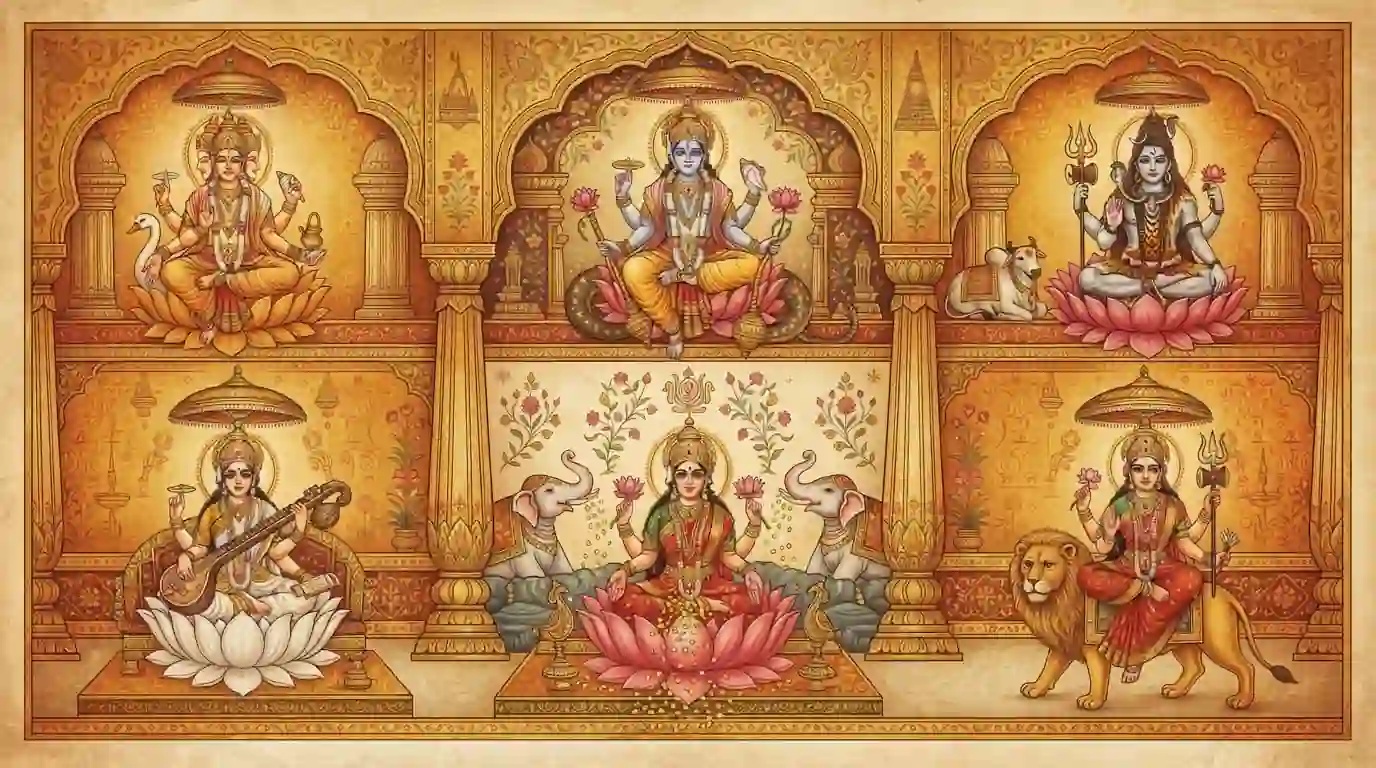
One of the most important meanings of the Trishul is its connection to the Trimurti:
- Lord Brahma – The Creator
- Lord Vishnu – The Preserver
- Lord Shiva – The Destroyer and Transformer
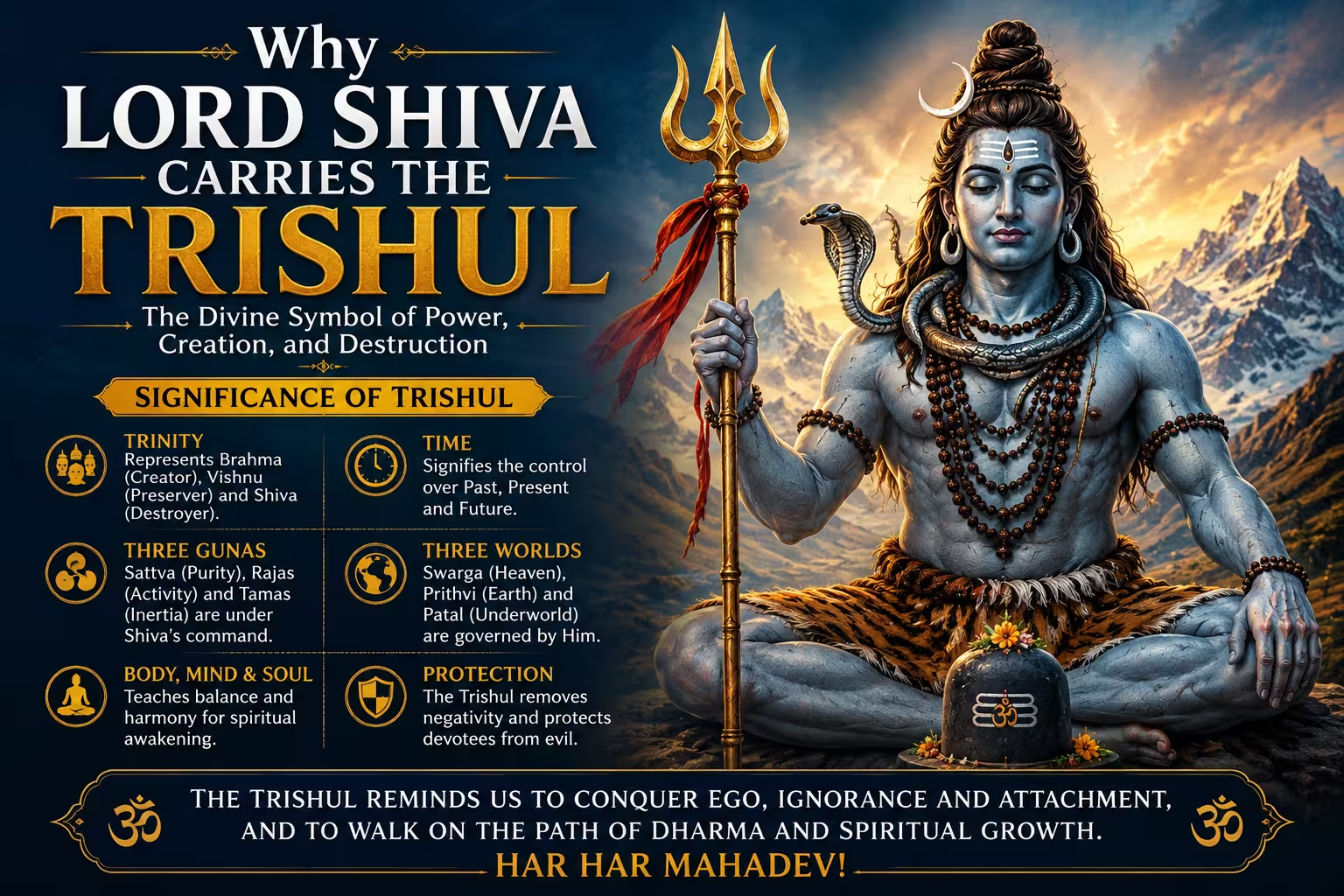
The three prongs symbolize these three cosmic functions.
Although Brahma creates and Vishnu preserves, Shiva ultimately controls all three aspects through his Trishul. It signifies that the entire universe operates under one supreme divine consciousness.
The Trishul reminds devotees that creation, preservation, and destruction are not separate processes but parts of the same eternal cycle.
The symbolism of the Trishul remains highly relevant today.
Control Your Mind
Like Shiva, individuals should master their thoughts rather than become controlled by them.
Overcome Ego
The Trishul reminds us that pride and selfishness lead to suffering.
Accept Change
Creation and destruction are natural parts of life. Accepting change brings peace and wisdom.
Seek Balance
Success requires balance between work, family, spirituality, and personal growth.
Pursue Spiritual Growth
The Trishul inspires individuals to rise above material concerns and focus on higher consciousness.
Symbol of the Three Gunas
According to Hindu philosophy, nature operates through three fundamental energies known as the Gunas:
Sattva
Represents purity, wisdom, harmony, and truth.
Rajas
Represents action, desire, ambition, and movement.
Tamas
Represents ignorance, darkness, and inertia.
Every human being possesses these three qualities in varying proportions.
Lord Shiva’s Trishul symbolizes mastery over all three Gunas. It teaches devotees to rise above material influences and attain spiritual liberation.
By holding the Trishul, Shiva demonstrates that he is beyond the limitations of nature and controls the forces that govern the universe.
Representation of Time
The Trishul also symbolizes the three dimensions of time:
- Past
- Present
- Future
For ordinary beings, time is an unstoppable force. Every person is bound by their past actions, present circumstances, and future destiny.
Lord Shiva, however, transcends time itself. He is known as Mahakaal, the Lord of Time.
The Trishul signifies Shiva’s authority over all periods of existence. It reminds devotees that while worldly life changes continuously, the divine remains eternal.
The Three Worlds
Hindu scriptures describe three primary realms:
Swarga Lok
The heavenly realm of the gods.
Prithvi Lok
The earthly realm where humans live.
Patal Lok
The underworld.
The three prongs of the Trishul represent these three worlds.
Lord Shiva’s possession of the Trishul signifies his sovereignty over all realms of existence. Nothing in the universe remains outside his divine control.
Symbol of Body, Mind, and Soul
Another spiritual interpretation connects the Trishul to human existence.
The three points represent:
- Body
- Mind
- Soul
Many spiritual traditions teach that suffering occurs when these three aspects are out of balance.
The Trishul teaches devotees to achieve harmony between physical actions, mental thoughts, and spiritual awareness.
Through devotion to Shiva, one learns to purify the body, calm the mind, and awaken the soul.
The Trishul and Spiritual Awakening
Yogic philosophy associates the Trishul with the three principal energy channels in the body:
Ida Nadi
Associated with the moon and mental energy.
Pingala Nadi
Associated with the sun and physical energy.
Sushumna Nadi
The central spiritual channel.
When these energies become balanced, spiritual awakening occurs.
The Trishul symbolizes the union of these three energies, leading to enlightenment and realization of the divine self.
This interpretation makes the Trishul not only a symbol of power but also a symbol of inner transformation.
Mythological Importance of Shiva's Trishul
Numerous stories in Hindu mythology highlight the divine power of the Trishul.
Destruction of Evil Forces
Whenever demons threatened cosmic balance, Shiva used his Trishul to destroy negative forces.
Unlike ordinary weapons, the Trishul represented divine justice. It was used only when necessary to restore dharma and protect the universe.
Defeat of Powerful Demons
Many Puranic stories describe Shiva defeating mighty asuras through the power of his Trishul.
The weapon symbolizes the destruction of:
- Ego
- Ignorance
- Attachment
These are considered the greatest enemies of spiritual growth.
Protection of Devotees
Shiva’s Trishul is also viewed as a protective symbol.
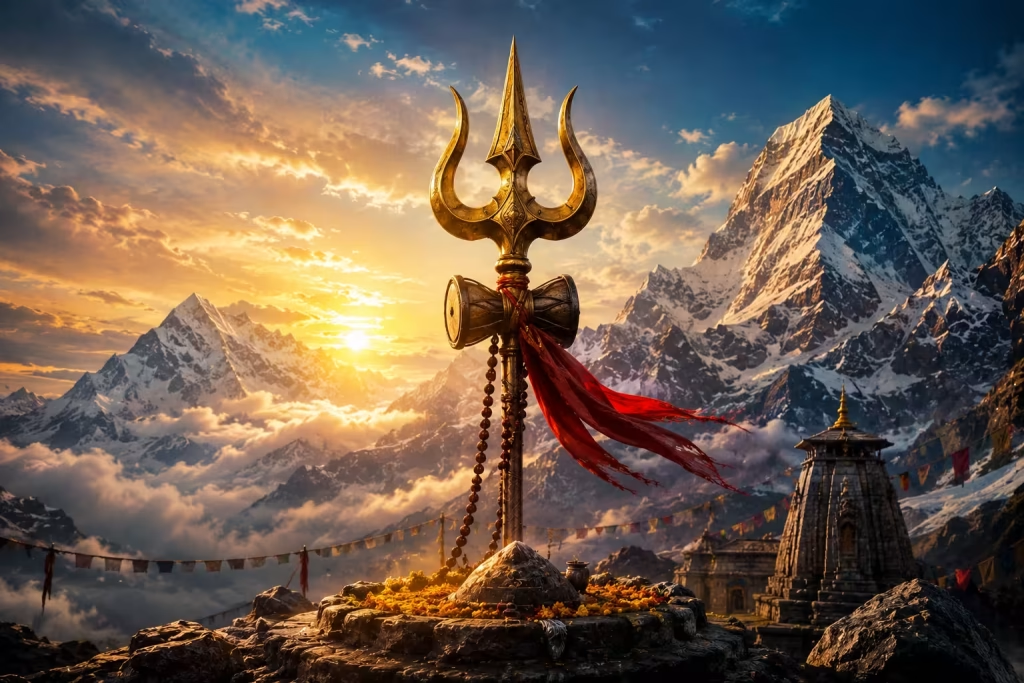
Devotees often place Trishuls near temples and homes to ward off negative energies and invoke divine blessings.
The presence of a Trishul signifies Shiva’s protection and guidance.
Why the Trishul is Kept Outside Shiva Temples
Many Shiva temples feature large Trishuls at their entrances.
This practice has deep symbolic meaning.
The Trishul serves as:
- A guardian against negative energies
- A symbol of Shiva’s presence
- A reminder of spiritual discipline
- A representation of divine protection
When devotees enter a temple, the Trishul encourages them to leave behind ego, anger, and worldly distractions.
The Trishul and Destruction of the Ego
One of the greatest teachings associated with Lord Shiva is the destruction of ego.
The ego creates separation between the individual soul and the divine.
The three points of the Trishul are often interpreted as destroying:
- Ahankara (Ego)
- Moha (Attachment)
- Avidya (Ignorance)
By surrendering these limitations, a devotee can move closer to spiritual freedom.
This is why the Trishul is considered a weapon against inner darkness rather than merely an instrument of physical warfare.
Symbol of Balance
The universe survives because opposing forces remain balanced.
Examples include:
- Light and darkness
- Life and death
- Creation and destruction
The Trishul teaches that balance is essential in all aspects of existence.
Lord Shiva embodies this balance perfectly. He is both an ascetic and a householder, both compassionate and fierce, both destroyer and protector.
The Trishul reflects this harmonious integration of opposites.
Lessons for Modern Life
The symbolism of the Trishul remains highly relevant today.
Control Your Mind
Like Shiva, individuals should master their thoughts rather than become controlled by them.
Overcome Ego
The Trishul reminds us that pride and selfishness lead to suffering.
Accept Change
Creation and destruction are natural parts of life. Accepting change brings peace and wisdom.
Seek Balance
Success requires balance between work, family, spirituality, and personal growth.
Pursue Spiritual Growth
The Trishul inspires individuals to rise above material concerns and focus on higher consciousness.
Spiritual Significance During Worship
During Shiva worship, devotees often meditate upon the Trishul.
They pray for:
- Protection from negativity
- Inner strength
- Spiritual wisdom
- Freedom from fear
- Divine guidance
Many believe that visualizing the Trishul helps remove obstacles and strengthens devotion toward Mahadev.
The Trishul of Lord Shiva is one of Hinduism’s most profound symbols. It represents creation, preservation, and destruction; body, mind, and soul; past, present, and future; and the three fundamental energies of nature.
Far beyond being a weapon, the Trishul embodies spiritual wisdom, divine authority, and cosmic balance. It reminds devotees that true power lies not in conquering others but in conquering ego, ignorance, and attachment.
Whenever devotees see the sacred Trishul standing beside Lord Shiva, they are reminded of Mahadev’s eternal presence, protection, and guidance. It serves as a powerful symbol of transformation, teaching humanity the path toward inner peace, self-realization, and ultimate liberation.
Har Har Mahadev!