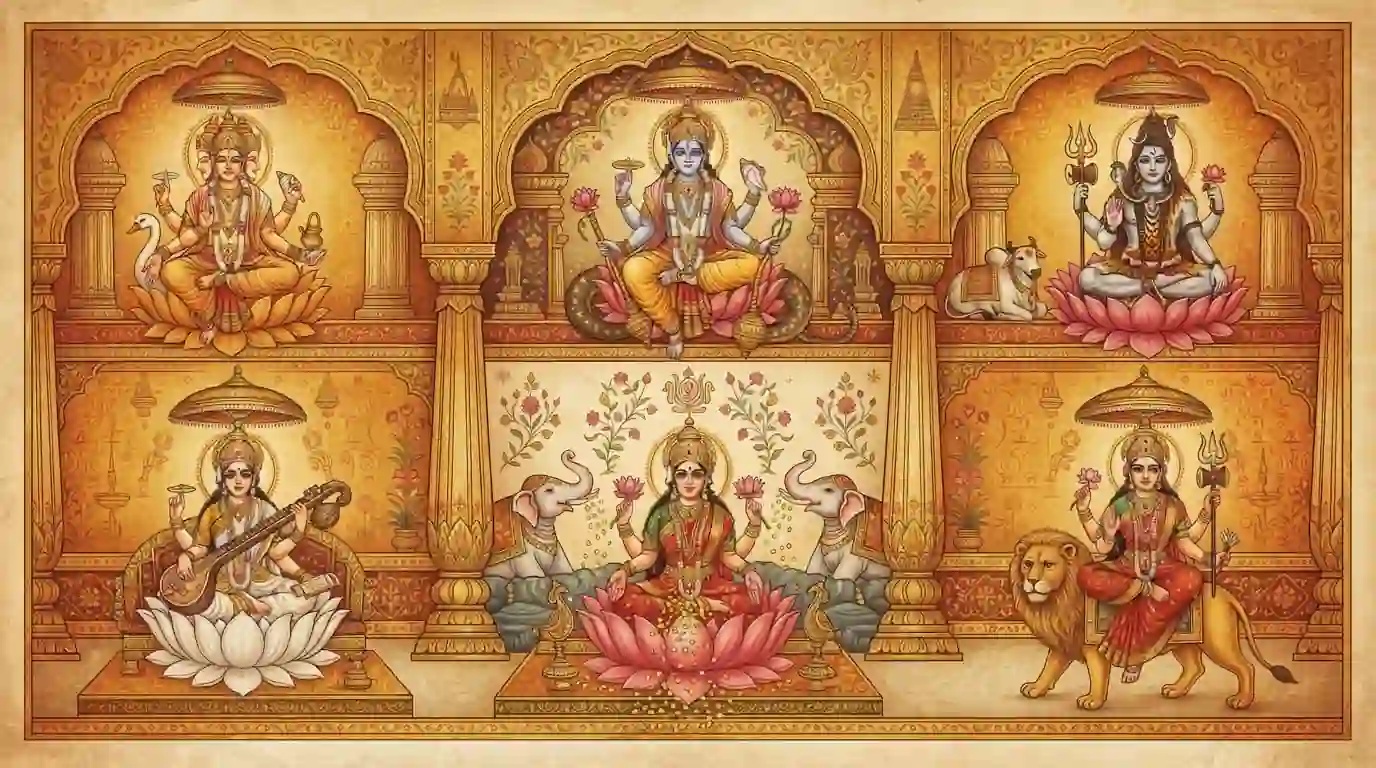

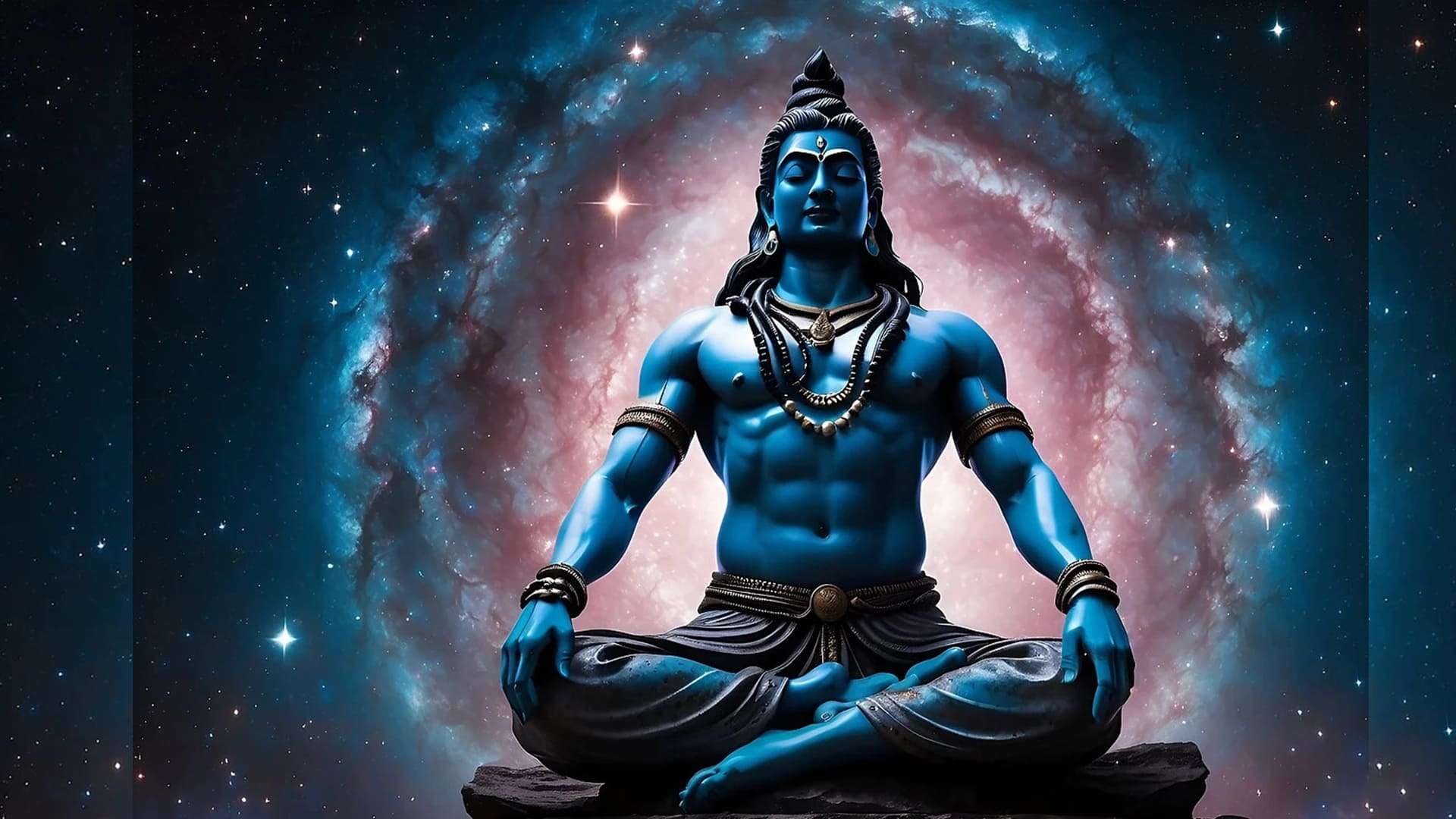
This section will delve into various stories and legends related to Lord Shiva. It will include narratives such as his marriage to Parvati, the story behind the Shiva Linga, and the mesmerizing cosmic dance called Tandava, which symbolizes the cyclical nature of the universe.
The Marriage of Shiva and Parvati:
The Marriage of Shiva and Parvati is a profound and significant tale in Hindu mythology, representing the eternal bond between the divine masculine and feminine energies. It is a story that delves into themes of devotion, love, perseverance, and the cosmic balance between creation and destruction.
According to the myth, Goddess Parvati, also known as Uma, was born as the daughter of Himalaya, the king of the mountains. From a young age, she was drawn to Lord Shiva, who was immersed in deep meditation and renunciation. Parvati, deeply enamored by Shiva’s austere and divine presence, sought to win his affection and become his consort.
However, Shiva, being the ascetic he was, was initially uninterested in worldly affairs and rejected Parvati’s advances. Undeterred by Shiva’s refusal, Parvati decided to undertake severe penance and ascetic practices in the Himalayas to prove her devotion and sincerity. She lived in a hermitage, practicing rigorous meditation and self-denial, for thousands of years.
Impressed by her unwavering devotion and determination, Lord Shiva decided to test her resolve. He appeared before Parvati in the form of a wild, fearsome ascetic, and challenged her intentions. Unfazed, Parvati accepted Shiva’s appearance as the divine play of the cosmos and remained steadfast in her devotion.
Pleased by her response and understanding, Shiva revealed his true form and blessed her, accepting her as his beloved. The divine union of Lord Shiva and Parvati symbolizes the harmony between the Purusha (male) and Prakriti (female) energies in Hindu philosophy. It signifies that the path to spiritual realization involves the integration of both masculine and feminine qualities within oneself.
The story of their marriage also carries a deeper philosophical meaning. Shiva represents the formless and transcendental aspect of the divine, while Parvati embodies the material world and the feminine creative energy (Shakti). Together, they represent the dynamic interplay between the manifest and unmanifest aspects of the universe, emphasizing the inseparability of the two.
Their marriage also highlights the importance of marriage as a sacred institution in Hindu culture, where the union of two souls is considered not just a bond between individuals but a sacred connection between two complementary forces. It teaches the significance of mutual respect, understanding, and support between partners, creating a harmonious and balanced life.
Furthermore, the story of Shiva and Parvati illustrates the idea of divine love and the ultimate surrender of the self to the divine. Parvati’s dedication and penance exemplify the devotee’s journey, seeking to merge with the divine, while Shiva’s acceptance and reciprocation demonstrate the divine’s boundless love and compassion for its devotees.
In essence, the marriage of Shiva and Parvati serves as a profound spiritual metaphor, guiding individuals on the path of self-realization, emphasizing the importance of devotion, perseverance, and the union of opposites to attain spiritual enlightenment and cosmic harmony.
The Churning of the Ocean (Samudra Manthan):
The Churning of the Ocean, also known as “Samudra Manthan,” is an epic tale from Hindu mythology that depicts a significant cosmic event. This mythological episode revolves around the pursuit of amrita, the nectar of immortality, which the gods and demons sought to obtain to attain eternal life and power.
The story begins with the devas (gods) and asuras (demons) coming together to churn the cosmic ocean, located in the primordial waters, using Mount Mandara as the churning rod and the serpent Vasuki as the rope. However, they faced a daunting challenge as they attempted to churn the ocean. To facilitate the churning process, Lord Vishnu, the preserver of the universe, took the form of Kurma (the tortoise) and supported the mountain on his back.
As the churning commenced, various celestial objects and treasures emerged from the ocean. Some of the significant treasures included the celestial cow Kamadhenu, the wish-fulfilling tree Kalpavriksha, and the divine nymphs called Apsaras. Each of these treasures was claimed by the gods and the demons.
However, amidst the treasures, a deadly poison known as “halahala” also surfaced from the ocean. The poison was so potent that it could have destroyed all of creation. The devas and asuras were terrified and sought Lord Shiva’s help to save the universe from destruction.
In his benevolence, Lord Shiva consumed the poison to protect the cosmos. However, before swallowing the poison, his consort Goddess Parvati pressed his throat to prevent the poison from going down to his stomach. As a result, Lord Shiva’s throat turned blue, and he came to be known as “Neelkantha” (the blue-throated one).
The churning continued, and finally, Dhanvantari, the divine physician, emerged carrying a golden pot filled with the precious amrita. Both the gods and demons eagerly desired the nectar, realizing its power to grant immortality. However, apprehensive of the demons gaining too much power, Lord Vishnu devised a plan to deceive them.
Taking the form of the enchanting Mohini, an enchantress of incomparable beauty, Lord Vishnu distributed the amrita among the gods, granting them immortality. He cleverly served the demons a drink that appeared like amrita but was, in fact, a potent illusion.
One asura named Rahu, disguised as a god, managed to drink the amrita. However, the sun and moon, recognizing his deception, alerted Lord Vishnu. As a result, Lord Vishnu swiftly beheaded Rahu with his Sudarshana Chakra (a celestial discus). Rahu’s head, which had tasted the nectar, became immortal and turned into the shadowy planet Rahu, while his body remained mortal as Ketu.
The tale of the Churning of the Ocean holds several symbolic meanings. It represents the eternal struggle between good and evil, the quest for immortality, and the cyclical nature of creation, preservation, and destruction. It also emphasizes the importance of cooperation and unity among diverse forces to achieve common goals, even in the face of seemingly insurmountable challenges.
Overall, the Churning of the Ocean (Samudra Manthan) remains a timeless and captivating mythological tale, inspiring people to contemplate the deeper meanings of life, the cosmic order, and the eternal pursuit of enlightenment and spiritual evolution.
Shiva and Nandi:
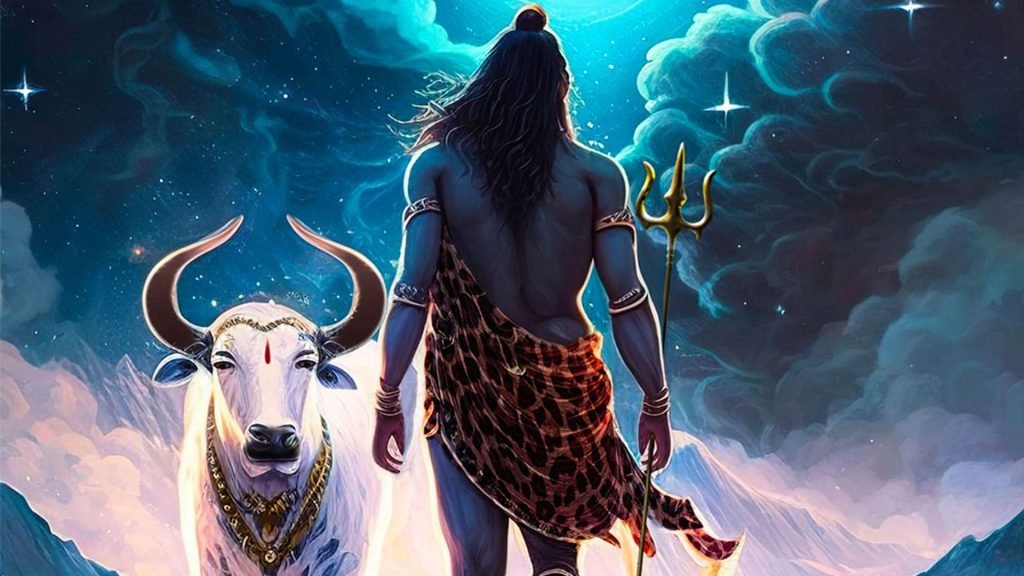
The relationship between Lord Shiva and Nandi, his loyal and devoted vehicle, is one of the most endearing and significant aspects of Hindu mythology. Nandi, the bull, holds a prominent place in Shiva’s iconography and is an integral part of the Shivaite tradition.
Nandi’s origin can be traced back to the myth of the Churning of the Ocean (Samudra Manthan). According to this legend, Nandi emerged from the churning of the ocean as one of the celestial treasures. Impressed by his unwavering loyalty and dedication, Lord Shiva chose Nandi as his primary mount and bestowed upon him the role of his vahana (vehicle).
Symbolically, Nandi represents both strength and humility. As a bull, Nandi embodies immense power and force, reflecting Shiva’s aspect as the Lord of destruction (Mahadeva) and the cosmic force responsible for dissolving the universe. However, Nandi is also known for his gentle and docile nature, symbolizing humility and complete surrender to the divine will. This duality in Nandi’s character illustrates the harmony between the forces of creation and destruction in the universe.
In many depictions of Lord Shiva, he is shown sitting or standing with Nandi by his side, facing him with unwavering devotion. Nandi is often portrayed gazing at Shiva with adoration and reverence, showcasing the deep bond between them.
Nandi’s presence carries profound spiritual significance. As a vehicle, Nandi carries Lord Shiva wherever he goes, serving as a symbol of readiness and dedication to the divine will. Devotees believe that by seeking the blessings of Nandi, they can gain access to Lord Shiva more easily and effectively. Hence, Nandi holds a significant place in Hindu temples dedicated to Lord Shiva, where his image is usually found in the courtyard, facing the main sanctum.
In temples, Nandi is also considered the guardian and protector, as he stands at the entrance, serving as a guardian deity, allowing only those with sincere devotion and pure hearts to enter the sanctum of Lord Shiva.
Nandi’s association with Lord Shiva goes beyond just being a vehicle; he is also considered Shiva’s chief gana (attendant) and constant companion. Nandi is believed to be the gatekeeper of Mount Kailash, the abode of Lord Shiva. In this role, he acts as an intermediary, conveying the prayers and wishes of devotees to Lord Shiva and interceding on their behalf.
The bond between Lord Shiva and Nandi exemplifies the ideal Mentor-disciple relationship. Nandi’s unwavering loyalty, complete surrender, and readiness to serve are qualities that every spiritual seeker aspires to cultivate in their journey towards self-realization and enlightenment.
Overall, the relationship between Lord Shiva and Nandi is a beautiful embodiment of devotion, humility, and selfless service. It serves as a reminder to devotees that genuine love and dedication to the divine can lead one closer to the ultimate truth and realization of the inner self, just as Nandi’s unwavering devotion brings him closer to Lord Shiva.
The Dance of Destruction (Tandava):
The Dance of Destruction, known as the Tandava, is a powerful and awe-inspiring dance performed by Lord Shiva, the Hindu god of destruction, transformation, and cosmic renewal. This cosmic dance is one of the most captivating and iconic representations of Lord Shiva’s divine nature and his role in the eternal cycle of creation and destruction.
According to Hindu mythology, the Tandava is said to be the source of both the creation and dissolution of the universe. Lord Shiva’s dance symbolizes the rhythmic and cyclical nature of existence, where everything is born, sustains for a while, and eventually returns to its original form.
There are two primary forms of the Tandava: the Ananda Tandava and the Rudra Tandava
- Ananda Tandava: The Ananda Tandava is the dance of bliss and is usually depicted as a gentle, graceful, and joyous dance. It represents the creative aspect of Shiva’s cosmic dance and is associated with the manifestation of the universe, the cycle of birth, and the flourishing of life. The Ananda Tandava is said to be performed during moments of celebration and is a reminder of the joyous and life-affirming aspects of Lord Shiva’s divine nature.
- Rudra Tandava: The Rudra Tandava, on the other hand, is a more vigorous and fierce dance, symbolizing the destructive aspect of Lord Shiva. It is performed during moments of anger, sorrow, or to unleash the forces of cosmic destruction. As Rudra, Shiva embodies the power to annihilate and dissolve the universe, paving the way for its regeneration and renewal. The Rudra Tandava embodies the idea that destruction is not merely negative but a necessary process in the cosmic cycle, paving the way for new beginnings.
Shiva’s Tandava dance is often depicted with his four arms gracefully moving in different gestures. In one hand, he holds the damaru, a small drum, representing the cosmic sound that initiated creation. In another hand, he holds the fire, symbolizing the force of destruction. The third hand is raised in a gesture of reassurance, bestowing blessings on his devotees, while the fourth hand points to his raised foot, symbolizing liberation from the cycle of birth and death.
The symbolism and imagery associated with the Tandava convey profound philosophical and spiritual insights. The dance signifies the eternal rhythm of life, where birth and death are interconnected aspects of the same cosmic dance. It also emphasizes the impermanence of the material world and the constant flux of creation and dissolution
The Tandava is a reminder to seekers that embracing change, destruction, and transformation is crucial in their spiritual evolution. It teaches that destruction is not to be feared but rather seen as an integral part of the cosmic cycle, leading to regeneration and new possibilities.
Overall, the Dance of Destruction (Tandava) is a captivating and multifaceted representation of Lord Shiva’s divine nature, encompassing both the creative and destructive aspects of existence. It encapsulates the dynamic interplay of forces in the universe, inspiring devotees to appreciate the magnificence and profound wisdom of the cosmic dance.
These stories and legends of Lord Shiva offer profound insights into Hindu mythology, spirituality, and philosophy, inspiring millions with their timeless wisdom and divine symbolism.