



In Hindu mythology, the relationship between Nandi Ji and Lord Shiva represents one of the purest and most profound examples of devotion (bhakti), loyalty, and spiritual discipline. Nandi is not merely the vehicle (Vahana) of Lord Shiva but also his greatest devotee, gatekeeper, companion, and symbol of unwavering faith. Wherever Lord Shiva is worshipped, Nandi Ji is always present—calmly seated, facing his master, absorbed in divine contemplation.
The bond between Shiv Ji and Nandi Ji goes far beyond mythology; it offers deep spiritual lessons for seekers, devotees, and followers of dharma. This blog explores their relationship, origins, symbolism, spiritual meanings, and relevance in modern times.
Who is Nandi Ji?
Nandi, also known as Nandikeshvara or Nandideva, is a sacred bull and one of the most important figures in Shaivism. He is regarded as:
The Vahana (vehicle) of Lord Shiva
The chief of Shiva’s Ganas
The guardian of Kailasa
The gatekeeper of Shiva temples
The embodiment of devotion and righteousness
The word Nandi comes from the Sanskrit root “Nand”, meaning joy, bliss, and delight. Nandi symbolizes the bliss that arises from total surrender to the Divine.
Lord Shiva: The Supreme Ascetic and Cosmic Lord
Lord Shiva, one of the Important God of the Hindu Trinity (Trimurti), is known as:
Mahadeva – The Great God
Bholenath – The Innocent Lord
Neelkanth – The Blue-Throated One
Adiyogi – The First Yogi
Destroyer and Transformer
Shiva represents both detachment and compassion, stillness and cosmic energy, creation and dissolution. Nandi perfectly complements Shiva’s nature, serving him with humility, strength, patience, and devotion.
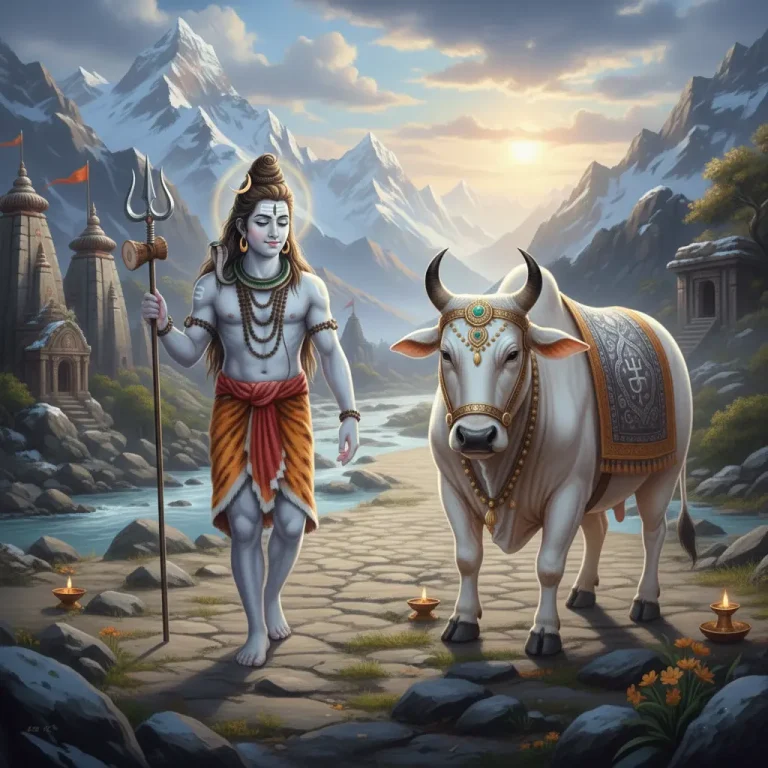
The Origin of Nandi Ji
There are several legends about the birth of Nandi Ji:
1. Son of Sage Shilada
According to the Shiva Purana, Nandi was born to Sage Shilada, who performed intense penance to receive a son blessed with immortality. Lord Shiva granted him Nandi, who was destined to be his eternal attendant.
2. Manifestation of Shiva’s Energy
In another belief, Nandi is considered an extension of Lord Shiva himself, created to assist him in cosmic duties and to guard divine knowledge.
From birth, Nandi showed deep devotion to Shiva and eventually earned the position of Shiva’s closest companion.
Why is Nandi Ji Always Facing Lord Shiva?
In almost every Shiva temple, Nandi Ji is seated directly opposite the Shiva Lingam, gazing continuously at his lord. This posture holds deep spiritual meaning:
Unbroken devotion – Nandi never turns away from Shiva
Meditative focus – Symbolizes concentration on the divine
Faith and patience – Waiting silently for Shiva’s grace
Gateway to Shiva – Devotees whisper wishes into Nandi’s ears, believing he conveys them to Shiva
Spiritually, Nandi teaches that true devotion means keeping the mind constantly fixed on God.
Nandi Ji as Shiva’s Vahana (Vehicle)
The bull represents:
Strength and stability
Dharma (righteousness)
Fertility and life force
Control over desires
Lord Shiva riding Nandi symbolizes mastery over animal instincts and ego. It conveys that a devotee must rise above base desires to reach spiritual enlightenment.
The Symbolism of Nandi Ji
Nandi is rich in symbolic meaning:
1. Dharma (Righteousness)
In Hindu philosophy, a bull symbolizes dharma. Nandi supports Shiva just as dharma supports the universe.
2. Inner Strength and Discipline
Nandi’s powerful yet calm form represents controlled energy, self-restraint, and discipline.
3. Silence and Meditation
Nandi rarely speaks. His silence symbolizes inner stillness, an essential quality for spiritual growth.
4. Faithful Service
Nandi teaches selfless service without expectation—serving God purely out of love.
Nandi Ji as the Guru of Shaivism
In Shaiva traditions, Nandikeshvara is regarded as the first Guru. He transmitted divine knowledge, yogic wisdom, and spiritual truths to sages and devotees.
The philosophy of Nandi Darshana emphasizes:
Devotion to Shiva
Discipline and moral living
Control of senses
Meditation and self-realization
Thus, Nandi is not just a devotee but also a spiritual teacher.
Nandi and Parvati Ji
Nandi also shares a respectful and devoted relationship with Goddess Parvati, whom he reveres as Shakti, the divine feminine energy of Shiva.
He is known to:
Protect Parvati
Follow her commands
Mediate during divine disputes (in legends)
This shows Nandi’s role as a balanced devotee who honors both Shiva (consciousness) and Shakti (energy).
Legends Highlighting Nandi and Shiva’s Relationship
1. Nandi’s Devotion Test
It is said that Lord Shiva once tested Nandi’s patience and devotion by delaying his appearance. Nandi waited in deep meditation, unmoved—proving that true devotion does not demand immediate rewards.
2. Curse of Ravana
In the Ramayana, when Ravana disrespected Nandi, Nandi cursed him, leading to the destruction of Lanka. This shows Nandi’s power as a divine being, not just a servant.
Nandi in Shiva Temples
Almost every Shiva temple places Nandi in the front courtyard. Devotees follow a ritual:
Pray to Nandi first
Whisper wishes in his ear
Then proceed to worship Shiva
This symbolizes that humility and devotion are prerequisites for reaching God.
Spiritual Lessons from Nandi Ji
Nandi Ji teaches powerful life lessons:
Patience – Wait calmly for divine timing
Faith – Never lose focus on God
Humility – Strength should be guided by humility
Discipline – Control desires and ego
Service – Serve without expecting recognition
In today’s fast-paced world, Nandi reminds us to slow down and reconnect with inner peace.
Relevance of Nandi and Shiva’s Bond in Modern Life
The relationship between Nandi Ji and Lord Shiva inspires modern devotees to:
Stay loyal to values and principles
Balance power with compassion
Practice mindfulness and meditation
Maintain faith during hardships
Nandi’s silent devotion is especially relevant in an age dominated by noise, ego, and distractions.
Nandi Ji in Yoga and Spirituality
n yogic philosophy:
Nandi represents Muladhara (root chakra) stability
Shiva represents pure consciousness
Their unity signifies the awakening of spiritual energy moving upward toward enlightenment.
The divine relationship between Nandi Ji and Lord Shiva is a timeless symbol of devotion, discipline, dharma, and spiritual surrender. Nandi is not merely a mount but Shiva’s truest companion—one who embodies the ideal devotee.
By understanding Nandi Ji, we learn how to approach Lord Shiva: with humility, patience, unwavering focus, and a pure heart. Their bond teaches that the path to God is not through noise or pride, but through silent faith and steadfast devotion.
May Nandi Ji bless all devotees with strength, clarity, and unwavering devotion, and may Lord Shiva guide us toward liberation and inner peace.
Har Har Mahadev 🕉️
Frequently Asked Questions (FAQs) on Nandi Ji and Lord Shiva
1. Who is Nandi Ji in Hindu mythology?
Nandi Ji is the sacred bull and the divine companion of Lord Shiva. He serves as Shiva’s vehicle (Vahana), gatekeeper, chief of the Ganas, and greatest devotee. Nandi symbolizes devotion, strength, discipline, and righteousness (Dharma).
2. What is the relationship between Nandi Ji and Lord Shiva?
The relationship between Nandi Ji and Lord Shiva is one of eternal devotion and service. Nandi is not only Shiva’s mount but also his closest attendant and spiritual disciple, representing unconditional faith and loyalty.
3. Why is Nandi Ji always facing Lord Shiva in temples?
Nandi Ji faces Lord Shiva to symbolize unwavering devotion and constant meditation on the divine. It teaches devotees to keep their mind focused on God and remain patient and faithful while seeking blessings.
4. Is Nandi Ji only a vehicle of Lord Shiva?
No, Nandi Ji is much more than Shiva’s vehicle. He is a spiritual teacher (Guru), guardian of Kailasa, leader of Shiva’s Ganas, and an embodiment of Dharma and devotion.
5. What does Nandi Ji symbolize spiritually?
Spiritually, Nandi Ji symbolizes inner strength, self-control, silence, patience, righteousness, and total surrender to God. He represents mastery over desires and disciplined living.
6. Why do devotees whisper wishes into Nandi Ji’s ears?
Devotees believe that Nandi Ji conveys their prayers directly to Lord Shiva. Whispering wishes symbolizes humility, faith, and the belief that sincere prayers reach God through devotion.
7. What is the significance of the bull as Lord Shiva’s Vahana?
The bull represents strength, fertility, and Dharma. Lord Shiva riding Nandi signifies control over ego and animal instincts, highlighting the balance between power and spirituality.
8. Who are the parents of Nandi Ji?
According to Hindu scriptures, Nandi Ji was born to Sage Shilada after intense penance. Lord Shiva blessed the sage with Nandi, granting him immortality and divine purpose.
9. Is Nandi Ji considered a Guru in Shaivism?
Yes, in Shaiva traditions, Nandi Ji (Nandikeshvara) is regarded as the first Guru who imparted spiritual and yogic knowledge to sages and devotees.
10. What lesson does Nandi Ji teach devotees?
Nandi Ji teaches patience, humility, unwavering faith, discipline, and selfless service. His silent devotion reminds devotees that true spirituality lies in inner stillness and surrender.