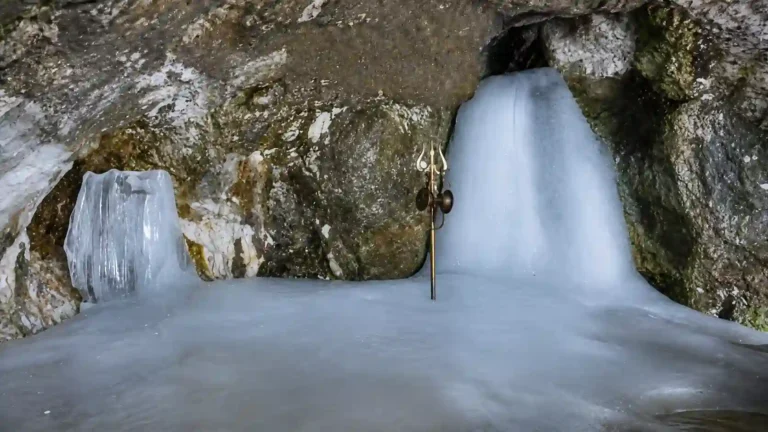

Ramanathaswamy Temple
Rameswaram Island, Ramanathapuram District, Tamil Nadu, India
One of the 12 Jyotirlingas of Lord Shiva and one of the Char Dham pilgrimage sites, nestled in the lap of the Himalayas at an altitude of 3,583 meters.
Location
Rameswaram Island, Ramanathapuram District, Tamil Nadu, India
Full Address
Ramanathaswamy Temple, East Car Street, Rameswaram, Ramanathapuram District, Tamil Nadu – 623526, India
Latitude
9.288°N
Longitude
79.317°E
Built By/ Era
Ancient origins linked to the Ramayana era; present structure largely built and expanded between the 12th and 17th centuries by the Pandya rulers, the Jaffna kings, and later the Setupati rulers of Ramnad
Elevation
Roughly 10 metres (about 33 feet) above sea level
Associated Deity
Lord Shiva (Jyotirlinga)
Opening Time
5:00 am
Closing Time
9:00 pm
Timing Notes
5:00 AM – 1:00 PM, then 3:00 PM – 9:00 PM (afternoon closure for rituals)
Overview
At the very tip of the Indian peninsula, where the Bay of Bengal meets the Indian Ocean and the coastline reaches out toward Sri Lanka, sits the small island town of Rameswaram. At its heart stands the Ramanathaswamy Temple — one of the twelve Jyotirlingas of Shiva and one of the four Char Dham pilgrimage sites, the only one of the four located in South India (the others being Badrinath, Dwarka, and Puri).
What sets this temple apart isn’t just its sanctity but its scale. Its corridors, lined with an estimated 1,200 intricately carved granite pillars, form what is widely regarded as the longest temple corridor in the world — a passage so vast that walking its full length feels less like visiting a shrine and more like stepping through a stone-cut chapter of history.
The temple is also the meeting point of two great strands of Hindu tradition: it honours Shiva as one of his twelve Jyotirlingas, yet its founding legend belongs entirely to Rama, the hero of the Ramayana. Few shrines in India carry that dual weight so gracefully.
⛰ 12 Jyotirlingas
🕉 Char Dham
✨ Sacred Place
History
The story of the temple begins not with stone, but with sand. According to the Ramayana, after Rama defeated Ravana and rescued Sita from Lanka, he was troubled by the fact that he had killed a Brahmin — for Ravana, despite his tyranny, was a scholar of Brahmin lineage. To atone, Rama wished to worship Shiva and sent Hanuman to the Himalayas to bring back a lingam. When Hanuman’s return was delayed, Sita is said to have shaped a lingam from the seashore sand herself so the auspicious moment for worship would not pass. When Hanuman finally arrived with the Himalayan lingam, Rama, moved by his devotion, decreed that this second lingam — the Vishwalingam — be worshipped first, a custom the temple still follows today.
The physical temple that pilgrims walk through now took shape over many centuries rather than at a single moment. Its sanctum has roots going back over a thousand years, but the structure was substantially expanded during the 12th century under the Pandya dynasty. Around the same period, Jeyaveera Cinkaiariyan and his successor Gunaveera Cinkaiariyan, rulers of the Jaffna kingdom in present-day Sri Lanka, funded major renovations to the sanctum — even shipping stone blocks across the sea from the Koneswaram temple in Trincomalee for the work.
The temple’s most spectacular feature, its immense pillared corridors, largely took form later, between the 16th and 17th centuries, under the patronage of the Setupati rulers of Ramnad, with King Muthuramalinga Sethupathi credited with much of the construction seen today. Over the generations, the Cholas, the Cheras, and the Vijayanagara Empire also left their mark through further additions and repairs, making the temple a layered record of South Indian temple architecture across nearly a millennium.
Temple Timings
Opening Time
5:00 am
Closing Time
9:00 pm
Aarti Timings
Morning Aarti
Evening Aarti
8:45 pm
Timing Notes
How to Reach
By Air: Rameswaram has no commercial airport of its own. The nearest is Madurai International Airport, roughly 170–180 km away, with regular flights connecting to Chennai, Mumbai, and Delhi. From Madurai, taxis and buses run onward to Rameswaram in about 3–4 hours.
By Train: Rameswaram Railway Station sits barely a kilometre or two from the temple, making it the easiest entry point for pilgrims. It’s connected to Chennai, Madurai, and other major cities. Trains cross the dramatic Pamban Bridge, a rail link over the sea, just before reaching the island — a journey worth experiencing in itself.
By Road: Rameswaram connects to the mainland via NH-49, crossing Pamban Island over the Pamban road bridge. State transport buses run frequently from Madurai, Chennai, Trichy, and Kanyakumari, and self-driven or hired taxis are a comfortable option for those wanting to explore the coastline en route.
Once in town, the temple is centrally located, and autos or short walks are enough to reach it from most hotels.
Nearby Places
Frequently Asked Questions
Kedarnath Temple is famous as one of the 12 Jyotirlingas and part of the Char Dham pilgrimage.
It is believed to have been built by the Pandavas and later reconstructed by Adi Shankaracharya.
The temple closes due to heavy snowfall making the region inaccessible; the deity is moved to Ukhimath.
The temple is open from May to October, with pleasant weather during these months.
Via road to Gaurikund, followed by a 16 km trek, or by helicopter services available seasonally.
You Might Also Like -
Maa Baglamukhi Temple
Bakreshwar Temple
Bahula Devi Temple (Shakti Peeth)
Attahas Temple (Phullara Shakti Peeth), Birbhum