


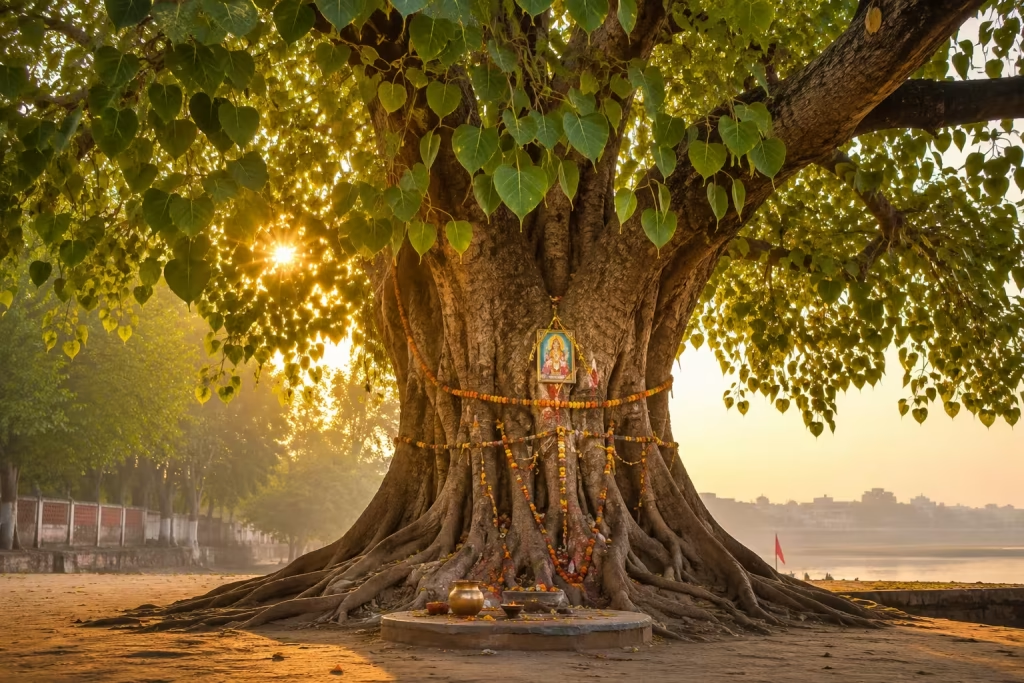
Peepal Tree in Hinduism
Among all the trees revered in Hinduism, the Peepal Tree (Ficus religiosa) occupies a unique and divine position. Known as Ashwattha in Sanskrit, this sacred tree is worshipped as a living manifestation of the Hindu Trinity—Lord Brahma, Lord Vishnu, and Lord Shiva. For thousands of years, devotees have offered prayers, water, lamps, and circumambulations around the Peepal tree seeking blessings, prosperity, and spiritual growth.
The Peepal tree is not merely a plant in Hindu culture; it is considered a sacred embodiment of cosmic energy and divine presence. Ancient scriptures, Puranas, and the Bhagavad Gita describe the Peepal tree as a symbol of immortality, wisdom, and the eternal cycle of creation and destruction.
This article explores the mythology, spiritual significance, religious beliefs, rituals, and benefits associated with the Peepal Tree in Hinduism.
The Peepal Tree: A Divine Symbol
ThIStree is one of the longest-living trees in India. Its broad canopy, heart-shaped leaves, and evergreen nature have made it a symbol of life and continuity.
In Hindu tradition, every part of the Peepal tree is considered sacred. The roots, trunk, branches, leaves, and fruits are believed to be inhabited by various deities and celestial beings.
Ancient sages recognized the tree’s spiritual and medicinal value, leading to its worship across generations. Temples, villages, and sacred sites throughout India often have a Peepal tree standing nearby, serving as a center for prayer and community gatherings.
Why Is the Peepal Tree Sacred in Hinduism?
The sacredness of the Peepal tree is rooted in Hindu scriptures and mythology.
According to religious texts:
- Lord Brahma resides in the roots.
- Lord Vishnu resides in the trunk.
- Lord Shiva resides in the leaves.
This association makes the Peepal tree a living representation of the Trimurti, the three principal deities responsible for creation, preservation, and destruction.
Because of this divine presence, cutting down a Peepal tree is traditionally considered a serious sin. Worshipping the tree, on the other hand, is believed to bring immense spiritual merit.
The Peepal Tree and Lord Vishnu
Among all deities associated with the Peepal tree, Lord Vishnu has the strongest connection.
Hindu scriptures state that Lord Vishnu resides permanently within the Peepal tree. This belief is especially emphasized in the Padma Purana and other sacred texts.
Devotees often worship the Peepal tree on Saturdays and Ekadashi days to seek the blessings of Lord Vishnu.
Peepal Tree in the Bhagavad Gita
In the Bhagavad Gita, Lord Krishna declares:
“Among all trees, I am the Ashwattha (Peepal Tree).”
This statement elevates the Peepal tree to an extraordinary spiritual status. By identifying Himself with the Peepal tree, Lord Krishna reveals its divine nature and significance.
As a result, worshipping the Peepal tree is considered equivalent to worshipping Lord Vishnu Himself.
The Presence of Lord Brahma in the Tree
Lord Brahma, the creator of the universe, is believed to reside in the roots of the this tree.
Roots symbolize the origin of life and creation. Just as roots nourish and support a tree, Lord Brahma is regarded as the source from which all existence emerges.
Many devotees offer water at the roots of the Peepal tree while praying for wisdom, knowledge, and success in new beginnings.
This connection between Brahma and the roots reinforces the tree’s role as a symbol of creation and cosmic order.
Lord Shiva and the Sacred Leaves of the Peepal Tree
The leaves of the this tree are associated with Lord Shiva.
The constant movement of the leaves, even in gentle winds, is believed to represent the cosmic dance of Shiva—the eternal rhythm of creation and destruction.
Many devotees offer prayers to Lord Shiva beneath the Peepal tree, particularly during the holy month of Shravan and on Mondays.
The leaves are also used in religious ceremonies and rituals dedicated to Lord Shiva.
Their distinctive heart shape symbolizes devotion, purity, and spiritual awakening.
Mythological Stories Associated with the Peepal Tree
The Story of the Trimurti
One ancient legend states that the gods once sought a permanent place on Earth where devotees could easily worship them.
Lord Brahma entered the roots of the Peepal tree, Lord Vishnu entered its trunk, and Lord Shiva entered its leaves.
From that moment onward, the Peepal tree became a living temple where devotees could worship all three deities simultaneously.
The Story of Goddess Lakshmi
According to popular belief, Goddess Lakshmi visits the Peepal tree on Saturdays.
Devotees light lamps beneath the tree during the evening and offer prayers for prosperity, financial stability, and family well-being.
This tradition remains widely practiced across India.
The Buddha and the Peepal Tree
Although primarily associated with Hinduism, the Peepal tree also holds immense significance in Buddhism.
It was beneath a Peepal tree, later known as the Bodhi Tree, that Gautama Buddha attained enlightenment.
This event further enhanced the tree’s spiritual prestige throughout the Indian subcontinent.
Benefits of Worshipping the Peepal Tree
Hindu scriptures describe numerous spiritual and worldly benefits of Peepal tree worship.
1. Removal of Negative Karma
Regular worship is believed to reduce the effects of past karmic actions and promote spiritual purification.
2. Blessings of Lord Vishnu
Devotees receive divine protection, prosperity, and guidance from Lord Vishnu.
3. Relief from Planetary Doshas
Many astrologers recommend Peepal worship to reduce the negative effects of Saturn (Shani).
4. Family Harmony
Prayers offered beneath the tree are believed to bring peace and harmony within families.
5. Spiritual Growth
Meditation under the Peepal tree is said to enhance concentration, wisdom, and inner peace.
The Scientific Significance of the Peepal Tree
Ancient Hindu traditions often align remarkably with scientific observations.
The Peepal tree is highly valued for its environmental benefits:
- Produces large amounts of oxygen.
- Supports biodiversity.
- Provides shade and cooling.
- Improves air quality.
- Helps maintain ecological balance.
Its medicinal properties are also recognized in Ayurveda.
Various parts of the tree are used to treat digestive disorders, respiratory issues, skin conditions, and inflammation.
The reverence shown toward the tree by ancient sages may have been influenced by both its spiritual and practical importance.
How to Worship the Peepal Tree
Morning Worship
Bathe and wear clean clothes.
- Offer water at the roots.
- Apply sandalwood paste or kumkum.
- Light a diya.
- Chant Vishnu mantras.
- Circumambulate the tree seven times.
Saturday Worship
Saturday is considered especially auspicious for Peepal worship.
- Light mustard oil lamps.
- Offer black sesame seeds.
- Chant Shani and Vishnu mantras.
- Pray for protection from difficulties and obstacles.
Important Mantras for Worship
Vishnu Mantra
ॐ नमो भगवते वासुदेवाय
Om Namo Bhagavate Vasudevaya
Prayer
मूलतो ब्रह्मरूपाय मध्यतो विष्णुरूपिणे।
अग्रतः शिवरूपाय वृक्षराजाय ते नमः॥
Meaning:
“I bow to the king of trees whose roots represent Brahma, whose trunk represents Vishnu, and whose top represents Shiva.”
Festivals Associated
Several Hindu observances involve worship of the Peepal tree:
- Vat Savitri Vrat
- Somvati Amavasya
- Ekadashi
- Shani Amavasya
- Shravan Mondays
During these occasions, devotees tie sacred threads around the tree and offer prayers for health, prosperity, and longevity.
Lessons
The Peepal tree teaches profound spiritual values:
- Selfless service through shade and oxygen.
- Patience and endurance.
- Continuous growth and renewal.
- Connection between nature and divinity.
- Respect for all forms of life.
Its deep roots and expansive branches symbolize the relationship between the earthly and the divine.
This Tree in Hinduism is far more than a sacred plant. It is revered as the living embodiment of Lord Brahma, Lord Vishnu, and Lord Shiva, making it one of the holiest trees in Hindu tradition. Ancient scriptures, mythological stories, and spiritual practices all emphasize its divine importance.
From the Bhagavad Gita’s praise of the Ashwattha tree to the countless rituals performed beneath its shade, the Peepal tree continues to inspire devotion and reverence among millions of Hindus. It stands as a timeless symbol of creation, preservation, destruction, wisdom, and eternal life.
By worshipping and protecting the Peepal tree, devotees honor not only the divine Trinity but also the sacred bond between humanity and nature.