
Religion has always played a vital role in shaping human civilization, values, ethics, and ways of life. Across the world, various religions offer spiritual guidance and moral frameworks for humanity. Among them, Hinduism stands out as one of the oldest living spiritual traditions, often described not merely as a religion but as a way of life. Unlike many other global religions that originated from a single founder or a specific historical event, Hinduism evolved organically over thousands of years.
This blog explores the key differences between Hinduism and other major religions such as Christianity, Islam, Buddhism, and Judaism, focusing on beliefs, philosophy, practices, scriptures, and worldview. Understanding these differences promotes mutual respect and deeper spiritual awareness in today’s diverse society.
1. Origin and Historical Development
Sanātana Dharma
Sanātana Dharma
has no single founder and no fixed date of origin. It developed gradually in the Indian subcontinent over more than 5,000 years, drawing from the wisdom of sages (rishis) who experienced spiritual truths through meditation and realization. Its roots lie in the Vedas, the oldest known sacred texts in the world.
Other Religions
Most other religions began with a specific founder or prophet:
Christianity began with Jesus Christ.
Islam originated with Prophet Muhammad.
Buddhism was founded by Gautama Buddha.
Judaism traces its roots to prophets like Moses and Abraham.
These religions generally emerged at a particular time in history with a defined beginning.
Key Difference:
Sanātana Dharma is timeless and evolutionary, while other religions are historically founded.
2. Concept of God
This embraces a pluralistic understanding of God. It recognizes:
One Supreme Reality (Brahman)
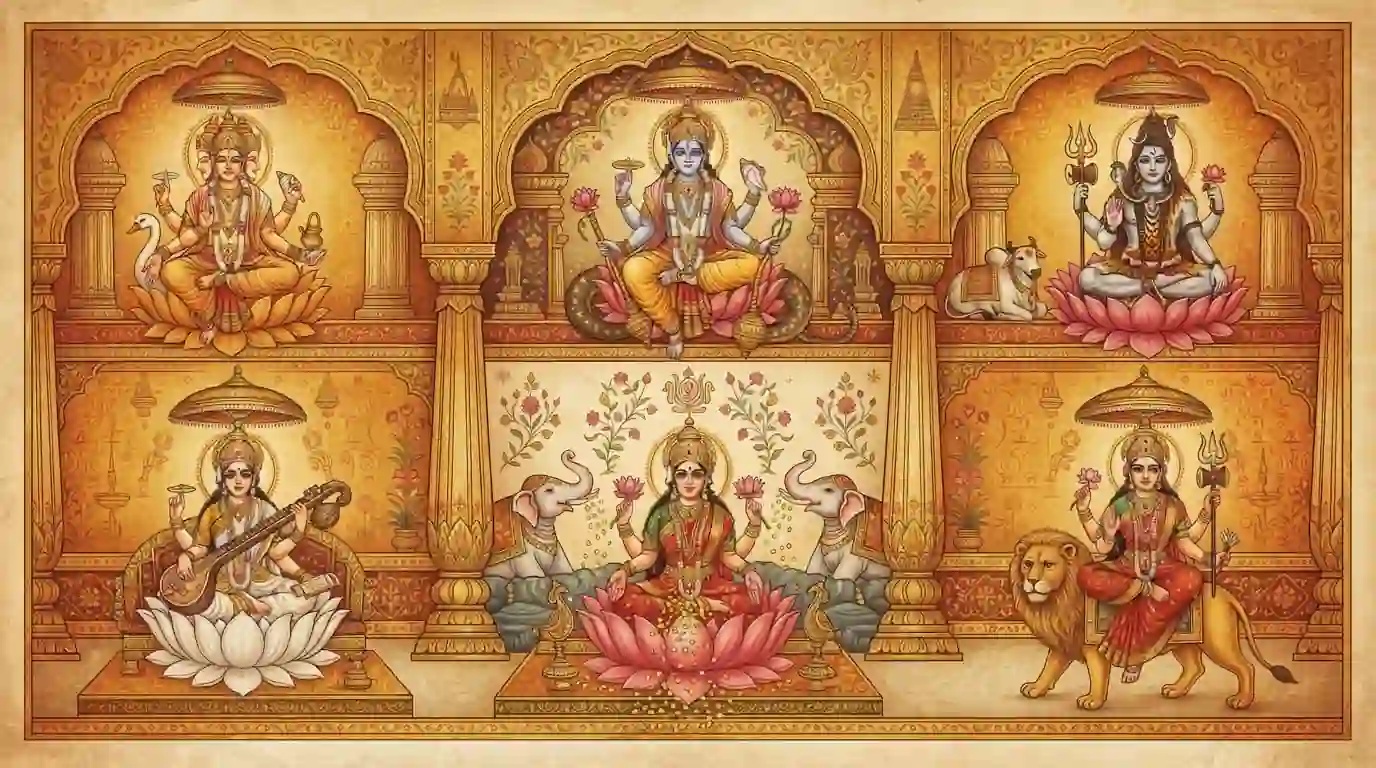
Multiple forms and manifestations of God such as Vishnu, Shiva, Shakti, Ganesha, and Krishna
Hindu philosophy allows believers to worship God in any form or even without form (Nirguna).
Other Religions
Most other religions are strictly monotheistic:
Islam and Judaism emphasize one formless God.
Christianity believes in one God in three forms (Trinity).
Buddhism focuses more on enlightenment than God.
Key Difference:
Hinduism allows both monotheism, polytheism, and non-theism, while most other religions follow a single defined concept of God.
3. Religious Authority and Belief System
Hinduism encourages personal spiritual experience and inquiry. There is no single central authority or compulsory belief system. Followers are free to explore different paths like:
Bhakti (devotion)
Karma (action)
Jnana (knowledge)
Raja Yoga (meditation)
Other Religions
Many other religions emphasize structured doctrines and belief systems:
Acceptance of specific creeds or articles of faith
Central religious authorities such as the Church or religious law
Key Difference:
Hinduism values spiritual freedom, while other religions often require adherence to defined beliefs.
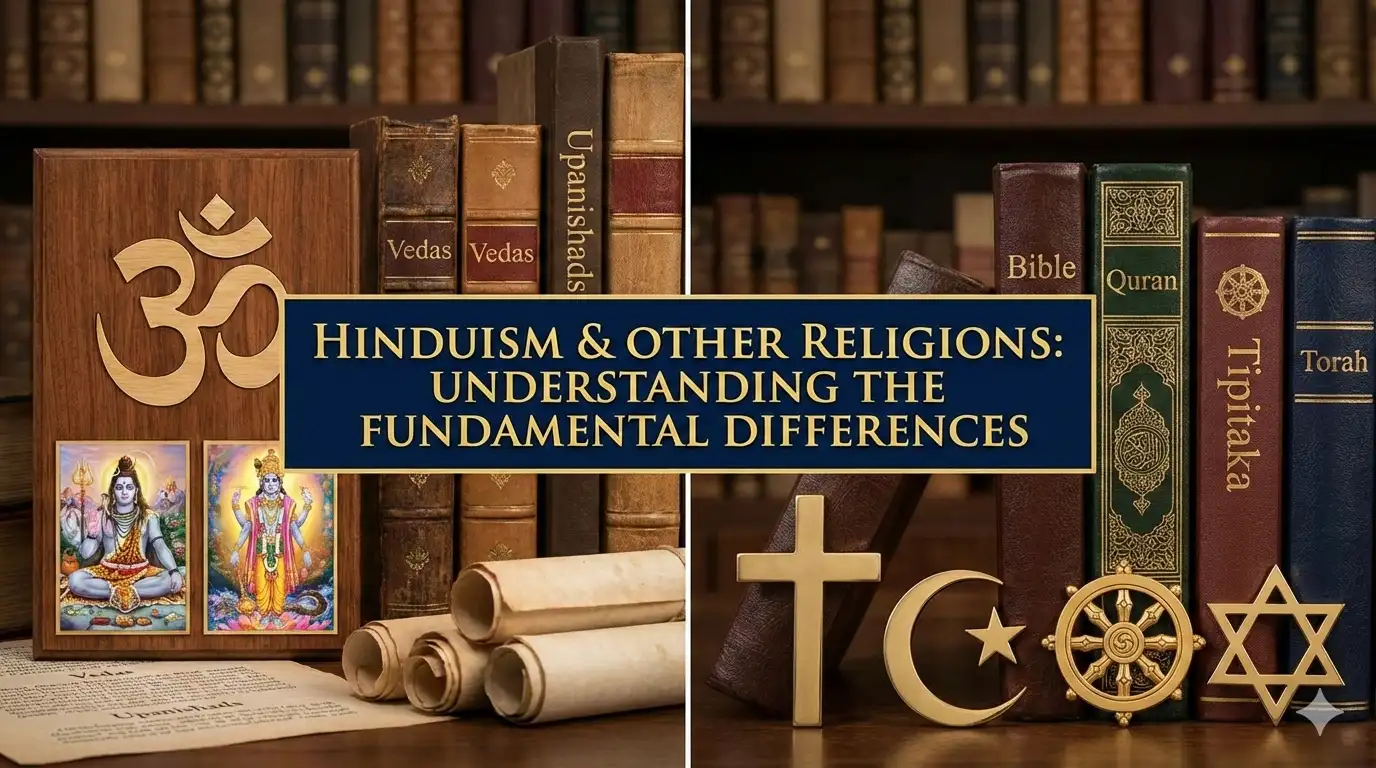
4. Sacred Scriptures
This has a vast and diverse body of scriptures, including:
Vedas
Upanishads
Bhagavad Gita
Ramayana
Mahabharata
Puranas
These texts are philosophical, symbolic, and open to interpretation.
Other Religions
Other religions generally follow one primary sacred book:
Bible (Christianity)
Quran (Islam)
Torah (Judaism)
Tripitaka (Buddhism)
These scriptures are often regarded as the final and absolute word of God.
Key Difference:
This embraces multiple scriptures, while other religions usually rely on a single central text.
5. Path to Salvation or Liberation
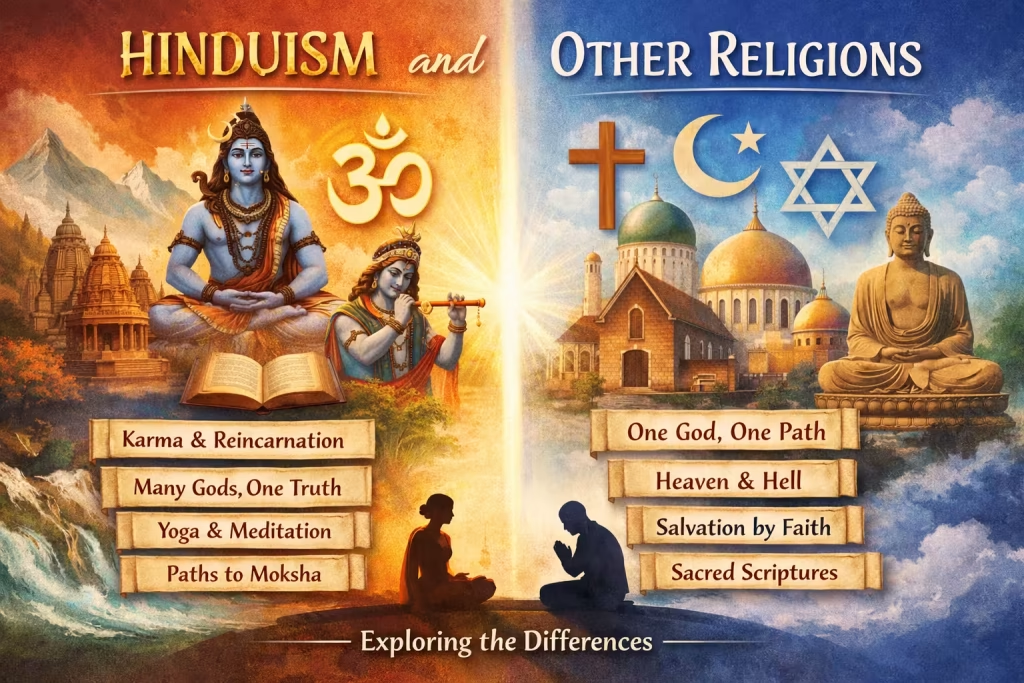
Hinduism seeks Moksha (liberation)—freedom from the cycle of birth and death (samsara). Liberation is achieved through self-realization, good karma, devotion, and knowledge over multiple lifetimes.
Other Religions
Most other religions believe in:
One life
Heaven or Hell after death
Salvation through faith, obedience, or divine grace
Key Difference:
This believes in rebirth and gradual liberation, while other religions focus on a single lifetime and eternal afterlife.
6. Concept of Karma and Reincarnation
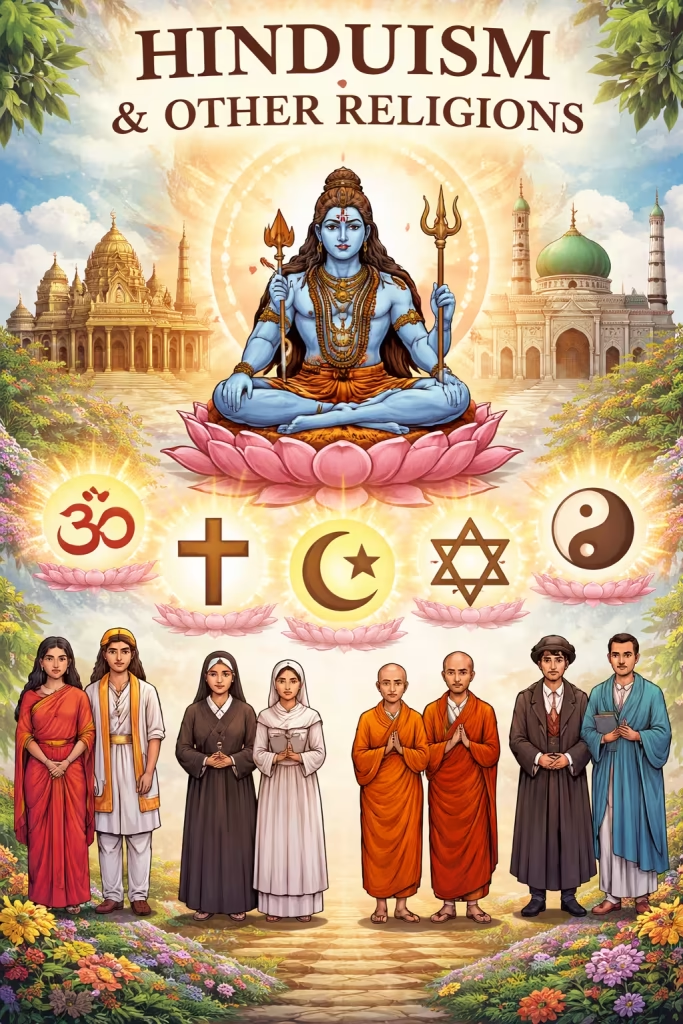
Karma is a universal law of cause and effect. Every action influences future experiences across multiple lives. Reincarnation allows the soul to evolve spiritually.
Other Religions
Most other religions do not accept reincarnation:
Christianity and Islam believe in resurrection and judgment.
Judaism has varied interpretations but generally rejects rebirth.
Key Difference:
Hinduism emphasizes reincarnation, while most other religions focus on judgment after one life.
7. Rituals and Worship Practices
Hindu worship is diverse and flexible:
Temple rituals
Home worship (puja)
Festivals
Yoga and meditation
There is no obligation to worship in a single way.
Other Religions
Other religions often prescribe specific forms of worship:
Church services
Mosque prayers
Synagogue rituals
Key Difference:
Hinduism offers flexible worship, while other religions follow standardized rituals.
8. Attitude Toward Other Religions
Sanātana Dharma is inherently inclusive and tolerant, embracing the idea:
“Truth is one, paths are many.”
It accepts that different spiritual paths can lead to the same ultimate reality.
Other Religions
Some religions emphasize exclusivity, claiming their path as the only true way to salvation.
Key Difference:
Hinduism promotes spiritual pluralism, while other religions may stress exclusivity.
9. Philosophy and Worldview
Sanātana Dharma
Hindu philosophy explores profound metaphysical ideas such as:
Dharma (righteous duty)
Maya (illusion)
Atman (soul)
Brahman (absolute reality)
It blends spirituality with daily life.
Other Religions
Other religions often focus more on:
Moral commandments
Obedience to divine law
Social and ethical order
Key Difference:
Hinduism emphasizes self-realization and cosmic philosophy, while others emphasize moral obedience.
10. Lifestyle and Social Structure
Hinduism influences every aspect of life—food, family, festivals, ethics, and social responsibilities. It outlines stages of life (Ashramas) and duties (Dharma).
Other Religions
Other religions generally focus more on belief and worship rather than detailed life systems.
Key Difference:
Hinduism is a complete lifestyle system, while other religions are primarily faith-based systems.
11. Religious Conversion
Sanātana Dharma
Hinduism traditionally does not promote conversion. It respects spiritual evolution at an individual pace.
Other Religions
Many other religions actively encourage conversion and missionary activities.
Key Difference:
Hinduism accepts diversity without conversion, while other religions often seek expansion through conversion.
12. Flexibility and Adaptability
Sanātana Dharma
Hinduism has evolved over centuries, adapting to social and cultural changes while retaining its spiritual core.
Other Religions
Other religions tend to be more fixed in doctrine and resistant to reinterpretation.
Key Difference:
Hinduism is dynamic and adaptable, while other religions are generally doctrinally fixed.
The difference between Hinduism and other religions lies not in superiority, but in approach, philosophy, and structure. Hinduism stands apart as a pluralistic, experiential, and inclusive spiritual tradition that encourages self-inquiry and personal realization. Other religions provide structured paths, clear doctrines, and defined moral systems that guide millions worldwide.
Understanding these differences helps promote interfaith harmony, respect, and spiritual awareness. In a world enriched by diverse beliefs, recognizing the uniqueness of Hinduism alongside other religions allows humanity to coexist peacefully while honoring individual faith journeys.