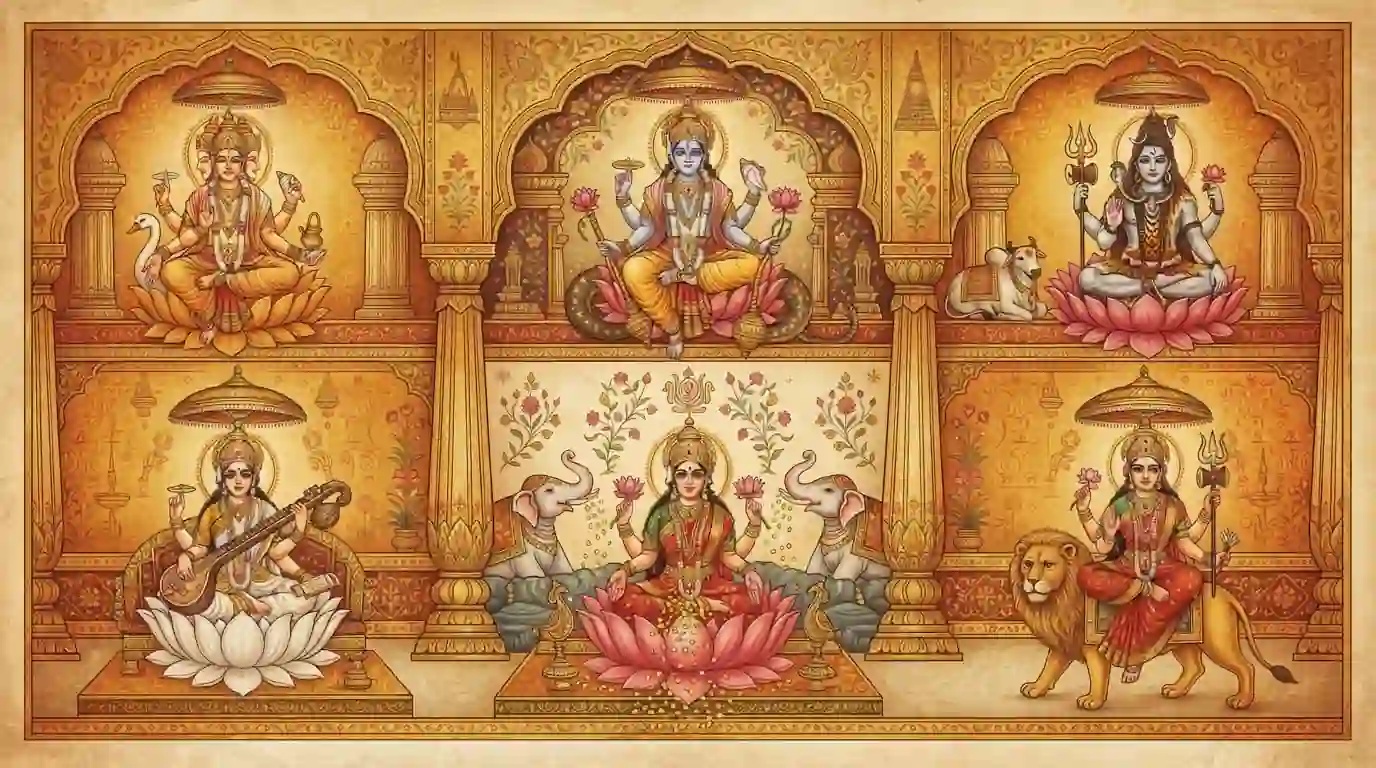


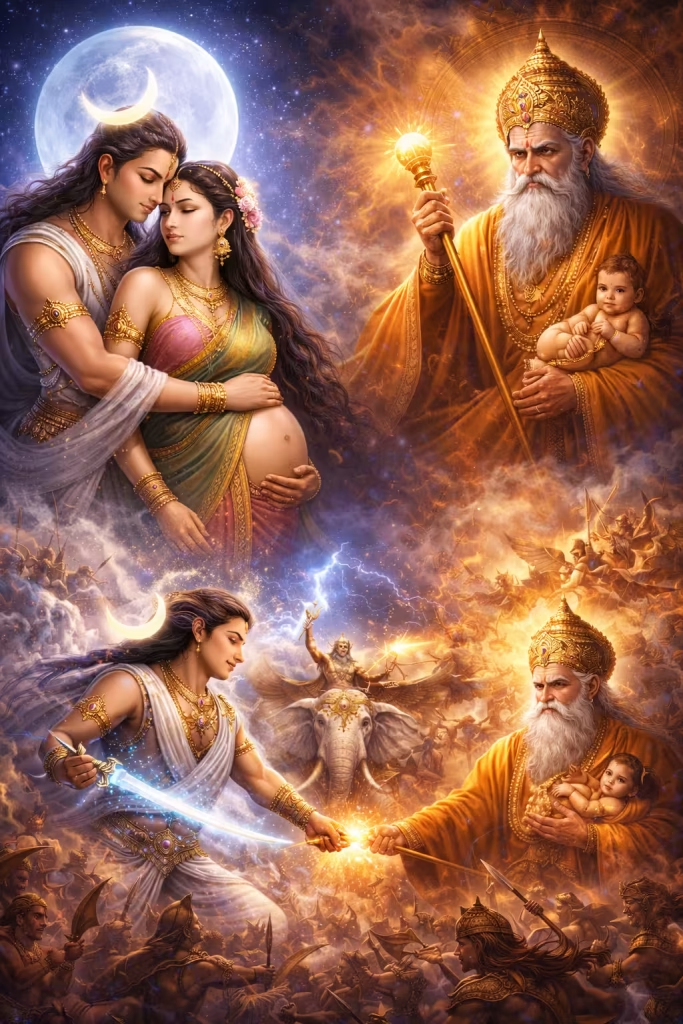
Hindu mythology is a vast ocean of stories that blend philosophy, spirituality, human emotions, and cosmic laws. Among its many fascinating narratives, the story of Tara and the Moon (Chandra) stands out as a profound tale of love, desire, pride, conflict, and the restoration of universal balance. This myth is not merely a romantic episode but a symbolic account that explains celestial phenomena, moral values, and the consequences of ego-driven actions.
The story of Tara and the Moon is closely associated with powerful sages, gods, and demons, and it ultimately leads to the birth of Budha (Mercury)—a significant planetary deity in Hindu astrology. Through this story, Hindu mythology conveys deep lessons about dharma (righteousness), restraint, and the harmony required to sustain the cosmos.
Who Was Tara?
Tara was a celestial woman of extraordinary beauty and intelligence. She was the wife of Brihaspati, the revered guru (teacher) of the Devas (gods). Brihaspati represents wisdom, righteousness, sacred knowledge, and moral discipline. As the wife of such a learned sage, Tara was expected to embody virtue, loyalty, and spiritual grace.
However, Hindu mythology often presents its characters as complex beings rather than idealized figures. Tara was not merely a passive character; she possessed her own emotions, desires, and agency. Her story reflects the inner conflicts that even divine beings face when desire clashes with duty.
The Moon God: Chandra
Chandra, the Moon God, is one of the Navagrahas (nine planetary deities) in Hindu tradition. He symbolizes the mind, emotions, beauty, fertility, and attraction. Chandra is known for his charm, gentle glow, and emotional depth. He governs the tides, plant life, and human mental states.
Despite his divine nature, Chandra is also portrayed as emotionally impulsive and driven by desire. This duality makes him a perfect counterpart in the story of Tara—a narrative where emotion overtakes wisdom and leads to cosmic consequences.
The Beginning of the Forbidden Attraction
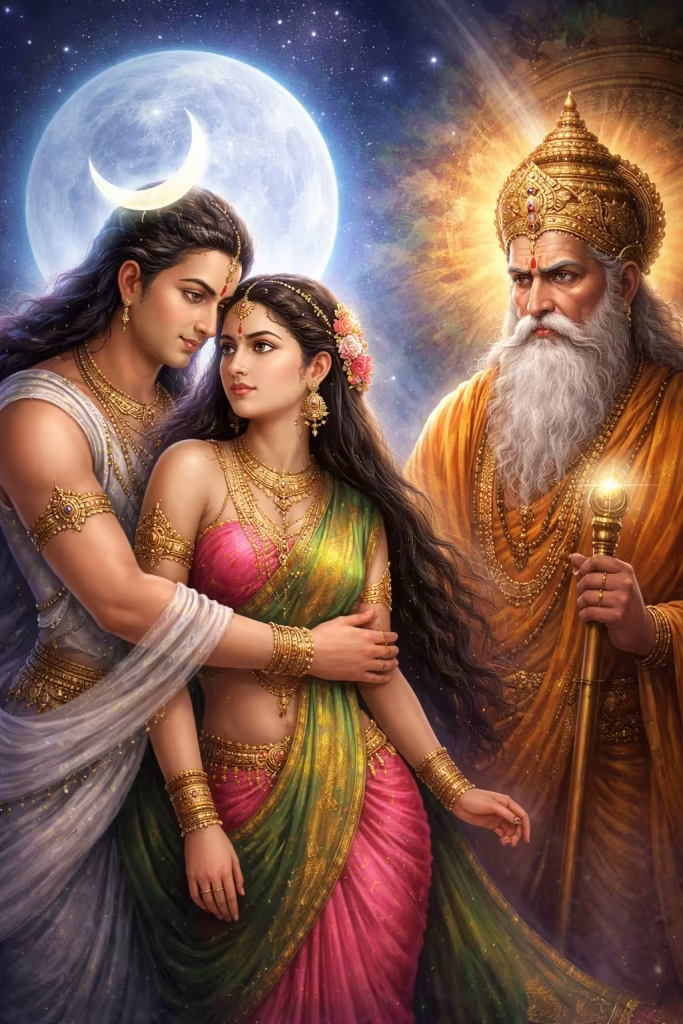
The story begins when Tara encounters Chandra. Enchanted by Tara’s beauty and intellect, Chandra becomes deeply infatuated with her. Tara, too, is drawn toward Chandra’s charm and emotional sensitivity. What starts as admiration soon develops into a powerful attraction.
Despite knowing that Tara is the wife of Brihaspati, Chandra allows his desire to overpower his sense of dharma. Eventually, he abducts Tara and takes her to his celestial abode. Some versions of the myth describe this as an elopement, while others portray it as a forceful act. Either way, the union is considered adharmic (against cosmic law).
Brihaspati’s Anguish and Demand for Justice
When Brihaspati learns that his wife has been taken away, he is devastated. As the guru of the gods, Brihaspati represents divine order and moral law. He demands that Chandra return Tara immediately, reminding him of righteousness and duty.
However, Chandra refuses. Blinded by love and pride, he defies Brihaspati and ignores repeated warnings. This defiance is not just personal—it is symbolic of emotion overpowering wisdom, a dangerous imbalance in both human life and the cosmos.
The Cosmic War: Devas vs. Asuras
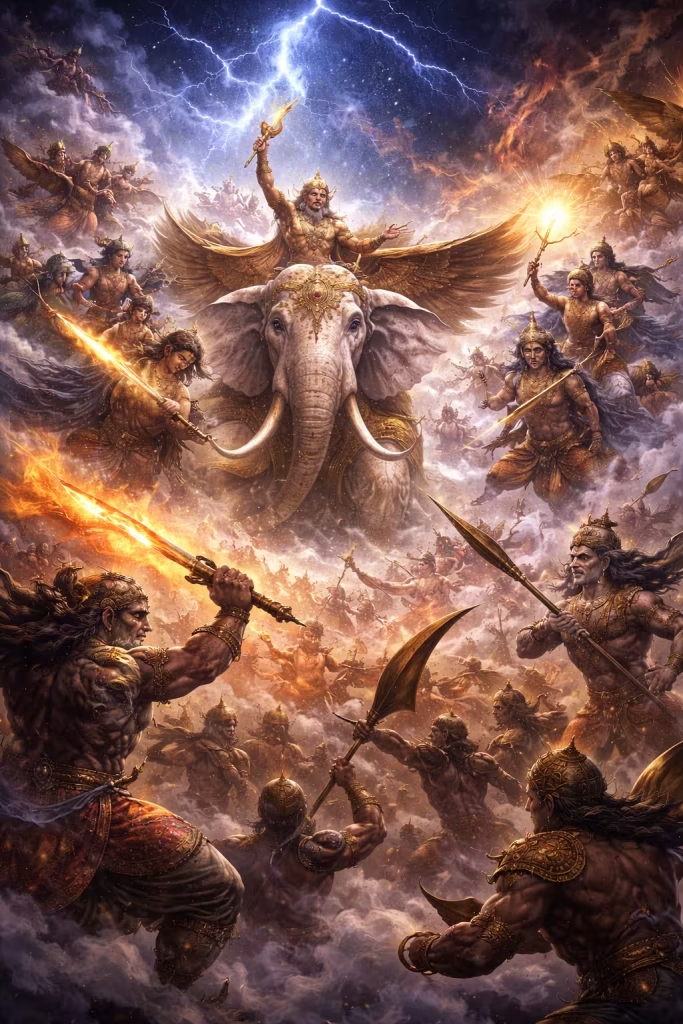
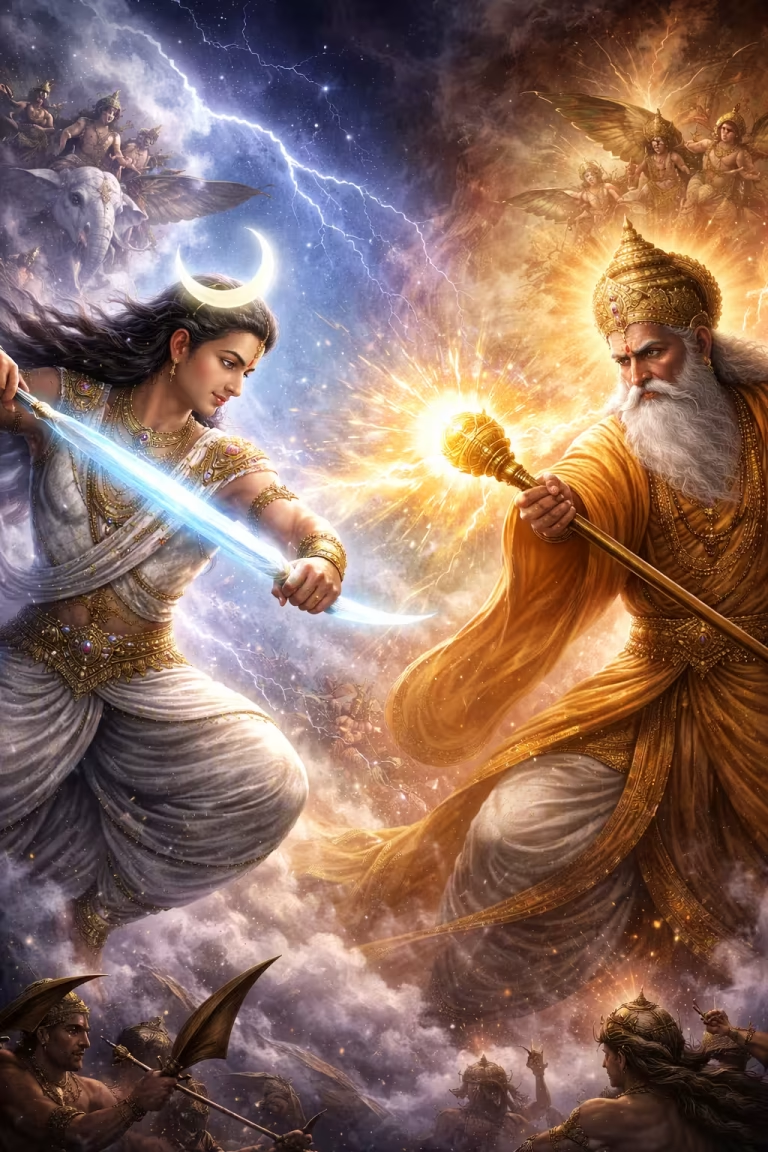
Brihaspati seeks help from Indra, the king of the Devas. Indra, recognizing the seriousness of Chandra’s transgression, sides with Brihaspati and demands justice. When Chandra still refuses to return Tara, the situation escalates into a full-scale cosmic conflict known as the Tarakamyam War.
Interestingly, Chandra finds support from Shukracharya, the guru of the Asuras (demons), and the Asuras themselves. This alliance shows that moral conflicts are not always divided strictly between good and evil; instead, they are often driven by ego, loyalty, and personal interests.
The war shakes the heavens, threatening the balance of the universe. Celestial bodies, planets, and natural forces are disturbed. This chaos reflects the larger message of Hindu mythology: when dharma is violated, the entire cosmos suffers.
Lord Brahma’s Intervention
As the war intensifies, it becomes clear that continued conflict will destroy cosmic harmony. At this critical moment, Lord Brahma, the creator of the universe, intervenes. He commands an end to the war and orders Chandra to return Tara to Brihaspati.
Chandra, though heartbroken, obeys Brahma’s command. Tara returns to Brihaspati, but the story does not end there. A deeper truth is yet to be revealed.
Tara’s Pregnancy and the Question of Paternity
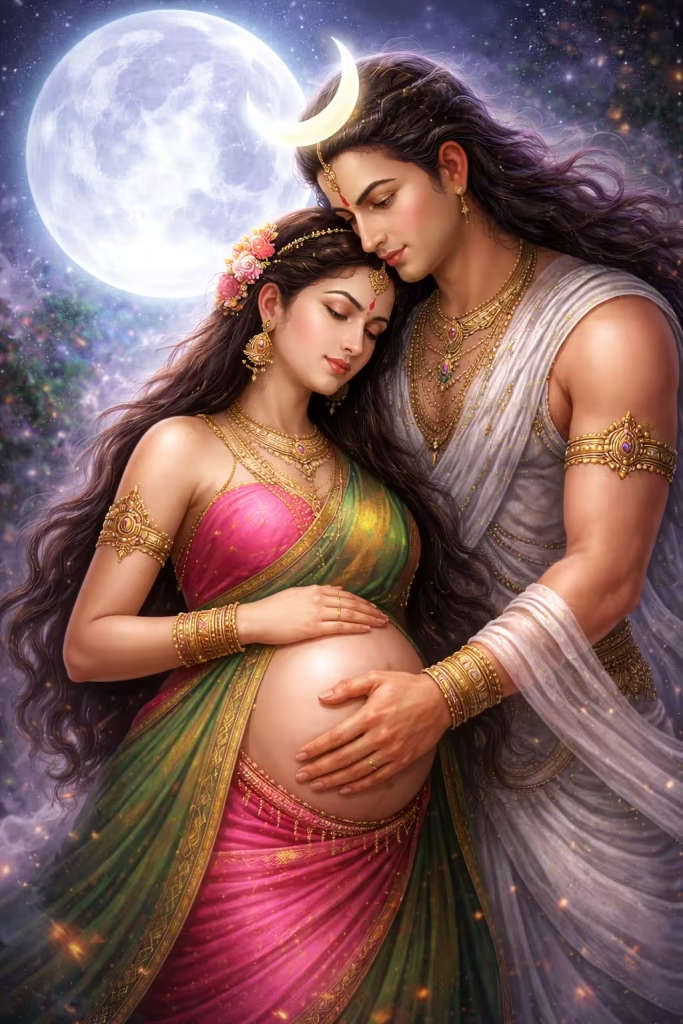
Soon after returning to Brihaspati, Tara is found to be pregnant. This revelation shocks everyone. Brihaspati demands to know the identity of the child’s father. Initially, Tara remains silent, creating tension and confusion among the gods.
At Brahma’s insistence, Tara finally reveals the truth: the child is Chandra’s. This admission deeply wounds Brihaspati’s pride and honor. Although he accepts the child’s divine destiny, he emotionally distances himself from Tara.
This moment highlights a recurring theme in Hindu mythology—the complexity of forgiveness and the lasting consequences of desire-driven actions.
The Birth of Budha (Mercury)
Tara gives birth to a radiant child named Budha, who later becomes the planetary deity Mercury. Budha symbolizes intelligence, communication, logic, learning, and analytical thinking. Interestingly, Budha’s qualities represent a balance between Brihaspati’s wisdom and Chandra’s emotional sensitivity.
Despite being Chandra’s biological son, Budha is raised under Brihaspati’s influence, learning sacred knowledge and intellectual discipline. This unique upbringing makes Budha one of the most intelligent and neutral planetary gods.
In astrology, Budha plays a crucial role in shaping human intellect, speech, and decision-making abilities. His birth from a forbidden union symbolizes the idea that even from mistakes and moral lapses, higher wisdom can emerge.
The Curse of the Moon
According to some versions of the story, Chandra is cursed by Daksha Prajapati or other divine forces for his actions. As a result, the Moon begins to wane and lose his brilliance. Later, upon seeking forgiveness, Chandra is partially relieved of the curse, leading to the cycle of waxing and waning of the Moon.
This mythological explanation beautifully connects cosmic events with moral narratives, showing how Hindu mythology integrates astronomy, ethics, and storytelling.
Symbolism and Deeper Meanings
The story of Tara and the Moon is rich with symbolism:
Tara represents desire, choice, and individual agency.
Chandra symbolizes the emotional mind—beautiful but unstable.
Brihaspati stands for wisdom, discipline, and dharma.
The War reflects inner conflicts between emotion and reason.
Budha’s birth signifies the emergence of intellect from emotional experiences.
The myth teaches that unchecked desire can disrupt harmony, but it also acknowledges human complexity. Rather than presenting characters as purely good or evil, Hindu mythology portrays them as evolving beings shaped by their choices.
Relevance in Modern Life
Even today, the story of Tara and the Moon holds deep relevance. In modern life, people often struggle to balance emotions and responsibilities, love and duty, freedom and ethics. This myth reminds us that while emotions are powerful and essential, they must be guided by wisdom to avoid chaos.
It also teaches compassion—understanding that mistakes are part of existence, and growth often comes through struggle and self-realization.
The Hindu mythology story of Tara and the Moon is far more than a tale of forbidden love. It is a cosmic drama that explores desire, ego, wisdom, conflict, and reconciliation. Through its rich characters and layered symbolism, the story explains celestial phenomena, moral values, and psychological truths.
At its heart, the myth reminds us that the universe thrives on balance—between heart and mind, passion and restraint, individuality and responsibility. When that balance is disturbed, chaos follows; when it is restored, wisdom and harmony emerge.
This timeless story continues to inspire, caution, and enlighten generations, proving once again the profound depth of Hindu mythology.
Frequently Asked Questions (FAQs)
The Hindu mythology story of Tara and the Moon is far more than a tale of forbidden love. It is a cosmic drama that explores desire, ego, wisdom, conflict, and reconciliation. Through its rich characters and layered symbolism, the story explains celestial phenomena, moral values, and psychological truths.
At its heart, the myth reminds us that the universe thrives on balance—between heart and mind, passion and restraint, individuality and responsibility. When that balance is disturbed, chaos follows; when it is restored, wisdom and harmony emerge.
This timeless story continues to inspire, caution, and enlighten generations, proving once again the profound depth of Hindu mythology.
Tara and the Moon is a sacred space where ancient mythology, powerful mantras, and lunar wisdom come together to inspire inner peace and spiritual awareness. Rooted in timeless traditions, Tara and the Moon explores divine stories, cosmic symbolism, and soulful chants that guide seekers toward clarity, balance, and higher consciousness.
1. Who was Tara in Hindu mythology?
Tara was the wife of Brihaspati, the guru of the Devas, and a celestial woman known for her beauty and intellect. She plays a central role in the mythological story involving Chandra, the Moon God.
Who is Chandra in Hindu mythology?
Chandra is the Moon God and one of the Navagrahas in Hindu astrology. He represents the mind, emotions, beauty, and attraction, and plays a key role in the story of Tara.
3. Why is the story of Tara and the Moon considered important?
The story highlights the conflict between desire and dharma (righteousness) and explains cosmic events such as the waxing and waning of the Moon. It also conveys deep moral and spiritual lessons.
4. What caused the Tarakamaya War?
The Tarakamaya War was caused when Chandra abducted Tara, leading Brihaspati to seek justice. This resulted in a celestial war between the Devas and Asuras, disrupting cosmic balance.
5. Who supported Chandra during the Tarakamaya War?
Chandra was supported by Shukracharya, the guru of the Asuras, and the Asuras themselves, while Brihaspati was supported by Indra and the Devas.
6. How did the Tarakamaya War end?
The war ended when Lord Brahma intervened and ordered Chandra to return Tara to Brihaspati, restoring peace and cosmic order.
7. Who is Budha (Mercury) in Hindu mythology?
Budha is the son of Tara and Chandra and later became the planetary deity Mercury. He symbolizes intelligence, communication, logic, and analytical thinking.
8. Why is Budha associated with intelligence and wisdom?
Budha combines the emotional nature of Chandra and the intellectual influence of Brihaspati, making him the deity of intellect, speech, and learning in Hindu astrology.
9. What is the symbolic meaning of the Tara and Moon story?
The story symbolizes the struggle between emotion and wisdom, the consequences of ego and desire, and the necessity of balance for harmony in life and the universe.
10. How does this story explain the phases of the Moon?
According to mythology, Chandra was cursed for his actions, causing him to lose his radiance periodically, which explains the waxing and waning phases of the Moon.
11. What moral lessons does the Tara and Chandra story teach?
The story teaches self-control, respect for dharma, the dangers of ego, and the importance of balancing emotions with wisdom.
12. Is the Tara and Moon story relevant in modern life?
Yes, the story remains relevant as it reflects human emotions, ethical dilemmas, and the importance of responsible choices in relationships and life.
13. In which Hindu scriptures is this story mentioned?
The story is referenced in texts such as the Puranas, including the Bhagavata Purana, Brahmanda Purana, and other mythological sources.