

Why Should We Not Sleep Facing North?
Have you ever heard elders saying:
“Never sleep with your head facing north”?
In many Indian households, this belief has been followed for generations. According to Vastu Shastra and Hindu traditions, sleeping in the north direction is considered inauspicious and harmful for mental peace, health, and spiritual balance.
Interestingly, even modern discussions often connect this belief with the Earth’s magnetic field and sleep quality.
But what is the real reason behind this ancient rule?
In this detailed article, we will explore:
- Spiritual reasons
- Scientific explanations
- Vastu beliefs
- Best sleeping directions
- Side effects of sleeping facing north
- Positive sleeping practices for peace and energy
Table of Contents
What Does Sleeping Facing North Mean?
Sleeping facing north usually means:
- Your head points toward the north direction
- Your feet point toward the south
According to traditional Indian beliefs, this sleeping position disturbs natural energy balance
Why Should We Not Sleep Facing North According to Vastu?
Vastu Shastra strongly advises against sleeping with the head toward the north.
According to Vastu:
- North direction carries strong magnetic energy
- Human body also has magnetic properties
- Wrong alignment may create imbalance
This imbalance is believed to cause:
- Poor sleep
- Stress
- Anxiety
- Restlessness
- Mental disturbance
Spiritual Reason for Not Sleeping Facing North
In Hindu traditions, the north direction has deep spiritual significance.
It is often associated with:
- Spiritual energy
- Divine realms
- Direction of departed souls
Many ancient beliefs say that sleeping facing north may disturb spiritual harmony and attract negative vibrations.
Some traditions also believe:
- Dead bodies are placed facing north during rituals
- Therefore, living people should avoid this direction while sleeping
Though symbolic, these beliefs remain deeply rooted in Indian culture.
Scientific Reason Behind Not Sleeping Facing North
Many people search online:
“Is there any scientific reason not to sleep facing north?”
One common explanation involves the Earth’s magnetic field.
The Earth has:
- North Pole
- South Pole
- Magnetic energy flow
Some experts believe that when the head faces north:
- Magnetic repulsion may occur
- Blood circulation may get disturbed
- Brain activity may feel affected
This could potentially lead to:
- Disturbed sleep
- Headaches
- Stress
- Fatigue
Although scientific evidence is limited, many people report better sleep quality after changing sleeping direction.
Connection Between Magnetic Field and Human Body
The human body contains:
- Iron in blood
- Electrical impulses
- Magnetic sensitivity
According to traditional theories:
- Head is considered the north pole of the body
- Facing north while sleeping creates energetic conflict
This concept is often used to explain:
- Restlessness
- Sleep disturbances
- Lack of relaxation
Side Effects of Sleeping Facing North
According to traditional beliefs and Vastu principles, sleeping with the head toward north may lead to:
1. Disturbed Sleep
People may experience:
- Frequent waking
- Bad dreams
- Poor sleep quality
2. Increased Stress
Improper sleeping direction is believed to affect mental calmness and emotional balance.
3. Headaches and Fatigue
Some people claim they feel:
- Heavier in the morning
- Less energetic
- Mentally tired
after sleeping facing north.
4. Negative Energy
In spiritual beliefs, north-facing sleep may attract negative vibrations and emotional imbalance.
Best Direction to Sleep According to Vastu
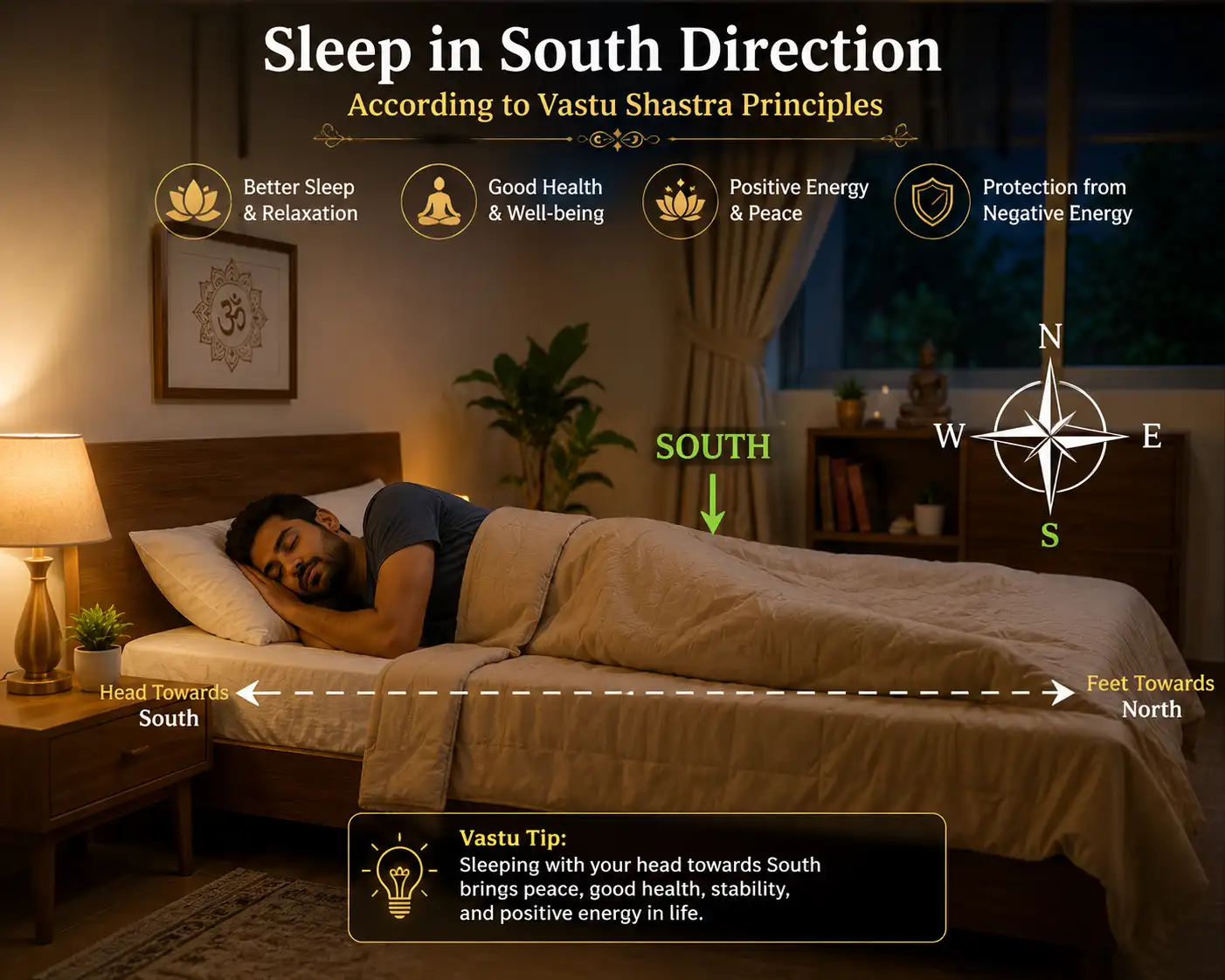
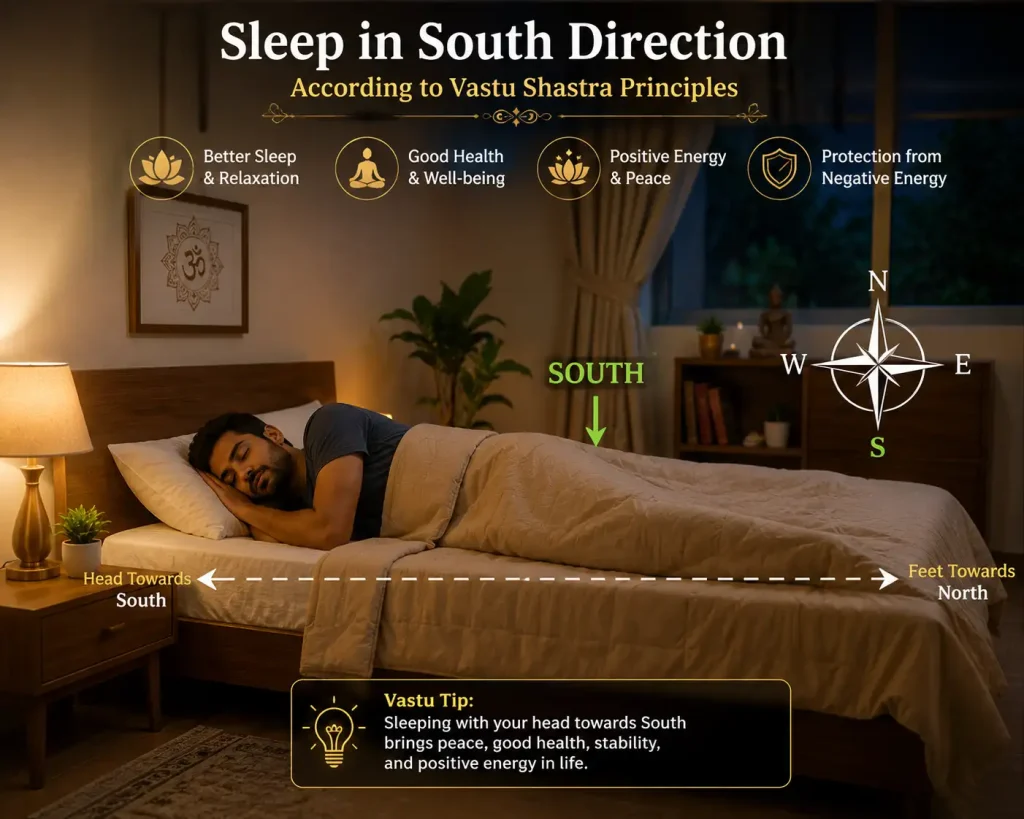
1. South Direction (Best)
According to Vastu Shastra:
- Sleeping with head toward south is considered ideal.
Benefits believed:
- Peaceful sleep
- Better health
- Positive energy
- Emotional stability
2. East Direction
East is also considered highly positive.
Benefits:
- Mental clarity
- Spiritual growth
- Better concentration
Students and spiritual practitioners are often advised to sleep facing east.
Directions to Avoid While Sleeping
North Direction
Traditionally avoided due to magnetic and spiritual beliefs.
Northwest Direction
Some Vastu experts believe this may create instability and restlessness.
What Does Hinduism Say About Sleeping Direction?
In Hindu traditions, sleeping direction is connected with:
- Energy flow
- Spiritual harmony
- Cosmic balance
Ancient sages emphasized proper sleeping posture and direction for:
- Health
- Peace
- Long life
Many scriptures and traditions suggest:
- South for stability
- East for spirituality
- Avoid north for regular sleep
Why Dead Bodies Are Placed Facing North
One of the strongest traditional beliefs is linked to funeral rituals.
In many Hindu customs:
- Dead bodies are placed with the head toward north
This direction symbolizes:
- Spiritual transition
- Journey of the soul
Therefore, living people are advised not to sleep in the same direction regularly.
Does Sleeping Direction Really Affect Sleep?
Modern science has not fully proven these beliefs, but sleep experts agree that:
- Sleep environment matters
- Mental comfort affects sleep quality
- Habit and belief influence the mind
If changing sleeping direction improves:
- Peace
- Comfort
- Sleep quality
then it may positively impact overall well-being.
Psychological Impact of Traditional Beliefs
Traditional beliefs often affect:
- Mindset
- Emotional comfort
- Relaxation
If someone strongly believes north-facing sleep is harmful, they may naturally feel:
- More anxious
- Restless
- Uncomfortable
This psychological effect can also influence sleep quality.
Best Sleeping Tips for Positive Energy
Besides direction, here are some simple Vastu sleep tips:
Keep Bedroom Clean
Clutter may create mental stress and discomfort
Avoid Mirrors Facing the Bed
Many Vastu traditions believe mirrors disturb sleep energy.
Use Calm Colors
Soft shades help relaxation and emotional balance.
Avoid Excessive Electronics
Too much screen exposure before sleep may disturb rest.
Meditate Before Sleeping
Meditation helps calm the mind and improve sleep quality.
Best Sleeping Direction for Couples
According to Vastu Shastra:
- South or southwest direction is considered beneficial for couples.
This is believed to improve:
- Emotional bonding
- Stability
- Harmony
What Happens if You Accidentally Sleep Facing North?
There is no need to panic.
Traditional beliefs are mostly based on:
- Energy concepts
- Cultural practices
- Spiritual symbolism
Occasionally sleeping facing north is not considered dangerous, but many people prefer avoiding it regularly.
Vastu Tips for Better Sleep
Ideal Bedroom Placement
Southwest direction is considered best for master bedroom.
Avoid Sleeping Under Heavy Beams
This may create psychological pressure and discomfort.
Keep Positive Energy
Use:
- Fresh air
- Natural light
- Clean surroundings
for peaceful sleep.
Spiritual Meaning of Sleep Direction
Why These Ancient Beliefs Still Matter Today
Even in 2026, millions of people follow traditional Vastu principles because they:
- Create discipline
- Improve mental peace
- Connect people with culture
- Encourage mindful living
Whether spiritual or psychological, these practices continue to influence daily life.
Conclusion
The belief that we should not sleep facing north comes from a combination of:
- Vastu Shastra
- Hindu traditions
- Spiritual symbolism
- Magnetic field theories
While modern science does not fully confirm these claims, many people still prefer sleeping with their head toward:
- South
- East
for better peace, positivity, and emotional comfort.
Ultimately, good sleep depends on:
- Healthy habits
- Calm surroundings
- Mental relaxation
- Consistent sleep schedule
Ancient traditions remind us that even simple lifestyle practices can influence our overall well-being and peace of mind.
FAQs About Sleeping Facing North
Why should we not sleep facing north?
According to Vastu and traditional beliefs, sleeping facing north may disturb energy balance and affect sleep quality.
Which direction is best for sleeping?
South is considered the best sleeping direction according to Vastu.
Is there scientific proof against sleeping north?
Scientific evidence is limited, but magnetic field theories are often discussed.