

The Goddess Who Belongs to the Family
In the quiet corners of homes and the sacred soil of ancestral villages, there lives a goddess who does not reside in grand temples or public shrines. She is the Kulaswamini, the ancestral guardian, the feminine force who watches over the lineage, protects the bloodline, and blesses the generations.
She is not worshipped by all, but by those who belong. She is not invoked by crowds, but by kin. Her presence is intimate, her power immense.
Understanding Kulaswamini
The word “Kulaswamini” is composed of two parts, Kula, meaning family or lineage, and Swamini, meaning mistress or goddess. She is the divine matriarch of the clan, the spiritual protector of the household, and the embodiment of ancestral memory.
Her worship is not just ritual; it is remembrance. It is a way of honoring the feminine energy that has guided the family through time.
The Concept of Kula Devata
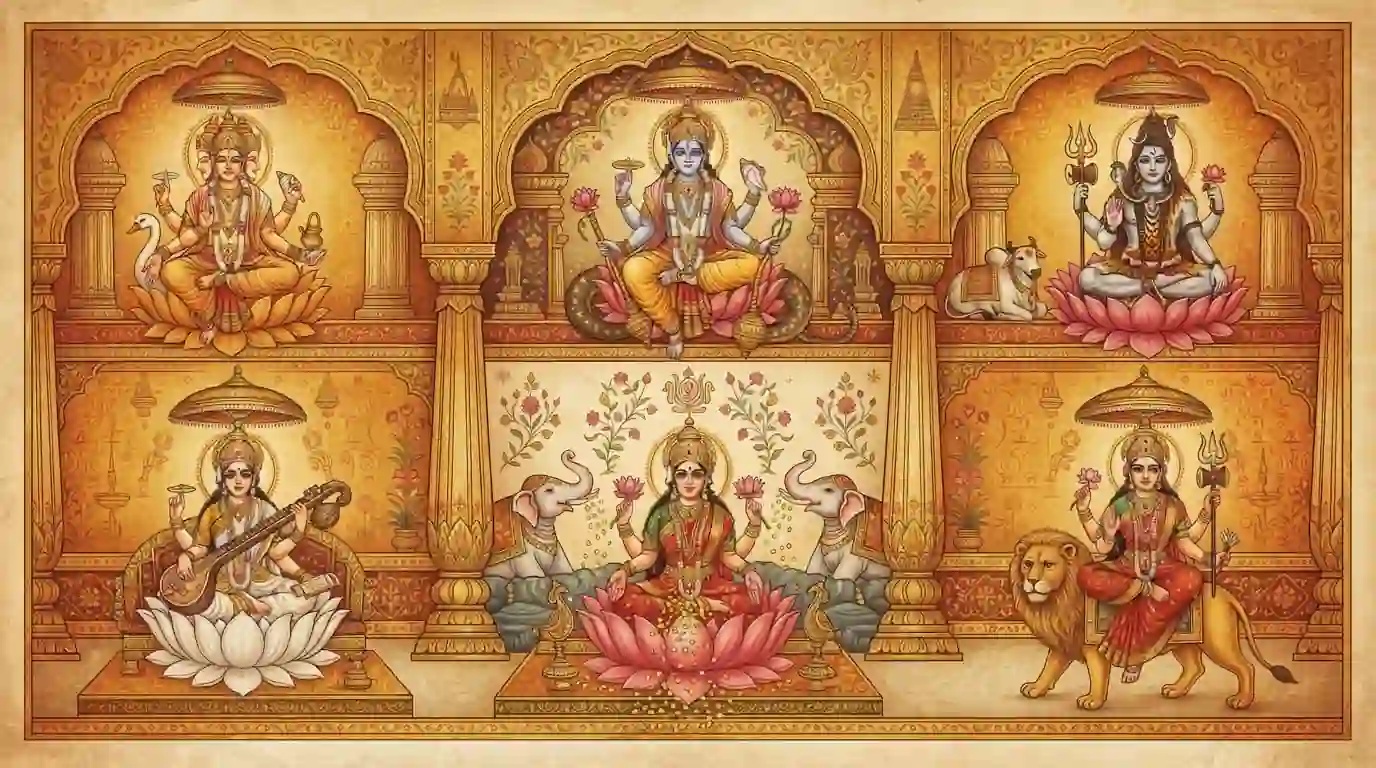
In many regions of Maharashtra, Karnataka, and Goa, families have a Kula Devata, a deity specific to their lineage. While some families worship male deities, such as Shiva or Vishnu, others revere a goddess, often in the form of Durga, Bhavani, Renuka, or a local village deity.
The Kulaswamini is not chosen. She is inherited. Her worship is passed down through generations, often orally, through stories, songs, and rituals.
The Feminine Force of Protection
The Kulaswamini is seen as a guardian, a warrior, and a nurturer.
- She protects the family from illness, misfortune, and spiritual imbalance.
- She blesses childbirth, marriage, and new beginnings.
- She is fierce when needed, gentle when called, and always present in times of transition.
- Her shrine may be a simple stone under a tree, a small alcove in the ancestral home, or a temple in the family’s native village.
- She does not demand grandeur, only devotion.
The Ritual of Worship
The Kulaswamini Puja is performed at specific times of the year, often during Navratri, Amavasya, or family milestones such as weddings, housewarmings, and naming ceremonies.
The ritual typically includes:
- Cleaning the home and preparing the altar
- Offering turmeric, kumkum, flowers, and coconut
- Lighting oil lamps and incense
- Chanting family-specific mantras and prayers
- Cooking traditional offerings such as rice, jaggery, and sweets
The puja is not just an act of worship; it is a moment of reconnection with the goddess and the ancestors.
Women as Keepers of Tradition
In most households, it is the women who carry the memory of the Kulaswamini.
- Mothers teach daughters the chants.
- Grandmothers pass down stories.
- Sisters gather to sing and pray.
The goddess lives in their rituals, their voices, and their hearts. The feminine energy of the goddess flows through the feminine presence in the home.
Stories Passed Through Generations
Each family has its own story of the Kulaswamini. Some say she appeared in a dream to protect the village. Others recall her saving the family during a plague or famine. Some remember her as a warrior riding a lion, while others see her as a healer who cured the sick.
These stories are sacred. They are not written in scriptures but preserved in memory. They are told during pujas, whispered during festivals, and remembered during times of need.
The Village Temple
Often, the Kulaswamini is linked to a village temple, usually located in the family’s place of origin. Even after generations migrate to cities, families return to this temple during festivals or important life events.
The journey is a pilgrimage. The offering is a renewal. The visit is a vow to never forget where one comes from.
The Goddess and the Land
The Kulaswamini is not just tied to blood; she is tied to land. Her presence is felt in the soil, the trees, the rivers, and the stones of the ancestral village. Her worship includes touching the earth, offering grains, and thanking nature.
She is the spirit of place, the soul of the land, and the breath of tradition.
A Dialogue with Ancestors
The Kulaswamini Puja is also a dialogue with ancestors. It is a way to honor those who came before, to seek their blessings, and to continue their legacy. The goddess becomes a bridge between generations, between realms, between memory and devotion.
The puja is often accompanied by offerings to departed souls, creating a sacred space where the living and the dead commune.
Symbols of Devotion
The Kulaswamini is worshipped with symbols that carry deep meaning:
- Turmeric and vermilion represent purity and power
- Coconut and betel leaves symbolize fertility and offering
- Rice and jaggery reflect nourishment and sweetness
- Oil lamps signify light, protection, and presence
Each item is chosen with care. Each gesture is filled with emotion.
The Quiet Flame
Unlike grand temple rituals, the Kulaswamini Puja is often performed in silence. There are no crowds, no priests, no elaborate ceremonies. Just a family, a lamp, a prayer, and a presence.
This quietness is sacred. It allows for intimacy, reflection, and deep connection.
Healing Through Ritual
The puja is also a form of healing. It brings family members together, mends old wounds, and renews bonds. It reminds everyone of shared roots, shared blessings, and shared responsibilities.
It is a ritual of unity and emotional restoration.
The Goddess in Modern Times
In today’s fast-paced world, the worship of Kulaswamini is fading. Urban life, migration, and changing values have dimmed her flame. Many families have forgotten her name, her story, her rituals.
Yet in some homes, she still waits, in the corner of the kitchen, in the memory of a grandmother, in the whisper of a prayer.
Reviving the Flame
Some families are now reviving the tradition. They are tracing their roots, visiting ancestral temples, and re-learning the rituals. Young people are asking questions. Elders are sharing wisdom.
This revival is not just cultural, it is spiritual. It is a return to identity, to belonging, to the divine feminine.
The Goddess and Dharma
The Kulaswamini is also a guide to dharma, right living. Her worship teaches:
- Respect for elders and ancestors
- Gratitude for blessings received
- Care for the land and home
- Devotion to the divine feminine
She is not just a protector, she is a teacher of values.
The Goddess and Festivals
During Navratri, the Kulaswamini is invoked as a form of Shakti. Families decorate her shrine, sing bhajans, and perform dances. During Diwali, she is offered sweets and lamps. During Amavasya, she is remembered in silence.
Her presence flows through the calendar, marking sacred time.
The Goddess and Dreams
Many devotees speak of dreams in which the Kulaswamini appears, offering guidance, warnings, or blessings. These dreams are considered sacred, messages from the divine, signs of her continued presence.
They are often shared during pujas, adding layers of meaning to the ritual.
The Goddess and Children
Children are introduced to the Kulaswamini early. They are taught her name, her story, her rituals. She becomes their guardian, their comfort, their silent friend.
Her blessings are invoked during exams, illnesses, and new beginnings.
The Eternal Guardian
The Kulaswamini is eternal. She does not age. She does not leave. She remains, watching, guiding, blessing. Her flame may flicker, but it never dies. Her presence may fade, but it never disappears.
She is the eternal guardian of the lineage, the silent strength behind the family, the goddess who belongs to us.