

India is a land of vibrant festivals, each deeply rooted in culture, tradition, and seasonal change. Among these colorful celebrations, Lohri holds a special place, especially in the northern states of India such as Punjab, Haryana, Himachal Pradesh, and Delhi. Celebrated with great enthusiasm and warmth, Lohri marks the end of winter and the arrival of longer days, symbolizing prosperity, gratitude, and new beginnings. More than just a harvest festival, Lohri is a heartfelt expression of joy, community bonding, and reverence for nature.
What is Lohri Festival?
Lohri is a traditional winter folk festival primarily associated with the harvest of the Rabi crops, especially sugarcane, wheat, and mustard. It is celebrated every year on 13th January, the night before Makar Sankranti. The festival signifies the passing of the winter solstice and the sun’s transition toward the northern hemisphere, a phase known as Uttarayan.
Lohri is particularly significant for farmers, as it represents gratitude to nature for a good harvest and prayers for prosperity in the coming agricultural season. Over time, Lohri has also become a social festival celebrated by families, friends, and communities regardless of profession.
Historical and Mythological Significance of Lohri
The origins of Lohri are deeply rooted in folklore, mythology, and ancient traditions. One popular legend associated with Lohri is the story of Dulla Bhatti, a heroic figure from Punjab during the Mughal era. He was known for rescuing young girls from exploitation and helping them get married with dignity. Folk songs sung during Lohri often praise his bravery and generosity, making him an enduring symbol of social justice and courage.
From a mythological perspective, Lohri is linked to the worship of Agni (the fire god) and Surya (the sun god). Lighting a bonfire and offering food to the fire symbolizes seeking blessings for warmth, fertility, and abundance. It also reflects the ancient practice of honoring natural elements that sustain life.
Why is Lohri Celebrated?
Lohri is celebrated for several reasons, both agricultural and cultural:
Harvest Celebration: It marks the harvesting of sugarcane and the sowing of wheat crops.
Seasonal Transition: Lohri signifies the end of harsh winter days and the arrival of longer, warmer days.
New Beginnings: The festival is especially important for newlyweds and families celebrating the birth of a child, as it represents fertility, growth, and happiness.
Gratitude to Nature: Lohri is a way of thanking nature for its bounty and praying for continued prosperity.
Traditional Rituals and Customs of Lohri
The celebration of Lohri is incomplete without its unique rituals and customs, which vary slightly from region to region but retain the same spirit.
1. Bonfire (Lohri Di Aag)
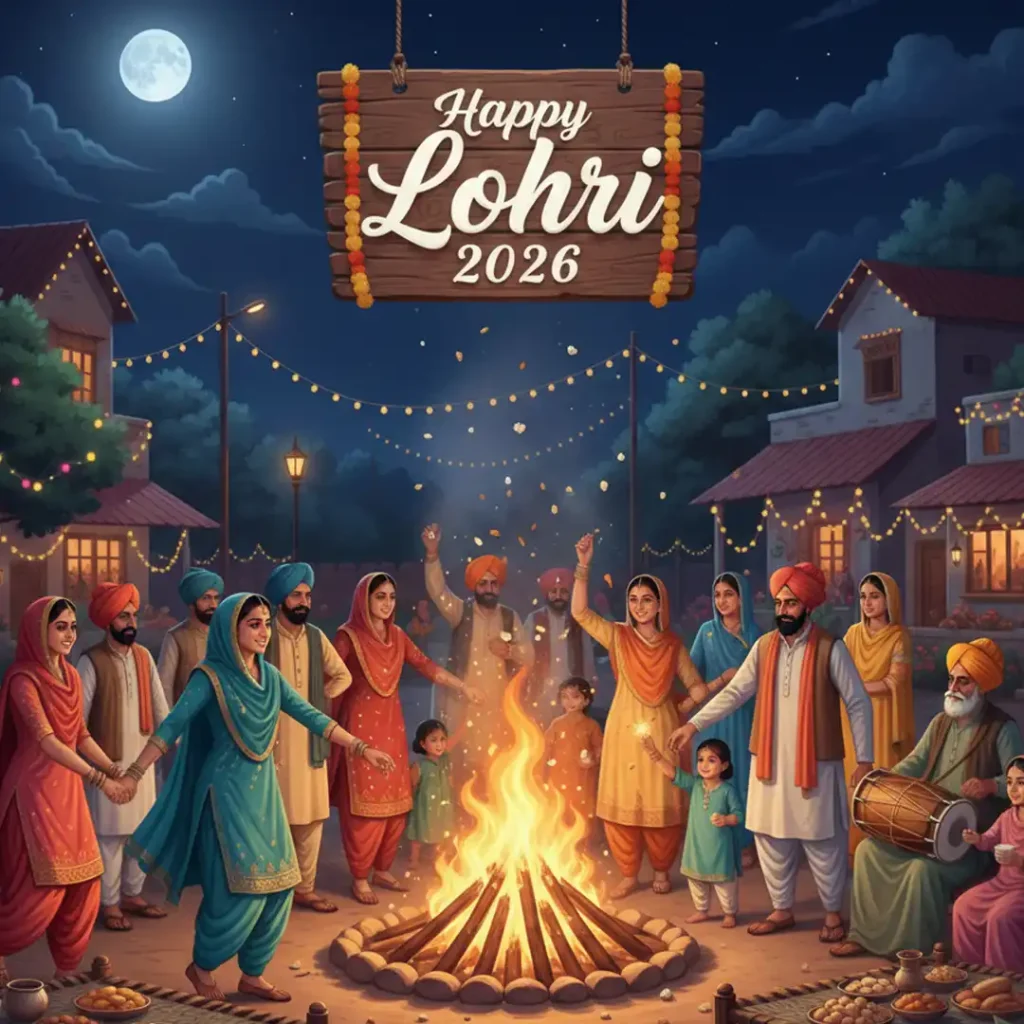
The central attraction of Lohri celebrations is the bonfire, lit in the evening. People gather around the fire, perform parikrama (circumambulation), and offer traditional items such as til (sesame seeds), gur (jaggery), peanuts, popcorn, and rewri to the flames. This ritual symbolizes the burning away of negativity and the welcoming of positivity and warmth.
2. Folk Songs and Music
Traditional Punjabi folk songs are sung around the bonfire, often narrating stories of Dulla Bhatti and celebrating the harvest. The rhythmic beats of the dhol add energy and excitement to the festivities.
3. Dance – Bhangra and Gidda
No Lohri celebration is complete without vibrant dances like Bhangra (performed by men) and Gidda (performed by women). These energetic dance forms express joy, strength, and gratitude.
4. Distribution of Prasad
After the rituals, people share Lohri prasad, which includes peanuts, rewri, gachak, popcorn, and jaggery-based sweets. Sharing food strengthens bonds and symbolizes community harmony.
Traditional Foods Associated with Lohri
Food plays an essential role in Lohri celebrations. The dishes prepared during this festival are simple yet rich in flavor and tradition. Some popular Lohri foods include:
Sarson da Saag and Makki di Roti – A classic Punjabi combination.
Til-gur Laddoos – Made from sesame seeds and jaggery.
Gajak and Rewri – Traditional winter sweets.
Peanuts and Popcorn – Offered to the bonfire and enjoyed as snacks.
These foods are not only delicious but also nutritious, providing warmth during the winter season.
Lohri Celebrations for Newlyweds and Newborns
Lohri holds special importance for newly married couples and families with a newborn baby, especially a male child in traditional communities (though modern celebrations honor all children equally). The first Lohri after marriage or childbirth is celebrated with extra enthusiasm, gifts, sweets, and blessings from relatives and friends.
These celebrations symbolize fertility, continuity of family lineage, and the community’s good wishes for the future.
Regional Variations of Lohri
While Lohri is most prominently celebrated in Punjab, its spirit extends to neighboring regions:
In Haryana, Lohri is celebrated with similar rituals and folk songs.
In Himachal Pradesh, people celebrate it as a mark of seasonal change.
In urban cities like Delhi, Lohri has become a multicultural celebration enjoyed by people from diverse backgrounds.
Despite regional differences, the core essence of Lohri—joy, gratitude, and togetherness—remains the same.
Modern-Day Lohri Celebrations
In modern times, Lohri has evolved beyond traditional village settings. Today, it is celebrated in:
Housing societies
Schools and colleges
Corporate offices
Community events
People organize cultural programs, DJ nights, themed parties, and eco-friendly bonfire celebrations. Social media has also become a platform for sharing Lohri wishes, images, and videos, making the festival more inclusive and widely celebrated.
Environmental Awareness and Eco-Friendly Lohri
With growing environmental concerns, many people are now opting for eco-friendly Lohri celebrations. Instead of large bonfires that cause air pollution, communities are choosing smaller fires or symbolic lamps. Using organic offerings and avoiding plastic materials helps preserve the environment while maintaining the festival’s spirit.
Spiritual and Social Significance of Lohri
Lohri is not just about festivities; it also carries deep spiritual and social meaning:
Unity and Togetherness: The festival brings people together, strengthening social bonds.
Gratitude and Humility: It teaches us to be thankful for nature’s blessings.
Hope and Positivity: Lohri encourages optimism as winter fades and new opportunities arise.
Lohri in Today’s World
In today’s fast-paced life, festivals like Lohri remind us of our roots, traditions, and the importance of human connections. It offers a moment to pause, celebrate life, and reconnect with family and culture. Even for people living abroad, Lohri serves as a beautiful reminder of home and heritage.
Lohri Festival is a vibrant blend of tradition, culture, agriculture, and community spirit. From the warmth of the bonfire to the rhythm of folk songs, from delicious winter delicacies to heartfelt prayers, Lohri encapsulates the essence of joy and gratitude. It celebrates the harmony between humans and nature, honoring the cycles of life and seasons.
As we gather around the glowing fire each year, Lohri reminds us to let go of the past, embrace positivity, and welcome prosperity with open hearts. In a world constantly changing, Lohri stands as a timeless festival that continues to spread warmth, happiness, and togetherness across generations.