
A Festival of Gratitude
Among India’s many festivals, Chhath Puja stands apart for its simplicity and intensity.
- Celebrated mainly in Bihar, Jharkhand, Uttar Pradesh, and Nepal’s Terai region.
- Honors Surya (the Sun God) and Chhathi Maiya, a protective goddess of fertility and well-being.
- Falls on the sixth day after Diwali.
- Marked by:
- Austere fasting
- Riverbank rituals
- Collective prayers
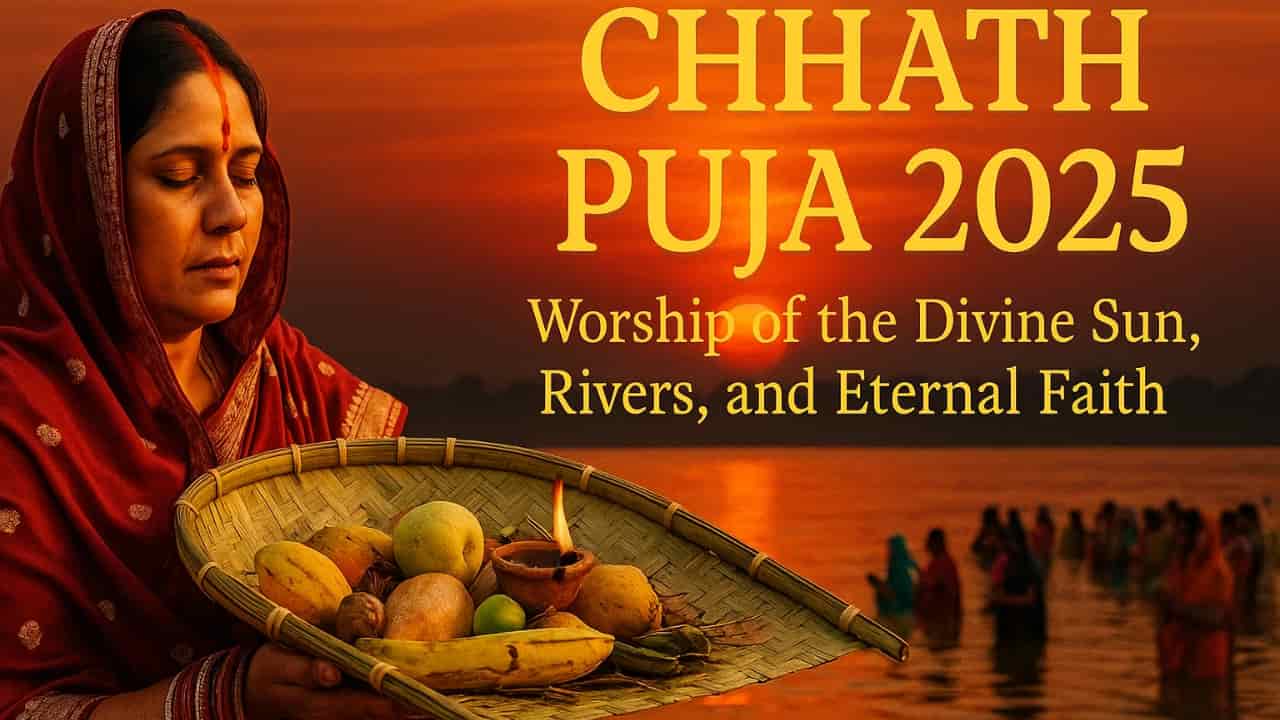
Families gather to offer arghya, prayers with water, fruits, and lamps, to the setting and rising sun. Unlike other festivals known for grandeur, Chhath is about endurance, gratitude, and alignment with nature.
The silence of devotees standing in water at dawn reflects both humility and hope.
Chhath Puja 2025 - Dates, Significance, and Celebrations
- Dates: October 26 – 29, 2025.
- Begins with Nahay Khay and ends with Usha Arghya.
- Large gatherings in:
- Bihar, Uttar Pradesh, Jharkhand, Nepal
- Cities like Delhi and Mumbai (migrant communities)
- Special trains and community arrangements for devotees.
- Emphasis on:
- Biodegradable offerings
- Clean riverbank campaigns
- Artificial tanks in urban centers
Chhath Puja 2025 will once again showcase discipline, ecology, and devotion, uniting millions in gratitude and resilience.
Mythological Roots of Chhath Puja
- The worship of the Sun dates back to the Rigveda, invoking Surya and Usha (dawn).
- Legends connected with Chhath:
- Mahabharata: Draupadi and the Pandavas observed Chhath during exile.
- Ramayana: Rama and Sita performed the rituals after returning to Ayodhya.
- In local tradition, Chhathi Maiya protects children and blesses families with fertility.
Essence: Chhath is about gratitude for life and renewal through devotion.
The Four Days of Chhath
Chhath Puja unfolds over four structured days, each with symbolic meaning:
- Day 1: Nahay Khay (Bath and Eat):
- Devotees bathe in rivers.
- Eat a single pure meal (pumpkin curry, rice, and ghee).
- Symbolizes purification.
- Day 2: Kharna:
- Day-long fast, broken after sunset with kheer and chapatis.
- 36-hour waterless fast begins afterward.
- Day 3: Sandhya Arghya (Evening Offering):
- Devotees gather at rivers/ponds at sunset.
- Offer water, milk, and lamps to the setting sun.
- Atmosphere filled with folk songs and prayers.
- Day 4: Usha Arghya (Morning Offering):
- Concludes at sunrise with offerings to the rising sun.
- Fast is broken with fruits and prasada.
Symbolism: A journey from purification – gratitude – endurance – renewal.
The Discipline of Fasting
- Central to Chhath: Nirjala vrat (36-hour fast without food or water).
- Preparation: Weeks of a simple, sattvic diet.
- Significance:
- Spiritual: purification and surrender.
- Ecological: awareness of dependence on natural cycles.
- Cultural: resilience and strength in restraint.
Women as Custodians of Ritual
- Women undertake the toughest fasting rituals for family well-being.
- Grandmothers pass down folk songs and rituals to younger women.
- Men also participate as fasters or supporters.
Chhath highlights women’s silent strength and cultural resilience.
The Role of Songs and Storytelling
The River as Sacred Space
- Rivers, ponds, and lakes become sites of worship.
- Rituals: Devotees stand waist-deep in water, hands folded to the horizon.
- Communities:
- Clean riverbanks before rituals.
- Manage waste afterward.
Reminder of ecological responsibility.
Collective Spirit of Chhath Puja
- Chhath is collective, not private.
- Brings together communities across caste, wealth, and divisions.
- Migrants celebrate even in metros like Delhi, Mumbai, or abroad.
- Hundreds offering water together = public, communal spirituality.
Symbolism of Sunset and Sunrise
- Sunset Arghya: gratitude for what has passed.
- Sunrise Arghya: hope for the future.
- The Sun symbolizes:
- Clarity
- Vitality
- Renewal
Frames human life as a balance between acceptance and aspiration.
Chhath Puja in the Modern World
- Challenges: urbanization and river pollution.
- Adaptations:
- Artificial ponds in cities
- Eco-friendly offerings
- Organized waste management
- Technology adds new dimensions:
- Live-streamed prayers
- WhatsApp coordination
- Social media sharing
Despite changes, the core remains simple and disciplined.
Lessons from Chhath Puja
- Restraint matters: fasting teaches discipline in an age of excess.
- Gratitude sustains: honoring the Sun and rivers as life-givers.
- Community strengthens: shared rituals unite across differences.
- Humility guides: standing in water reflects human smallness and interconnectedness.
A Festival of Endurance and Light
Chhath Puja may lack the fireworks of Diwali or the colors of Holi, but its quiet strength lies in:
- Discipline
- Gratitude
- Ecological wisdom
Families align with nature, women embody resilience, and communities unite under the rising sun’s glow.
At dawn, as sunlight meets folded hands, Chhath Puja conveys a timeless truth: gratitude and humility are the lamps that guide human life.