

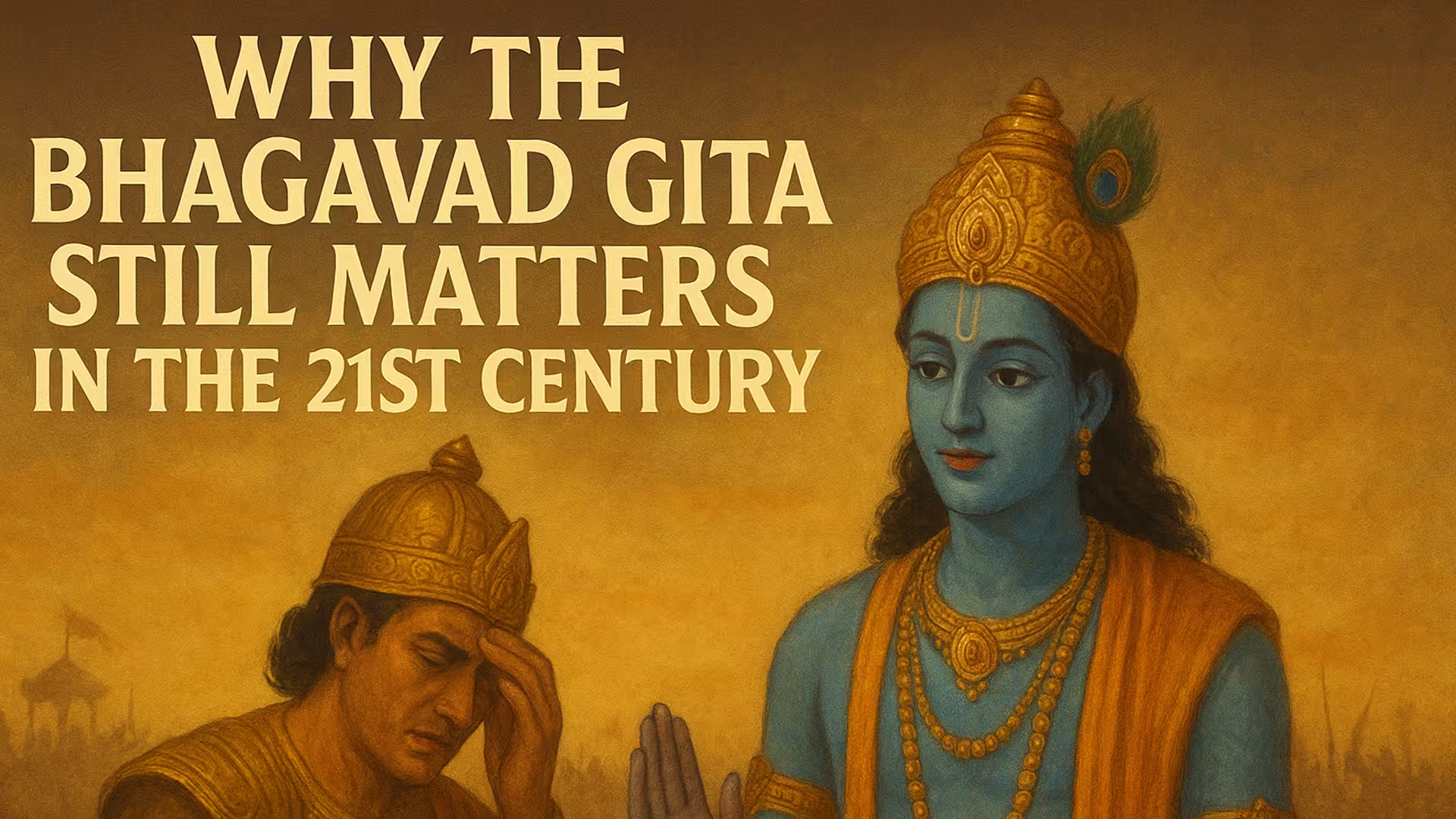
The world we live in today is fast, uncertain, and often stressful. People are chasing success, struggling with relationships, and trying to find balance between work and personal life. In the middle of this modern chaos, it may surprise many that an ancient text, written more than 5,000 years ago, still offers answers. That text is the Bhagavad Gita.
The Bhagavad Gita, known as the “Song of God,” is a dialogue between Lord Krishna and Arjuna on the battlefield of Kurukshetra. But beyond being part of the Indian epic Mahabharata, it is a spiritual guide that speaks about life, duty, emotions, self-realization, and the path to inner peace.
In the 21st century, where technology rules, competition is intense, and mental health challenges are rising, the teachings of the Gita are more relevant than ever. This blog explores why the Bhagavad Gita still matters today, and how its wisdom can guide us through modern challenges
1. The Timeless Nature of Wisdom
Unlike books that become outdated with time, the Bhagavad Gita deals with universal truths—about human nature, choices, emotions, and the search for meaning. The struggles Arjuna faced—confusion, fear, doubt, and moral dilemmas—are the same struggles we face today, though in different forms.
- Arjuna’s battlefield is symbolic of our everyday battles—career stress, family problems, or ethical decisions.
- Krishna’s guidance represents the inner wisdom and higher consciousness we all seek.
Because it deals with the human condition, the Gita never loses relevance, no matter what century we live in.
2. Finding Inner Peace in a Stressful World
In today’s fast-paced world, stress, anxiety, and depression are common. People are constantly running after success, wealth, and recognition. The Gita teaches us:
- Detachment from outcomes: Do your best, but don’t be controlled by results. This relieves pressure and reduces anxiety.
- Mind control and meditation: The Gita emphasizes calmness of mind through self-discipline and meditation, which modern psychology also supports for mental well-being.
- Balance in life: Krishna advises against extremes—whether it is overwork, overindulgence, or complete withdrawal.
This makes the Gita a practical guide for maintaining mental peace in a stressful modern life.
3. A Guide for Ethical Living
The 21st century is full of ethical challenges—corruption, dishonesty, environmental destruction, and material greed. The Gita’s principles of Dharma (righteous duty) and Karma (right action) give a clear moral compass.
- For professionals: It teaches integrity, hard work, and responsibility.
- For leaders: It emphasizes selfless service and fairness.
- For individuals: It stresses honesty, compassion, and justice.
In a world where values often get compromised, the Gita helps us choose what is right, not just what is convenient.
4. Lessons on Equality and Unity
The Bhagavad Gita strongly emphasizes equality of all beings. Krishna says that the wise see all creatures equally—whether rich or poor, human or animal, man or woman.
In today’s world, where issues like racism, gender inequality, caste discrimination, and social injustice still exist, the Gita’s message of equality and respect is extremely powerful. It inspires us to see beyond labels and treat everyone with dignity.
5. The Gita and Modern Science of Mind
Interestingly, many teachings of the Gita align with modern psychology and neuroscience.
- Overcoming fear and doubt: Just like therapy helps people face fears, Krishna teaches Arjuna to overcome his mental block through self-belief and awareness of higher truth.
- Power of mindfulness: The Gita’s stress on meditation, self-awareness, and detachment is very similar to practices like mindfulness and cognitive behavioral therapy.
- Balanced lifestyle: Chapter 6 advises moderation in food, sleep, work, and rest—echoing modern health advice.
This shows that the Gita is not just a religious book but also a scientific guide for the human mind.
6. Bhagavad Gita as a Leadership Guide
In the corporate and political world, leadership often comes with challenges of decision-making, responsibility, and pressure. The Gita provides timeless leadership lessons:
- Lead by example: Krishna tells Arjuna that leaders must act responsibly because people follow their actions.
- Selfless service: True leadership is not about power but about serving the larger good.
- Clarity in decision-making: Arjuna’s confusion is like the dilemmas leaders face today. The Gita shows how clarity comes from aligning decisions with values and purpose.
This is why many global leaders, CEOs, and thinkers like Mahatma Gandhi, A. P. J. Abdul Kalam, and even international scholars have drawn inspiration from the Gita.
7. Work Without Attachment – Karma Yoga
One of the most practical teachings of the Gita is Karma Yoga—the path of selfless action. It says:
- Do your duty sincerely.
- Don’t get attached to rewards.
- See work as worship.
In today’s competitive world, where success is often measured only by results, this teaching reduces stress and helps people stay motivated. It also encourages ethical work culture by focusing on action, not greed.
8. Relevance in Personal Relationships
Modern relationships often suffer from ego clashes, unrealistic expectations, and lack of understanding. The Gita’s wisdom helps in relationships too:
- Control of anger and desires leads to healthier communication.
- Detachment does not mean disconnection, but learning to love without selfish expectations.
- Compassion and understanding create harmony in families and friendships.
Thus, the Gita can guide people to build stronger, more meaningful relationships.
9. Spirituality Beyond Religion
One reason the Gita is universally respected is because it is not limited to one religion. It speaks of the soul, the universe, and eternal truths that apply to all humans.
In the 21st century, where interfaith harmony and global unity are important, the Gita acts as a spiritual bridge. It teaches that the ultimate goal is self-realization, not rigid rituals.
This makes it relevant not just for Hindus but for seekers of truth across cultures and religions.
10. Technology and the Gita – A Modern Connection
Today, Bhagavad Gita is available in apps, audiobooks, YouTube videos, and even AI-based learning tools. Initiatives like Bhagavad Gita For All (BGFA) are bringing this wisdom to people in new formats.
This shows how an ancient text is adapting to modern technology, ensuring its message reaches the younger generation in a language they understand.
11. Global Influence of the Bhagavad Gita
The Gita is not just respected in India but across the world. Great thinkers like Albert Einstein, Aldous Huxley, Carl Jung, and Henry David Thoreau admired its wisdom. Leaders like Mahatma Gandhi and Martin Luther King Jr. were deeply inspired by its teachings on non-violence and duty.
In a globalized world, the Gita acts as a universal guidebook for humanity
12. Practical Applications in the 21st Century
Let’s look at some everyday areas where the Gita’s teachings apply:
- Education: Students can learn focus, discipline, and stress-free studying.
- Workplace: Employees can avoid burnout by following Karma Yoga.
- Health: Meditation and balance as suggested in the Gita improve mental and physical health.
- Social life: The principle of equality helps build inclusive societies.
- Environment: Respect for nature in the Gita encourages sustainable living.
This shows that the Gita is not just theory but practical life wisdom.
13. Overcoming Modern Crises with the Gita
The 21st century faces unique challenges—climate change, wars, inequality, and loss of values. The Gita gives solutions:
- Greed vs. Sustainability: It teaches contentment and balance with nature.
- Conflict vs. Peace: It emphasizes duty with compassion.
- Despair vs. Hope: It inspires faith in the self and higher purpose.
Thus, the Gita’s teachings are powerful tools to solve modern problems at both personal and global levels.
The Bhagavad Gita is not just an ancient scripture; it is a living guidebook for humanity. Its teachings on duty, selfless action, equality, mindfulness, and inner strength are as relevant in the 21st century as they were on the battlefield of Kurukshetra.
In a time of stress, confusion, and moral dilemmas, the Gita reminds us:
- Do your duty sincerely.
- Stay calm and balanced.
- See all beings as equal.
- Seek higher truth beyond material life.
That is why the Bhagavad Gita still matters in the modern world. It gives us hope, direction, and timeless wisdom to live a meaningful and balanced life.

FAQ
How can the Bhagavad Gita help in daily life?
The Gita guides us to manage stress, build discipline, improve relationships, make ethical choices, and find inner peace. By following its principles, people can live a balanced and purposeful life.
Is the Bhagavad Gita only for Hindus?
No. The Gita is a spiritual text, not restricted to one religion. It speaks about the soul, duty, and universal truths that are relevant to everyone, regardless of faith or culture.
What are some key teachings of the Bhagavad Gita?
Do your duty without attachment to results (Karma Yoga).
Practice balance in life—avoid extremes.
See all beings with equality and compassion.
Cultivate self-awareness and inner peace through meditation.
How does the Bhagavad Gita relate to modern challenges like stress and anxiety?
The Gita encourages detachment from outcomes, focusing on effort rather than results. This reduces stress, promotes mental clarity, and supports emotional resilience in today’s fast-paced world.