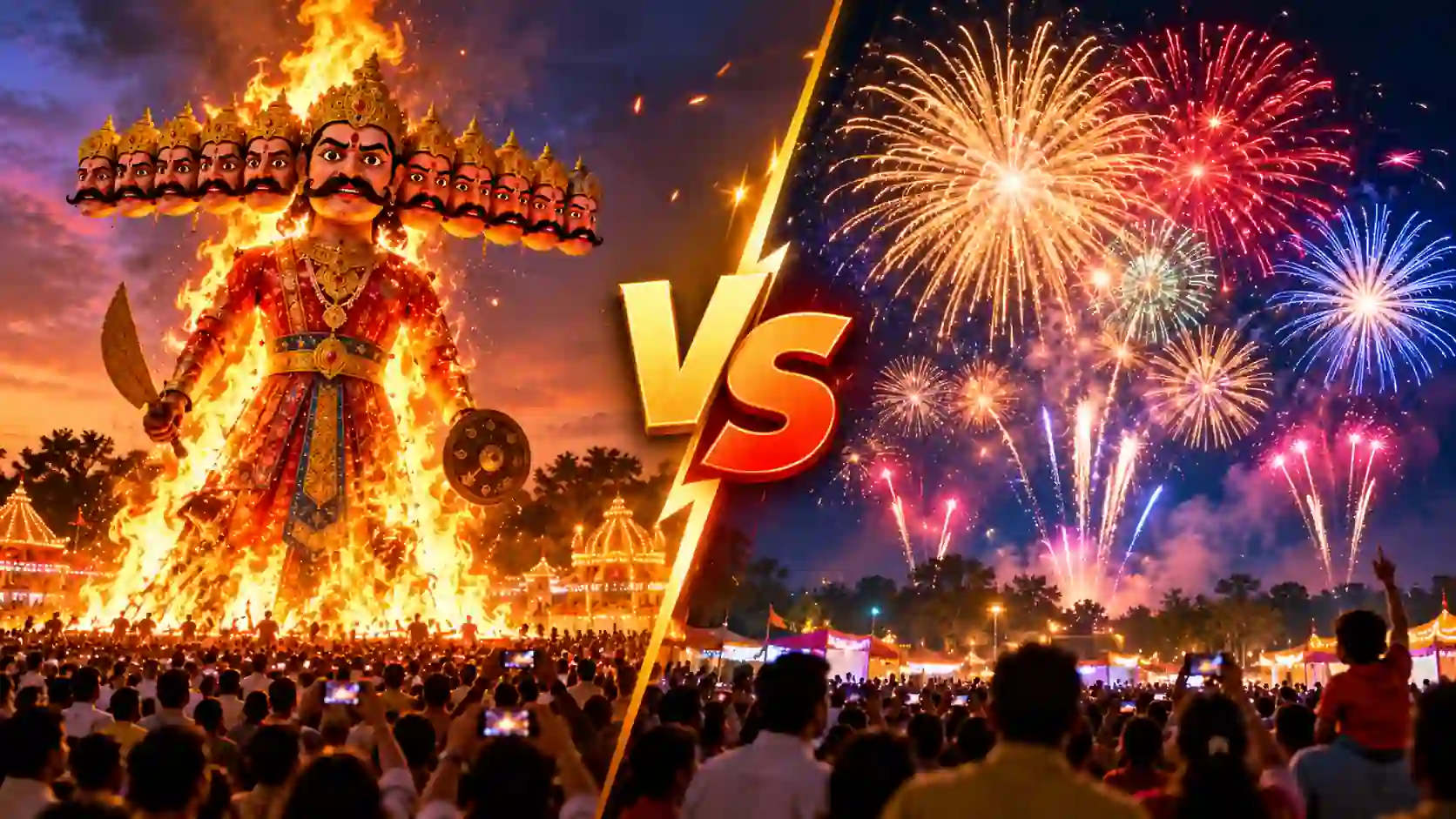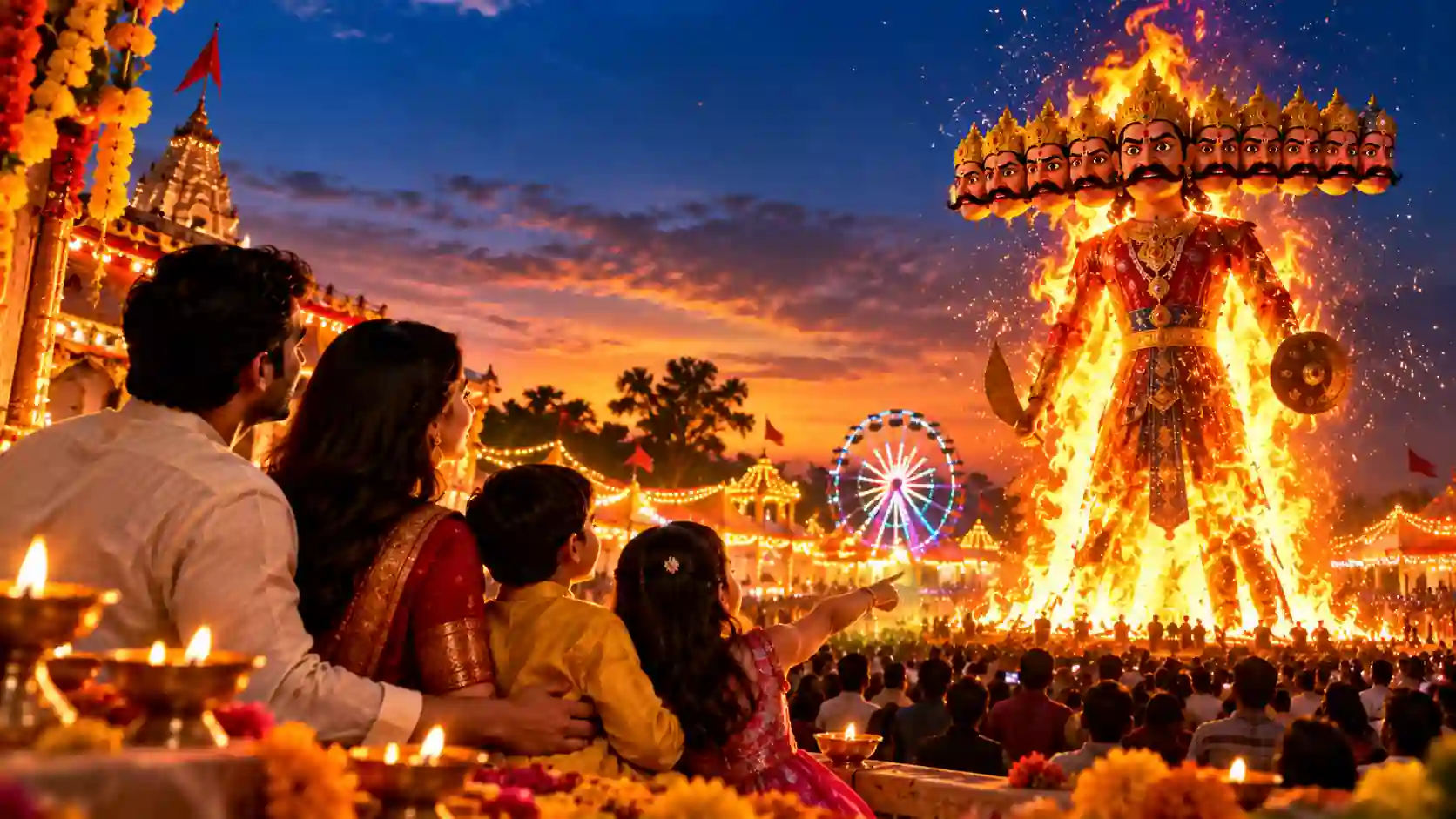

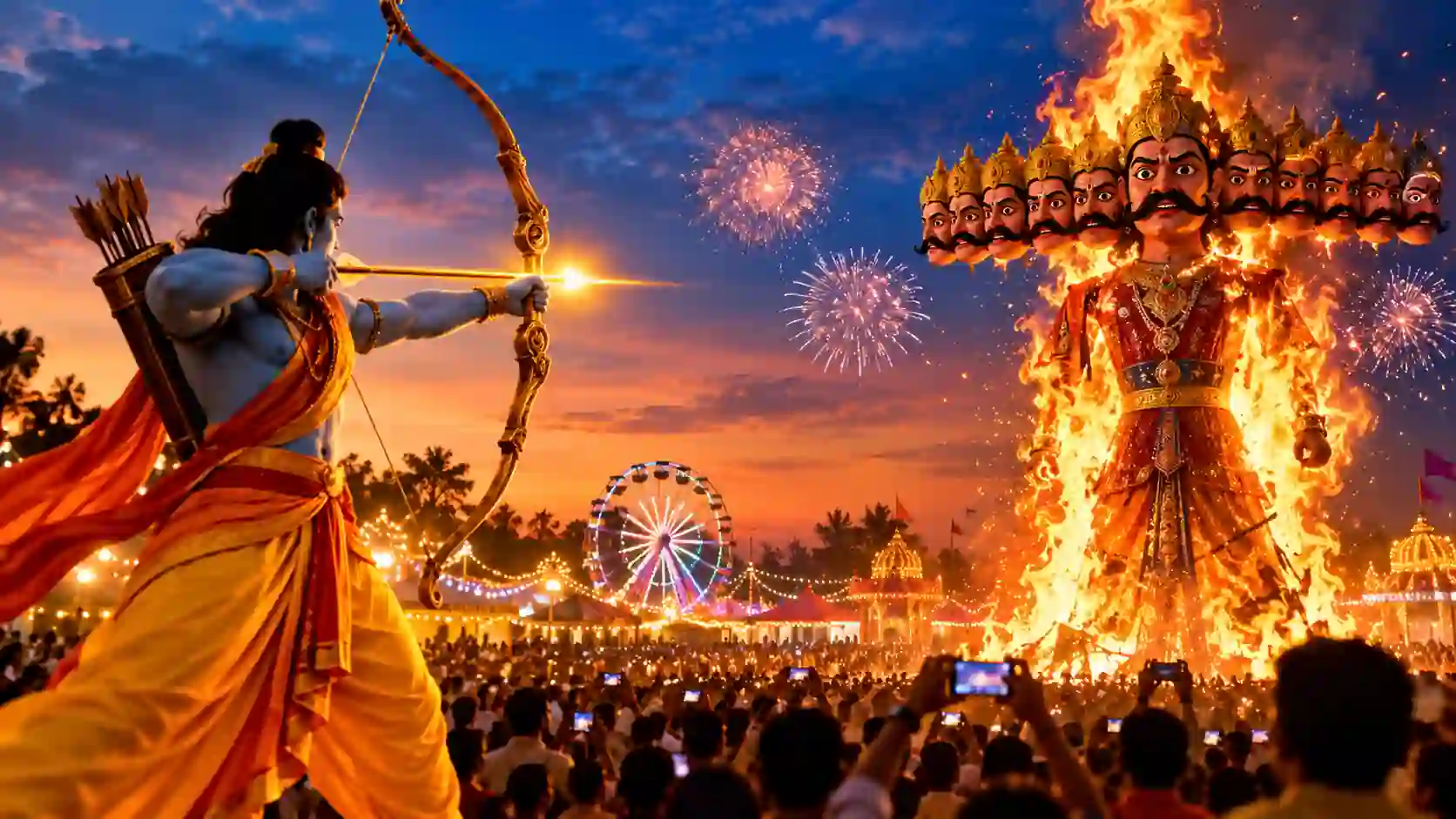
Effigies that tower over rooftops, processions that bring whole cities to a halt, fairs that run for weeks: India’s famous Dussehra celebrations have become some of the largest public festivals in the country. Dussehra 2026 falls on Tuesday, 20 October, and once again the scale will be striking. But the size isn’t really about bigger effigies or louder fireworks. The real reason is that Dussehra is one of the few festivals that belongs to a whole town at once, with roots in royal patronage, community theatre and local deities. Here’s what drives it, city by city.
Reason 1: Dussehra Was Always a Public Festival
Unlike festivals centred on the home, Dussehra grew up in public spaces. For centuries, kings marked Vijayadashami with processions, weapon worship and the start of the campaign season. That royal and civic character survives in the biggest celebrations today.
Mysuru Dasara, Karnataka
Celebrated as Karnataka’s Nadahabba or state festival, Mysuru Dasara draws on the traditions of the Wodeyar kings. The palace is illuminated through the festival, and on Vijayadashami the Jamboo Savari procession carries the idol of Goddess Chamundeshwari through the city on a decorated elephant. Read more in our Mysore Dasara guide.
Kota Dussehra, Rajasthan
Kota’s Dussehra fair, with roots in the patronage of the former Kota rulers, has grown into one of Rajasthan’s biggest annual fairs, with cultural programmes running alongside the Ravan Dahan.
Reason 2: Ramlila Turns Neighbours Into Performers
Across North India, Dussehra is the finale of Ramlila, the staged retelling of the Ramayana. In Ramnagar near Varanasi, the Ramlila runs for about a month across open-air locations, with audiences following the action from scene to scene. In Delhi, large Ramlilas draw crowds every evening of Navratri. UNESCO recognises “Ramlila, the traditional performance of the Ramayana” as Intangible Cultural Heritage. When a festival’s climax has been rehearsed by the community for weeks, it’s no surprise that thousands turn up to see it.
Reason 3: Local Deities Have Their Own Dussehra
Kullu Dussehra, Himachal Pradesh
Kullu’s celebration begins on Vijayadashami itself, just as it ends elsewhere, and continues for a week. Hundreds of village deities are carried in palanquins to Dhalpur to pay homage to Raghunath ji, the presiding deity of the valley. There is traditionally no Ravan Dahan in the Delhi style; the festival is about the gathering of gods and people.
Bastar Dussehra, Chhattisgarh
In Bastar, Dussehra stretches over many weeks and centres on the goddess Danteshwari and local tribal traditions, including a huge wooden chariot pulled through Jagdalpur. It is a reminder that “Dussehra” can mean very different things in different parts of India.
Reason 4: Durga Puja Feeds Into It
In Kolkata and across eastern India, Vijayadashami is the final day of Durga Puja, a festival UNESCO inscribed as Intangible Cultural Heritage in 2021. Sindoor Khela and immersion processions turn the day into a city-wide farewell to the Goddess, with streets full until late.
Reason 5: People Want Shared Moments
Perhaps the simplest reason Dussehra keeps growing is that people want reasons to gather. A Ravan Dahan is free, outdoors and open to all; a procession is something an entire city watches together. Diaspora communities from London to Toronto now hold their own Ravan Dahans and Dasara celebrations, too, extending the festival’s reach well beyond India.
Visiting Famous Dussehra Celebrations Safely
Scale has costs: crowd crushes, traffic, smoke and noise. Smaller neighbourhood celebrations often give families, children and elderly relatives a safer and more personal experience. If you’re attending a large event in 2026, arrive early, follow police and organiser instructions, and agree on a meeting point. Our Dussehra guide for kids has a short safety checklist.
Frequently Asked Questions
Which is the most famous Dussehra celebration in India?
Mysuru Dasara, Kullu Dussehra, the Ramlilas of Varanasi and Delhi, Kota’s Dussehra fair and Bastar Dussehra are among the best known, each with a very different character.
Is Ravana burned in Kullu Dussehra?
Kullu’s festival centres on the gathering of local deities around Raghunath ji rather than on a large Ravan Dahan of the North Indian plains style.
Why does Bastar Dussehra last so long?
Bastar Dussehra follows its own sequence of rituals honouring the goddess Danteshwari and local traditions, spread over many weeks before and after Vijayadashami.
When is Dussehra 2026?
Tuesday, 20 October 2026. See the Dussehra 2026 guide for muhurat timings.
Big, Because It Belongs to Everyone
Dussehra has gone big because it was never only a household ritual. It’s a festival of streets, maidans and palaces, of village gods and neighbourhood actors. However large the crowds become, the reason people come is the same: to see, together, the old story of right overcoming wrong. For the festival profile, visit our Dussehra festival page.