

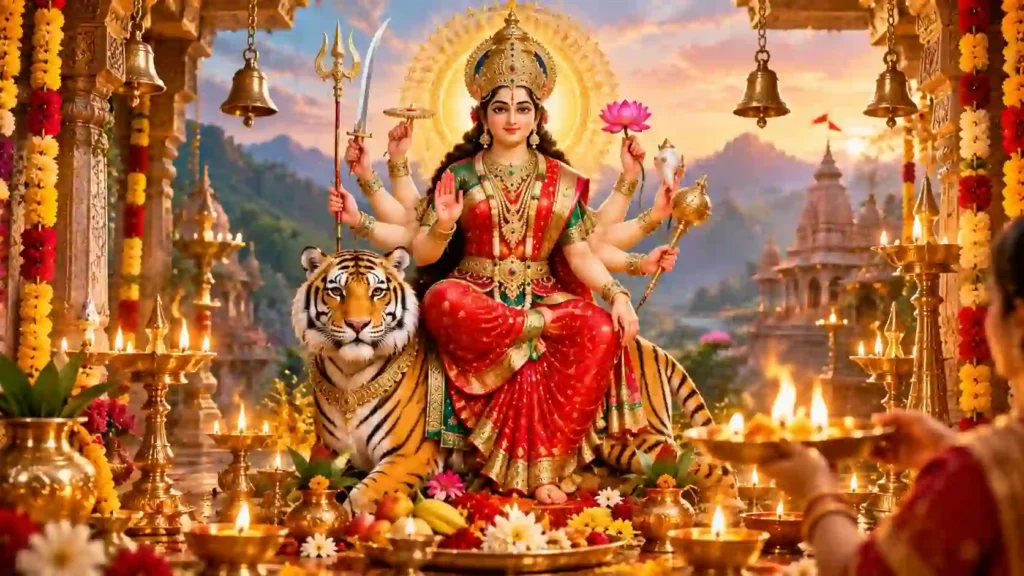
जय अम्बे गौरी
जय अम्बे गौरी, मैया जय श्यामा गौरी।
तुमको निशदिन ध्यावत, हर ब्रह्मा शिवरी॥ जय अम्बे गौरी॥
मांग सिंदूर विराजत, टीको मृगमद को।
उज्जवल से दोउ नैना, चंद्रवदन नीको॥ जय अम्बे गौरी॥
कनक समान कलेवर, रक्ताम्बर राजे।
रक्तपुष्प गल माला, कंठन पर साजे॥ जय अम्बे गौरी॥
केहरि वाहन राजत, खड्ग खप्पर धारी।
सुर-नर-मुनिजन सेवत, तिनके दुःखहारी॥ जय अम्बे गौरी॥
शुम्भ-निशुम्भ बिदारे, महिषासुर घाती।
धूम्र विलोचन नैना, निशदिन मदमाती। जय अम्बे गौरी॥
चण्ड-मुण्ड संहारे, शोणित बीज हरे।
मधु-कैटभ दोउ मारे, सुर भय दूर करे॥ जय अम्बे गौरी॥
ब्रह्माणी, रुद्राणी, तुम कमला रानी।
आगम निगम बखानी, तुम शिव पटरानी॥ जय अम्बे गौरी॥
भुजा चार अति शोभित, खड्ग खप्पर धारी।
मनवांछित फल पावत, सेवत नर नारी॥ जय अम्बे गौरी॥
श्री अम्बेजी की आरती, जो कोई नर गावे।
कहत शिवानंद स्वामी, सुख सम्पत्ति पावे॥ जय अम्बे गौरी।
You Can Also Read
- Related Chalisa
- Related Mantras
- 108 Names
- Sahasranama
Hindi Translation
इस आरती में देवी अम्बे (दुर्गा) के विभिन्न रूपों और उनके पराक्रम का वर्णन है—शुम्भ-निशुम्भ, महिषासुर, चंड-मुंड और रक्तबीज जैसे असुरों का संहार करने वाली माता। उन्हें ब्रह्माणी, रुद्राणी और कमला के रूप में तथा शिव की अर्धांगिनी के रूप में वर्णित किया गया है।
English Translation
This aarti celebrates Goddess Ambe (Durga) in her many forms, recounting her victories over demons like Shumbha-Nishumbha, Mahishasura, Chanda-Munda and Raktabija. She is glorified as Brahmani, Rudrani and Kamala — the consort of Shiva who bestows the desired wish upon devotees who worship her sincerely.
Significance
How to Chant?
Light a diya with ghee, offer red flowers and a red chunri to the Goddess, and sing the aarti while circling the lit lamp; devotees often play a dholak or clap in rhythm.
Number of Repetitions
Twice daily (morning and evening) throughout the nine days of Navratri; once during regular Devi puja.
Best Time to Chant
Morning and evening during Navratri, and on Tuesdays/Fridays which are considered auspicious for Devi worship.
Benefits of Aartis
- Brings peace, positivity, and spiritual energy
- Helps strengthen devotion and faith in God
- Creates a peaceful atmosphere at home and temples
- Traditionally performed during daily worship and festivals