


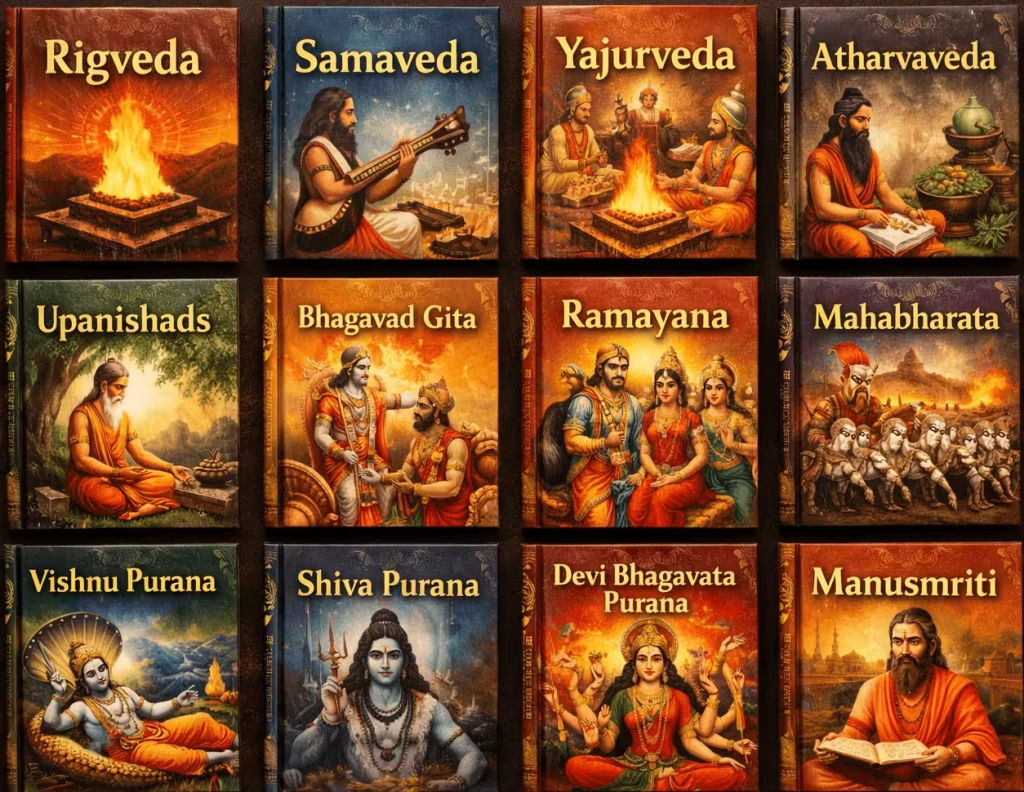
Hinduism is the world’s oldest living religion, enriched with a vast collection of sacred texts that guide humanity toward truth, righteousness, devotion, and liberation. Unlike many religions that rely on a single holy book, Hinduism draws its spiritual strength from numerous scriptures written over thousands of years. These religious books address philosophy, rituals, ethics, devotion, cosmology, and daily life.
This blog explores 12 of the most important Hindu religious books, explaining their meaning, teachings, and spiritual significance in detail.
1. Rigveda Books– The Foundation of Vedic Wisdom
The Rigveda is the oldest and most authoritative Hindu scripture, composed between 1500–1200 BCE. It consists of 1,028 hymns written in praise of various Vedic deities such as Indra, Agni, Varuna, and Soma.
The hymns explore the forces of nature, cosmic order (ṛta), and the relationship between humans and the divine. The Rigveda forms the philosophical and spiritual foundation of Hinduism, emphasizing prayer, gratitude, and harmony with the universe.
2. SamavedaBooks – The Veda of Sacred Music
The Samaveda is primarily a collection of musical chants derived from the Rigveda. Its significance lies in its melodic structure, which influenced Indian classical music.
This Veda teaches that devotion expressed through sound and rhythm can elevate the soul. Samaveda chants were sung during religious rituals, emphasizing that music itself is a sacred bridge between humans and the divine.
3. Yajurveda – The Veda of Ritual Action
The Yajurveda focuses on ritual practices and ceremonial procedures. It provides detailed instructions for conducting yajnas (fire sacrifices), which were central to early Vedic worship.
Divided into White (Shukla) and Black (Krishna) Yajurveda, this scripture highlights the importance of discipline, duty, and precision. It connects spiritual intention with physical action, teaching that righteous conduct leads to spiritual growth.
4. Atharvaveda – The Veda of Daily Life
The Atharvaveda stands apart from the other Vedas by addressing practical human concerns. It includes prayers and hymns for health, prosperity, family harmony, protection from illness, and mental peace.
This Veda reflects the compassionate aspect of Hinduism, acknowledging human struggles and offering spiritual solutions. It bridges the gap between ritual worship and everyday life.
5. Upanishads – The Philosophy of Ultimate Truth
The Upanishads are philosophical texts that form the spiritual heart of Hinduism. They explore profound questions such as:
Who am I?
What is the nature of reality?
What is Brahman (ultimate truth)?
What is the soul (Atman)?
The central teaching of the Upanishads is the unity of Atman and Brahman, meaning the individual soul and universal consciousness are one. These texts laid the foundation for Vedanta philosophy and deeply influenced Indian and global thought.
6. Bhagavad Gita – The Divine Song of Life
The Bhagavad Gita, often called the “Song of God,” is one of the most widely read Hindu scriptures. It appears in the Mahabharata as a dialogue between Lord Krishna and the warrior Arjuna on the battlefield of Kurukshetra.
The Gita teaches:
Karma Yoga (path of action)
Bhakti Yoga (path of devotion)
Jnana Yoga (path of knowledge)
It offers practical guidance for living a righteous life while fulfilling worldly responsibilities, making it universally relevant even today.
7. Ramayana – The Ideal Path of Dharma
The Ramayana, composed by Sage Valmiki, narrates the life of Lord Rama, the embodiment of righteousness and virtue. The epic tells of Rama’s exile, Sita’s abduction by Ravana, and the ultimate triumph of good over evil.
The Ramayana teaches moral values such as loyalty, sacrifice, obedience, compassion, and devotion. It remains a guiding light for ethical living in Hindu culture.
8. Mahabharata – The Epic of Human Struggle and Wisdom
The Mahabharata is the longest epic in the world and a treasure of Hindu philosophy. It narrates the great war between the Pandavas and the Kauravas while exploring complex ethical dilemmas.
Beyond the war, the Mahabharata addresses family duties, leadership, justice, and moral responsibility. Its depth makes it a timeless reflection of human nature and spiritual evolution.
9. Vishnu Purana – The Path of Preservation and Devotion
The Vishnu Purana glorifies Lord Vishnu as the preserver of the universe. It explains cosmic creation, the cycles of time, and the incarnations of Vishnu, including Rama and Krishna.
This Purana emphasizes devotion (bhakti) as the path to salvation and teaches that righteousness sustains cosmic order.
10. Shiva Purana – The Power of Transformation
The Shiva Purana is dedicated to Lord Shiva, representing destruction and regeneration. It presents Shiva as both a meditative ascetic and a loving householder.
The text explains the spiritual meaning of destruction as a necessary step for renewal. It inspires devotees to seek inner transformation and liberation through devotion and discipline.
11. Devi Bhagavata Purana – The Glory of Divine Feminine Energy
The Devi Bhagavata Purana celebrates Shakti, the divine feminine power that governs the universe. It portrays the Goddess as the supreme reality behind all creation.
This scripture forms the foundation of Shaktism and highlights the worship of Durga, Lakshmi, Saraswati, and other goddesses. It teaches balance, compassion, strength, and wisdom.
12. Manusmriti – The Code of Moral and Social Law
The Manusmriti is an ancient legal and ethical text that outlines duties, responsibilities, and social conduct. It played a significant role in shaping early Hindu social organization.
While some of its views are debated today, Manusmriti reflects historical attempts to align spiritual principles with social harmony and moral discipline.
The twelve religious books of Hinduism represent an ocean of spiritual knowledge, guiding humanity through devotion, action, wisdom, and ethical living. Together, they offer multiple paths toward self-realization and liberation, respecting the diversity of human nature.
From the sacred hymns of the Vedas to the philosophical depth of the Upanishads and the inspiring narratives of the epics and Puranas, Hindu scriptures continue to illuminate the path of truth for millions around the world.